



ISLAMABAD: US President Donald Trump has directly urged leaders of Pakistan, Saudi Arabia and Qatar to normalise relations with Israel as part of efforts to conclude a deal ending recent tensions with Iran.
The push came during a conference call with multiple regional leaders on Saturday, according to Axios and other US media reports.
Trump reportedly linked progress on the Iran agreement to broader regional integration through the Abraham Accords framework.
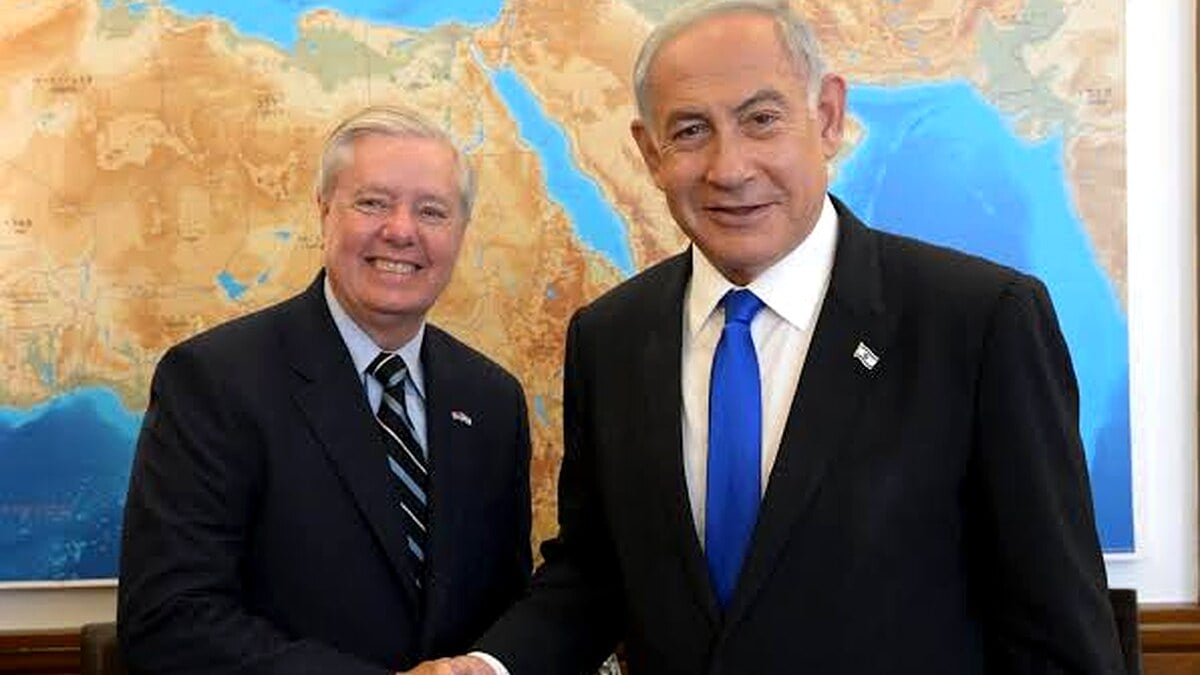
Senator Lindsay Graham warned of “dangerous consequences” if the countries do not move towards recognition, highlighting ongoing US diplomatic pressure.
Pakistani officials have not issued any immediate public confirmation of a policy shift, maintaining support for Palestinian statehood.
**Official Statements**
Trump told participants on the call that following any Iran deal, he expects countries without existing ties to Israel to join the Abraham Accords and establish peace agreements.
During the conversation, an awkward silence reportedly occurred, prompting Trump to ask if leaders were still on the line.
Saudi officials have consistently linked any normalisation to concrete advancements toward Palestinian statehood and an end to the Gaza conflict.
Qatari diplomats emphasised their ongoing mediation efforts rather than bilateral recognition commitments at this stage.
Senator Graham stated that failure to recognise Israel could result in reduced US support and heightened regional risks for the concerned countries.
**Key Data and Figures**
Pakistan-Saudi Arabia bilateral trade reached approximately $8.5 billion in FY 2024-25, with remittances from over 2.7 million Pakistani workers in the Kingdom exceeding $3.5 billion.
US military assistance and sales to Saudi Arabia have totalled more than $110 billion since 2015. Qatar hosts Al Udeid Air Base, home to around 10,000 US troops and central to operations in the region.
Trade between Pakistan and Israel remains below $6 million annually due to the absence of diplomatic relations. Saudi defence imports from the US in recent packages exceeded $15 billion.
The Strait of Hormuz facilitates nearly 21% of global seaborne oil trade. Disruptions in 2025 contributed to oil price spikes of up to 18% at peak periods.
CPEC-related Chinese investment commitments in Pakistan stand at over $65 billion, providing an alternative economic anchor.
**Background Context**
Pakistan has maintained non-recognition of Israel since 1948 and consistently supports the Palestinian cause through the Organisation of Islamic Cooperation.
The Abraham Accords of 2020 established normalisation between Israel and the UAE, Bahrain, Morocco and Sudan. Saudi Arabia has previously indicated openness conditional on Palestinian progress via the 2002 Arab Peace Initiative.
Recent US-Iran indirect talks, mediated partly through Omani and Pakistani channels, focused on uranium enrichment limits, sanctions relief, and reopening of the Strait of Hormuz.
A 60-day ceasefire framework has been under discussion following earlier escalations involving strikes on Iranian facilities.
**Reactions and Impact**
Public opinion in Pakistan remains overwhelmingly opposed to recognition without resolution of core Palestinian demands, as reflected in National Assembly resolutions.
Saudi and Qatari positions have emphasised regional stability and avoidance of new flashpoints. Israeli officials expressed reservations about any Iran deal that does not fully address nuclear, missile, and proxy concerns.
Oil markets showed mild volatility, with Brent crude trading between $74 and $79 per barrel following the reports.
No official statements have emerged yet from Islamabad, Riyadh or Doha confirming acceptance of the US proposal.
**Strategic Implications**
The US initiative reflects efforts to expand the circle of normalisation amid shifting energy dynamics and competition with other global powers. For Pakistan, the matter involves balancing deep economic and defence ties with Saudi Arabia against longstanding principles and relations with China.
Saudi Vision 2030 aims for $1 trillion in non-oil GDP by 2030, where diversified partnerships play a key role beyond single-issue diplomacy.
Qatar’s position as a major LNG exporter, supplying nearly 30% of global needs, prioritises secure trade routes and mediation influence.
Upcoming engagements are expected to clarify specific incentives, including potential security guarantees and economic packages. The coming weeks will indicate whether diplomatic momentum leads to concrete movement or reinforces existing policy positions across the three capitals.