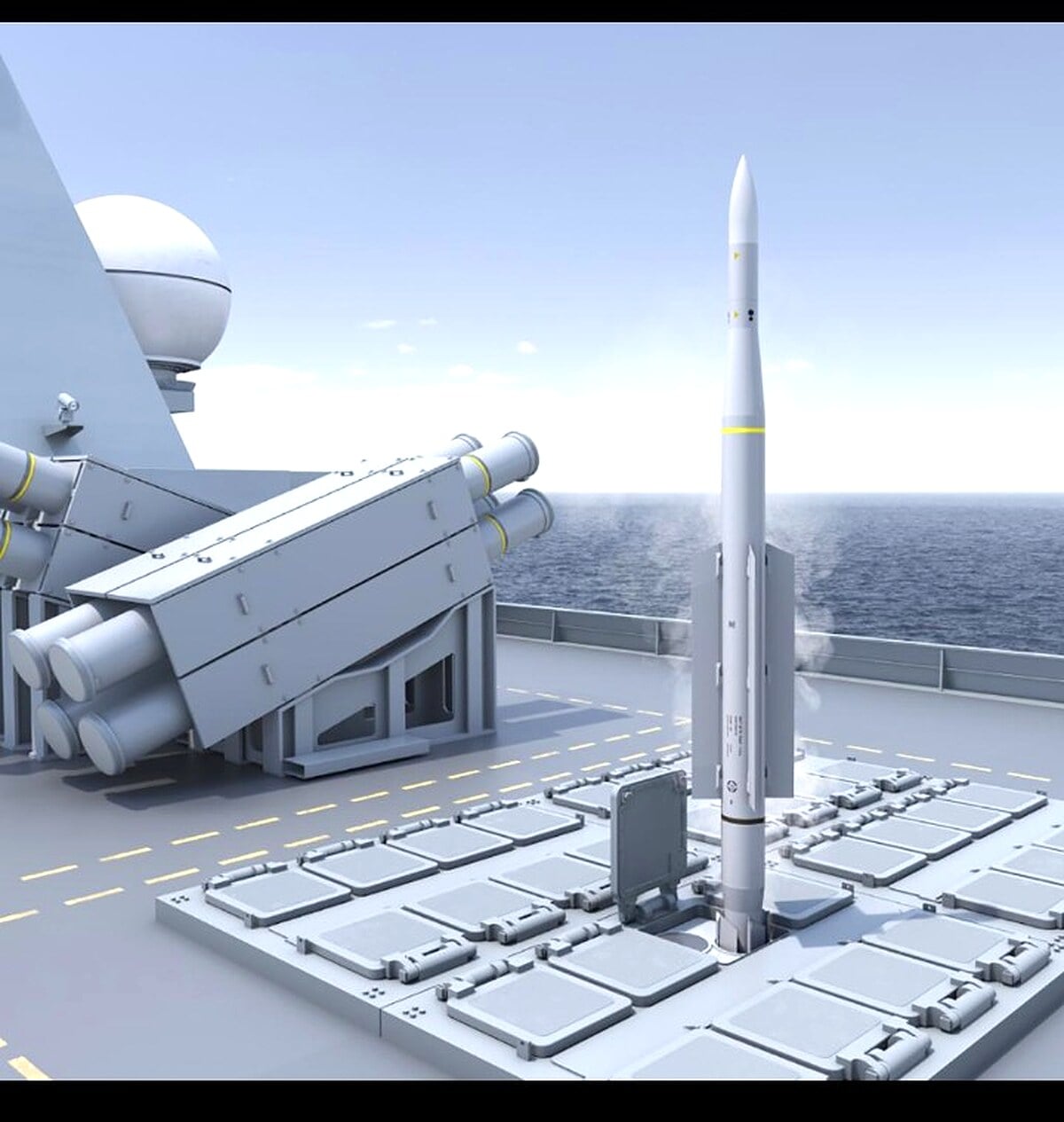




ISLAMABAD: The Pakistan Navy has integrated the MBDA CAMM-ER extended-range surface-to-air missile system aboard its Babur-class corvettes, marking a significant upgrade in naval air defence capabilities.
The system, part of the Albatros NG naval-based air defence (NBAD) platform, provides the Navy’s newest corvettes with a 45-kilometre plus engagement range against aerial threats. This includes fighter aircraft, drones, helicopters, and incoming anti-ship missiles.
Defence sources confirm that Pakistan became the launch customer for the Albatros NG system, selected in 2021 for the Turkish MILGEM-derived Babur-class vessels. The corvettes feature vertical launch system (VLS) cells configured for the CAMM-ER missiles aft of the main gun.
**Official Confirmation and Specifications**
The CAMM-ER variant offers active radar homing (ARH) guidance with a two-way datalink, enabling fire-and-forget engagements and rapid response times. It achieves supersonic speeds with a 160 kg launch weight, 4.2-metre length, and 190 mm diameter.
The system delivers 360-degree coverage through soft vertical launch technology, allowing high rates of fire against multiple simultaneous targets. Its effective altitude reaches over 10 kilometres.
This integration represents a generational improvement over previous systems like the LY-80N semi-active radar homing missiles on Tughril-class frigates, which offer around 40 km range. The CAMM-ER provides superior kinematic performance and electronic counter-countermeasure resistance.
**Project Background**
The Babur-class corvettes, built under the Pakistan Navy MILGEM project at Karachi Shipyard, displace approximately 2,890 tonnes. They measure 109 metres in length and serve as multi-mission platforms for air defence, surface warfare, and anti-submarine operations.
Pakistan ordered four vessels in this class. The selection of the Italian-UK developed CAMM-ER over alternative options occurred in March 2021, with the first ship, PNS Babur, entering service in recent years. The system forms part of a broader naval modernisation drive that includes Chinese-built Tughril-class frigates and indigenous shipbuilding efforts.
**Strategic and Operational Impact**
The addition strengthens layered air defence for Pakistani naval task forces operating in the Arabian Sea. It enhances protection for high-value assets against regional aerial and missile threats, particularly in contested maritime environments.
Analysts note that the active seeker technology allows engagement of targets beyond line-of-sight when networked with ship sensors or external data links. This capability improves survivability during multi-domain operations.
Market reactions remain limited as this forms part of an ongoing procurement programme. However, the move signals continued diversification of Pakistan’s defence suppliers, combining Western European missile technology with Turkish shipbuilding expertise and Chinese platforms.
**Broader Implications**
The CAMM-ER integration positions the Pakistan Navy as one of the first operators of this advanced European system in the region. It complements existing assets, creating a more robust defensive shield for surface fleets.
Future developments may include potential land-based variants or further acquisitions to standardise across additional surface combatants. The Navy continues to focus on operational readiness through joint exercises and technology absorption.
Defence officials have not released exact missile inventory numbers or full integration timelines for all vessels in the class. However, the system’s deployment aligns with Pakistan’s long-term goal of maintaining credible maritime deterrence along vital sea lanes.
Ongoing evaluations will determine further enhancements to naval air defence architecture in response to evolving regional dynamics.