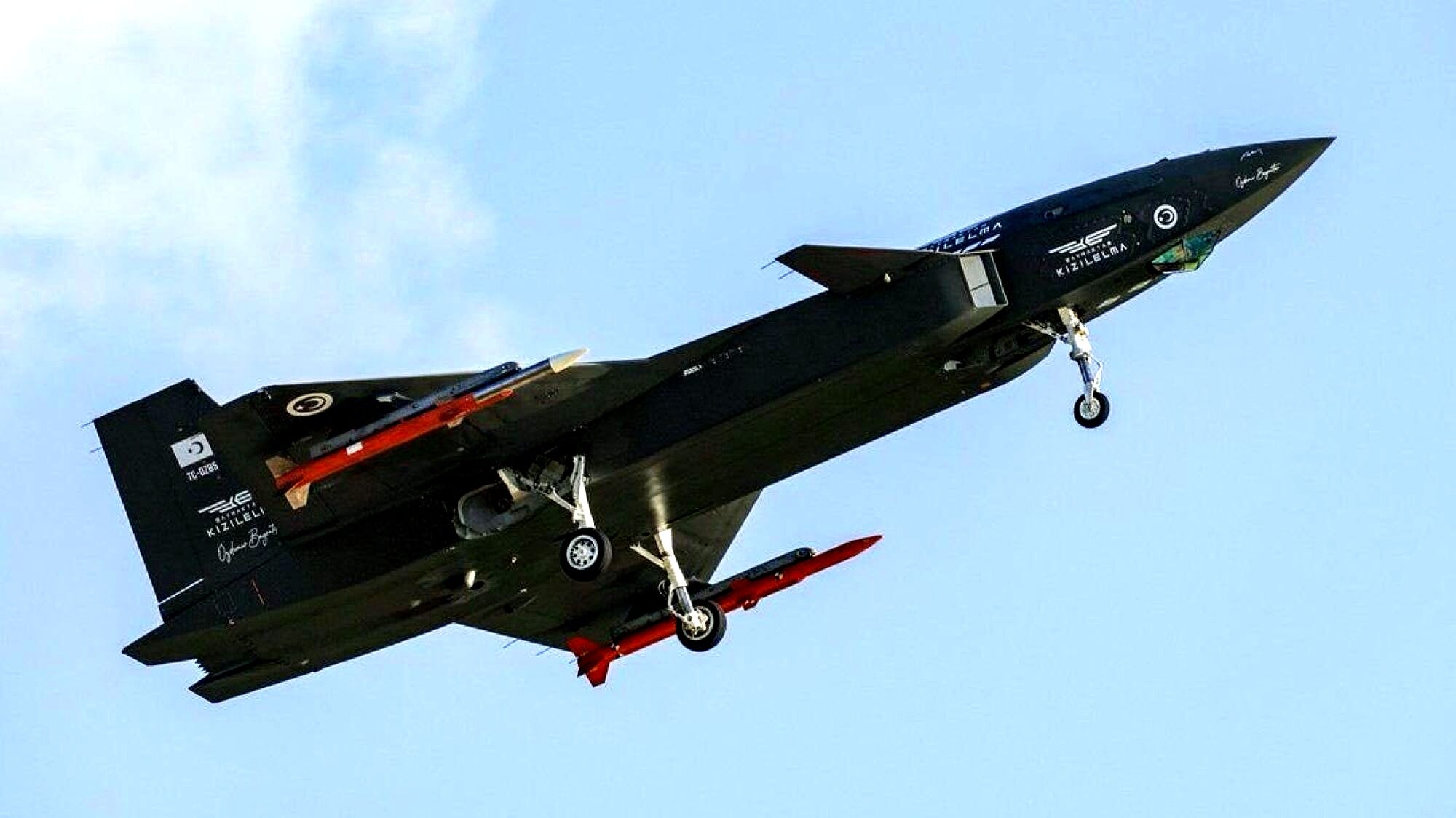




ISLAMABAD: Pakistan Air Force (PAF) is actively pursuing the induction of Turkish Bayraktar Kızılelma unmanned combat aerial vehicles (UCAVs) as part of its ongoing fleet modernisation drive. Senior defence officials have confirmed exploratory discussions with Turkey’s Baykar Technologies for potential acquisition and local co-production.
The development comes as regional air forces accelerate adoption of advanced loyal wingman and autonomous combat platforms. Kızılelma, a jet-powered stealth UCAV, is designed for high-threat environments and multi-role missions alongside manned fighters.
Defence sources indicate that formal negotiations have gained momentum following successful Turkish flight tests and recent export agreements. Indonesia became the global launch customer for the Kızılelma earlier this month, signing for 12 units with options for additional squadrons.
**Kızılelma Capabilities** The Kızılelma features a maximum take-off weight of 8.5 tons and a payload capacity of 1,500 kg. It achieves a combat radius of approximately 500 nautical miles (930 km) and operates at altitudes up to 25,000 feet, with service ceiling reaching 45,000 feet. Cruise speed stands at Mach 0.6, with maximum speed nearing Mach 0.9.
Equipped with Aselsan’s MURAD AESA radar, the platform demonstrated a significant milestone in late 2025 by successfully engaging an aerial target using Gökdoğan beyond-visual-range (BVR) air-to-air missiles. It can carry two Gökdoğan missiles on underwing pylons, providing enhanced engagement flexibility compared to several competing designs.
PAF officials view the Kızılelma as a force multiplier that can integrate with existing assets including JF-17 Thunder variants and F-16 fighters. Local manufacturing discussions focus on establishing assembly and integration facilities in Pakistan, which could shorten induction timelines and support technology transfer.
**Indian Response and MQ-28 Interest** In response to evolving unmanned capabilities across the border, the Indian Air Force (IAF) has initiated engagement with Australia’s Boeing MQ-28 Ghost Bat. Australian officials showcased the platform to Indian counterparts during recent defence interactions, highlighting growing Indo-Pacific collaboration in autonomous systems.
The MQ-28 Ghost Bat, developed under Australia’s Loyal Wingman program, serves primarily as a collaborative combat aircraft. It features a range exceeding 3,700 km and has demonstrated air-to-air engagements using AIM-120 AMRAAM missiles in tests with E-7A Wedgetail and F/A-18F Super Hornet platforms.
Current configurations allow the MQ-28 to carry one AIM-120 missile on a belly hardpoint, according to available technical assessments. Industry observers note this contrasts with Kızılelma’s dual external pylon capability for BVR missiles, though platform roles differ significantly in operational doctrine.
The IAF currently operates limited dedicated UCAV capability in the high-end segment and is exploring multiple options to enhance its unmanned fleet amid rapid regional advancements.
**Background Context** Pakistan has steadily expanded its unmanned aerial capabilities over the past decade. The PAF already operates Bayraktar TB2 and Akıncı systems from Turkey, alongside Chinese Wing Loong variants and indigenous platforms. The addition of Kızılelma would represent a significant leap into jet-powered stealth UCAV territory.
Turkey’s Baykar has positioned Kızılelma as an autonomous multi-role fighter with carrier compatibility. Serial production milestones were achieved in 2025, with Turkish Air Force induction targeted for 2026. Pakistan’s interest aligns with broader defence cooperation under existing military ties between the two countries.
The MQ-28 program, meanwhile, has seen eight Block 1 aircraft delivered to the Royal Australian Air Force, with further Block 2 units in production. The platform emphasises human-machine teaming and has proven operational viability in contested scenarios.
**Market and Strategic Implications** Defence analysts estimate the global market for collaborative combat aircraft and loyal wingman systems could exceed several billion dollars in the coming decade. Both platforms represent different philosophies: Kızılelma leans toward independent fighter-like operations, while MQ-28 focuses on augmenting crewed assets through networked autonomy.
For Pakistan, successful co-production of Kızılelma could generate local employment, enhance maintenance self-reliance, and strengthen interoperability with Turkish systems already in service. Initial induction timelines remain under discussion but could align with mid-2030s operational requirements if agreements materialise.
Regional observers note that unmanned systems are reshaping South Asian air power dynamics. Both countries are investing heavily in AI-enabled operations, electronic warfare integration, and cost-effective force multiplication to offset traditional manned aircraft expenses.
**Future Outlook** PAF sources indicate that technical evaluations of the Kızılelma continue alongside broader fifth-generation modernisation efforts, including potential interest in crewed platforms. Final decisions on quantity and configuration will depend on comprehensive trials and budgetary considerations.
The IAF’s engagement with the MQ-28 forms part of its wider push toward indigenous and collaborative unmanned programs, including the Ghatak stealth UCAV project.
As both nations advance their respective unmanned strategies, the coming years are likely to witness intensified competition in drone technology, doctrine development, and operational integration. Defence planners on both sides will closely monitor how these platforms perform in networked environments and joint exercises with traditional air assets.
The evolving capabilities underscore the shifting nature of aerial warfare in the region, where autonomous systems are transitioning from support roles to core components of combat power.