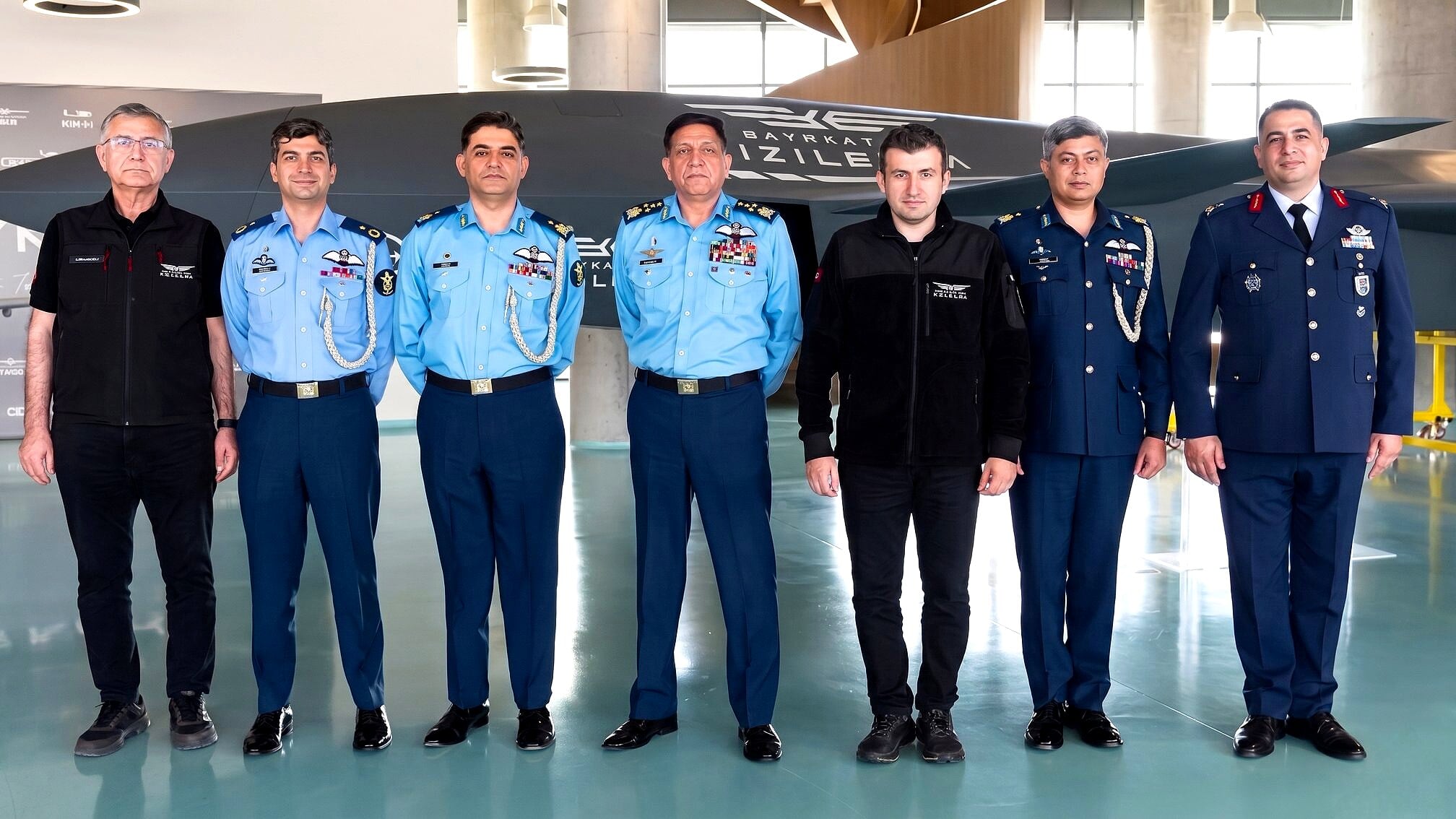




ISLAMABAD: Air Chief Marshal Zaheer Ahmed Baber Sidhu, Chief of the Air Staff of the Pakistan Air Force, concluded an official visit to Turkiye focused on deepening cooperation in aerospace innovation, unmanned aerial systems and emerging defence technologies.
The Inter-Services Public Relations (ISPR) stated that the visit involved high-level engagements with senior Turkish military and defence officials. These discussions reaffirmed the strong strategic partnership between the two nations.
Air Chief Marshal Sidhu met General Ziya Cemal Kadıoglu, Commander of the Turkish Air Force, at Turkish Air Force Headquarters in Ankara.
He was accorded a guard of honour during the visit. Both sides discussed enhancing interoperability through joint exercises, training programmes and professional military exchanges.
The Turkish Air Chief appreciated the Pakistan Air Force’s continued support in training Turkish pilots, highlighting long-standing reciprocal training arrangements between the two air forces.
In a separate meeting, Air Chief Marshal Sidhu called on Yasar Guler, Minister of National Defence of Turkiye. The two leaders reaffirmed historical and strategic ties while exploring expanded cooperation in training, capacity building and aerospace projects.
The Chief of the Air Staff also held detailed discussions with Mr Selcuk Bayraktar, Chief Technology Officer of Baykar Technologies. The talks centred on advancements in unmanned aerial systems (UAS), next-generation aerospace technologies and potential joint initiatives.
**Defence Partnership Background**
Pakistan and Turkiye have steadily expanded defence collaboration over the past decade. This includes major acquisitions such as the Bayraktar TB2 and Akinci unmanned combat aerial vehicles (UCAVs) for the Pakistan Air Force. According to available data, Pakistan received its first batch of TB2 systems in 2022 following an order placed in 2021.
Baykar has emerged as a key partner. The company reported a turnover of $1.4 billion in 2022, with exports forming the bulk of its revenue. It has secured agreements with over 30 countries for the TB2 platform. Pakistan has also engaged Baykar for research and development initiatives at the National Aerospace Science and Technology Park (NASTP).
Other notable defence deals between the two countries include the $1.5 billion contract for four MILGEM-class corvettes for the Pakistan Navy and procurement of T129 ATAK helicopters. Turkish firms have supported upgrades for Pakistan’s F-16 fleet and supplied various radar and electronic warfare systems.
**Key Focus Areas During Visit**
The visit emphasised joint development in unmanned systems. Baykar’s Akinci UCAV, already in PAF inventory, features a 24-hour endurance, 40,000 feet service ceiling, 20-metre wingspan and 1,350 kg payload capacity. It can integrate advanced munitions including locally supported air-to-air missiles.
Discussions also touched on technology transfer and potential local assembly or production facilities in Pakistan. Reports indicate ongoing talks for drone manufacturing setups involving Baykar to support both Pakistan Air Force and Army requirements.
Training cooperation remains a cornerstone. Over the years, nearly 1,500 Pakistani military officers have received training in Turkiye. In return, Pakistan has provided advanced tactical training to Turkish pilots. Both air forces regularly participate in joint exercises such as Anatolian Eagle.
**Official Statements**
ISPR described the engagements as reflecting a shared vision for greater collaboration in next-generation defence technologies. The meetings underscored mutual commitment to enhanced strategic convergence in defence and aerospace domains.
General Kadıoglu and Air Chief Marshal Sidhu agreed to expand joint training and multi-domain operations. Defence Minister Guler emphasised the importance of historical ties and future capacity-building initiatives.
**Regional and Strategic Context**
Pakistan and Turkiye maintain close coordination on regional security issues. Both countries face similar challenges in counter-terrorism and have collaborated in joint military exercises involving third parties. The defence partnership serves as a stabilising factor amid evolving geopolitical dynamics in South Asia, West Asia and beyond.
Bilateral trade in defence equipment has grown significantly. Turkish defence exports to Pakistan have included various systems worth hundreds of millions of dollars, supporting local industrial development and technology absorption.
**Broader Implications**
This high-level visit comes at a time when both nations seek to strengthen indigenous defence capabilities. For Pakistan, greater access to Turkish UAS technology supports modernisation of its aerial platforms and enhances operational readiness. For Turkiye, cooperation with Pakistan provides a strategic partner with extensive operational experience in diverse environments.
Analysts note that sustained collaboration in UAS and emerging technologies could lead to co-development of future systems, including potential involvement in projects like Turkiye’s KAAN fighter jet programme, where Pakistani expertise has been mentioned in past reports.
Future engagements are expected to focus on concrete deliverables, including expanded joint exercises, more technology transfer agreements and possible establishment of production facilities in Pakistan. Officials from both sides are likely to follow up on the outcomes of these meetings in upcoming high-level strategic forums.
The continued momentum in Pakistan-Turkiye defence ties reflects a pragmatic approach to building self-reliant capabilities while leveraging mutual strengths in training, innovation and operational expertise.