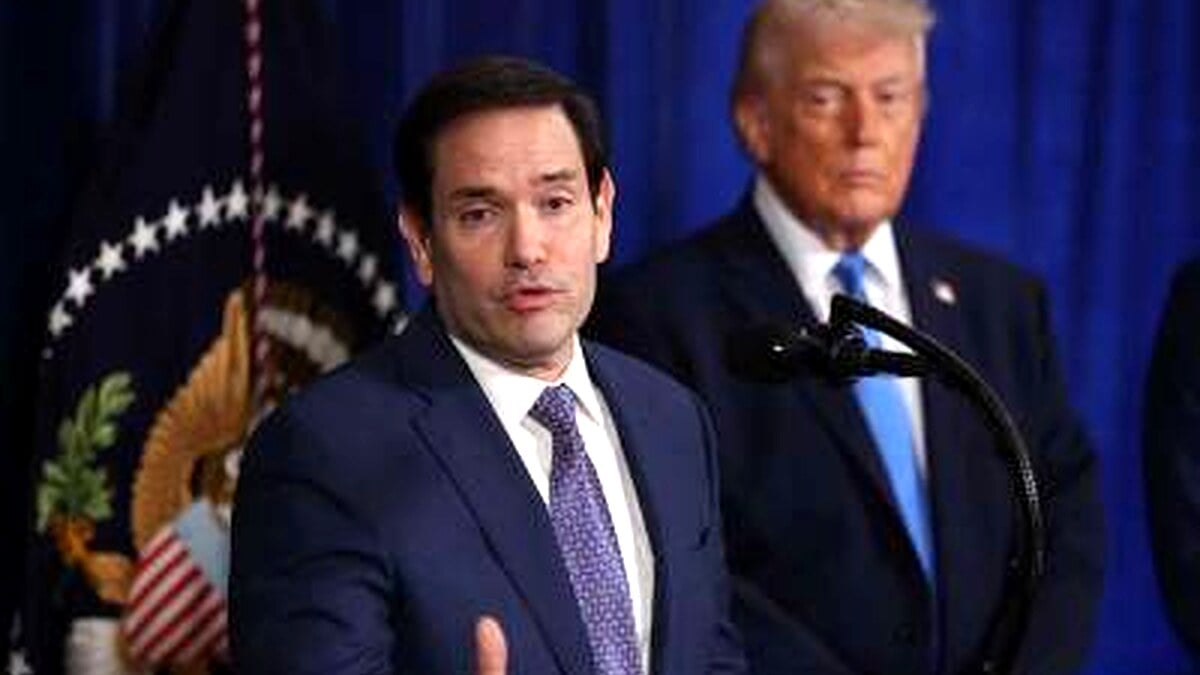




ISLAMABAD: US Secretary of State Marco Rubio has confirmed that Washington paused Project Freedom following a direct request from Pakistan to facilitate diplomatic efforts with Iran.
Rubio made the remarks during an interview with NBC, stating that Pakistani officials indicated a suspension could open the path to an agreement. He emphasised that the decision was taken to give diplomacy a chance.
President Donald Trump has prioritised diplomatic channels in the ongoing Iran-related developments, according to official statements.
Project Freedom, launched earlier this month on May 5, involved US naval escorts for commercial vessels through the blockaded Strait of Hormuz. The operation followed the conclusion of “Operation Epic Fury” and aimed to restore maritime traffic in the critical chokepoint, which handles approximately 20 percent of global oil shipments.
Rubio noted that Pakistan assured the US that halting the mission would enable progress toward a deal with Tehran. The Trump administration agreed to the pause while maintaining the broader naval blockade.
Pakistani leadership, including Prime Minister Shehbaz Sharif, has been credited in US statements for playing a constructive role in urging de-escalation. Senior Pakistani officials reportedly engaged directly with Washington on the matter.
The Strait of Hormuz remains a flashpoint following recent regional conflicts. Its closure or disruption has contributed to volatility in global energy markets, with oil prices sensitive to any changes in traffic flow.
US officials have retained the option to resume escort operations if diplomatic talks stall. Trump has described the pause as temporary, aimed at testing whether a comprehensive agreement can be finalised.
Background to the development traces to a fragile ceasefire declared in early April. Project Freedom represented a humanitarian and economic effort to free trapped shipping, according to initial US announcements, even as military options stayed on the table.
Market reactions have been mixed. Energy analysts note that a successful diplomatic outcome could ease pressure on oil prices, which have fluctuated amid uncertainty over Hormuz access. Regional trade partners, including Gulf states and Asian importers, have closely watched the US decision.
Pakistan’s intervention aligns with its longstanding diplomatic outreach in the Muslim world and efforts to prevent wider escalation that could affect South Asian economies. Islamabad maintains strong ties with both Washington and Tehran.
**Official Confirmation** Rubio’s statement provides the clearest US acknowledgement yet of Pakistan’s specific influence on the operational pause. He quoted Pakistani interlocutors as saying: “If you guys stop Project Freedom, we think we can reach a deal.”
The Secretary of State reiterated that President Trump favours diplomacy where possible, consistent with earlier White House messaging.
Regional observers view the move as a calibrated step. While the pause does not lift the blockade entirely, it signals willingness to prioritise negotiations over immediate naval action.
Pakistan has not issued a detailed public statement on the specifics of its request, but government sources describe it as part of broader efforts to support peace in the Gulf region.
**Strategic Implications** The development highlights Pakistan’s relevance in backchannel diplomacy amid US-Iran tensions. Successful talks could stabilise energy flows and reduce risks to global supply chains, benefiting Pakistan’s own economy through lower import costs.
However, the pause remains conditional. US forces continue to monitor the area, and any failure in negotiations could lead to resumption of Project Freedom or other measures.
Analysts suggest the coming weeks will prove critical as Iran responds to the latest proposals. Timelines mentioned in earlier briefings pointed toward potential agreements within 30 days of certain proposals.
The episode also underscores shifting dynamics in crisis management, where allied and partner requests can influence tactical decisions in high-stakes maritime zones.
Future developments will depend on Iran’s engagement and the ability of mediators, including Pakistan, to deliver on assurances of progress. The US has made clear it retains full military flexibility if diplomacy does not yield results.