



US-Iran War
ISLAMABAD: Qatari and Turkish officials have reaffirmed robust support for Pakistan’s diplomatic initiative aimed at ending the US-Iran conflict and securing the reopening of the Strait of Hormuz.
Foreign Minister from both countries emphasised that dialogue remains the only viable path to de-escalation following months of hostilities that disrupted global energy flows.
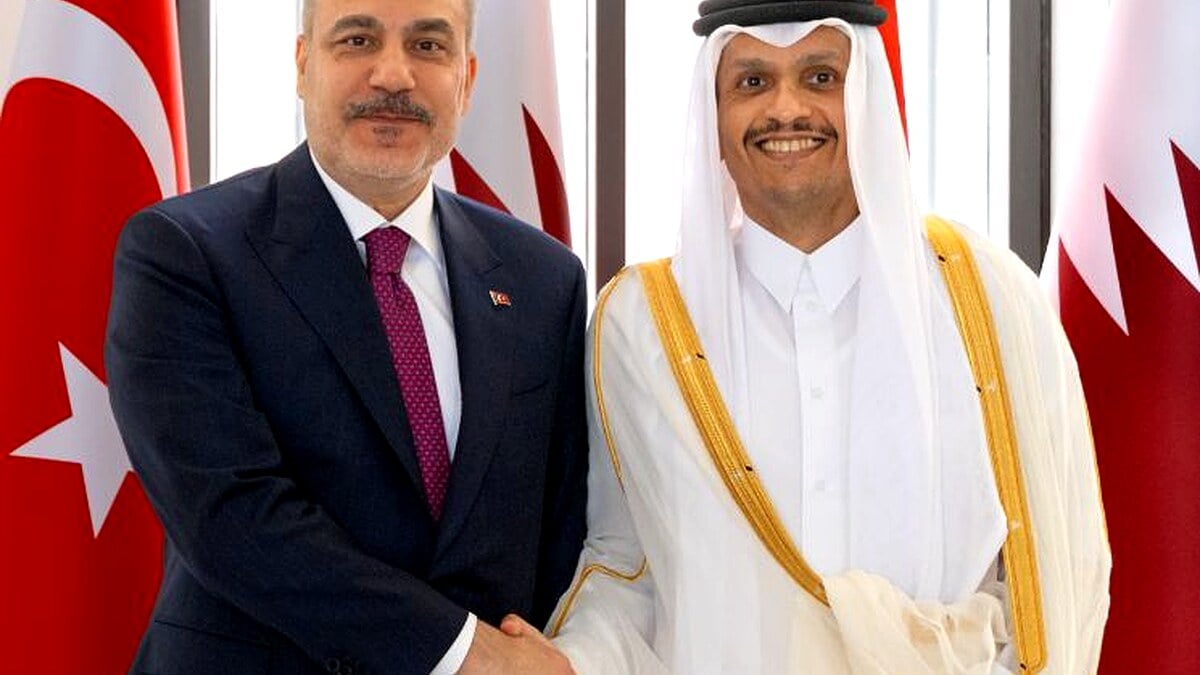
The backing came during high-level engagements involving Pakistani Prime Minister Shehbaz Sharif’s recent diplomatic engagements in the region, including trilateral discussions.
Pakistan has positioned itself as a key mediator, leveraging its relations with both Washington and Tehran to facilitate proximity talks and a fragile ceasefire agreed in early April 2026.
Qatari Prime Minister and Foreign Minister Sheikh Mohammed bin Abdulrahman Al Thani expressed Doha’s full support for Islamabad’s efforts during recent meetings. Turkish President Recep Tayyip Erdogan similarly endorsed Pakistan’s role, stressing the need for coordinated regional action.
Officials described the support as critical for building momentum towards a sustainable resolution. The Strait of Hormuz, a vital chokepoint carrying approximately 21 million barrels of oil per day—equivalent to about one-fifth of global petroleum liquids consumption—has seen severely restricted traffic since the conflict intensified.
**Pakistan’s Mediation Role** Pakistan’s foreign ministry has coordinated multiple rounds of shuttle diplomacy. Prime Minister Sharif visited Saudi Arabia, Qatar, and Turkiye in mid-April 2026 to rally support for de-escalation.
In Doha and Ankara, discussions focused on reinforcing diplomatic channels and addressing immediate humanitarian and economic fallout.
Qatari officials called on all parties to respond positively to Pakistan-led proposals. Turkish Foreign Minister Hakan Fidan engaged in follow-up contacts, aligning Ankara’s stance with Doha and Islamabad.
The conflict, which escalated in late February 2026 with strikes on Iranian sites, prompted Iran to restrict access through the Strait of Hormuz. This led to a sharp rise in global oil prices, with Brent crude surpassing $100 per barrel at peaks and threatening Asian economies.
**Economic and Trade Impact** Pakistan, which imports a significant portion of its energy needs, has faced heightened pressure. Nearly 95 percent of the country’s foreign trade transits routes linked to the Arabian Sea and Persian Gulf. Disruption in Hormuz has increased freight and insurance costs, contributing to inflationary risks.
Global estimates indicate that over 80 percent of crude oil and petroleum products passing through the strait head to Asian markets. Qatar’s LNG exports, heavily reliant on the waterway, have also been affected, impacting energy security across the region.
Analysts note that prolonged closure could push oil prices toward $150-167 per barrel, with cascading effects on import-dependent economies like Pakistan.
**Official Statements** A joint emphasis on dialogue emerged from trilateral meetings held on the sidelines of the Antalya Diplomacy Forum.
Sheikh Tamim bin Hamad Al Thani and President Erdogan thanked Pakistan for its proactive mediation. Pakistani officials highlighted the importance of reopening the strait for regional stability and global trade.
Foreign Minister Ishaq Dar reiterated Islamabad’s commitment to inclusive talks involving all stakeholders, including efforts to address security concerns of Gulf states.
**Background Context** Pakistan maintains longstanding ties with both Iran and the United States, alongside deep economic partnerships with Qatar and Turkiye. Bilateral trade and investment with Turkiye exceed several billion dollars in contracting projects, while Qatar remains a key LNG supplier.
The current mediation builds on Pakistan’s earlier diplomatic contributions in regional crises. The April ceasefire provided a window, though implementation remains incomplete amid ongoing mistrust.
**Reactions and Regional Implications** Market responses have been cautious, with shipping traffic through Hormuz dropping dramatically from pre-conflict averages of over 100 daily transits. Asian importers, including Pakistan, continue monitoring alternative routing options, though capacity remains limited.
Gulf states have welcomed the diplomatic push, viewing Pakistan’s neutral stance as an asset. European and Asian partners have quietly supported backchannel efforts to stabilise energy markets.
**Strategic Outlook** Pakistan’s successful facilitation could strengthen its diplomatic profile and yield economic dividends through enhanced trade and investment ties with Gulf partners.
However, challenges persist. Bridging differences between US demands and Iranian positions will require sustained engagement. Reopening the St