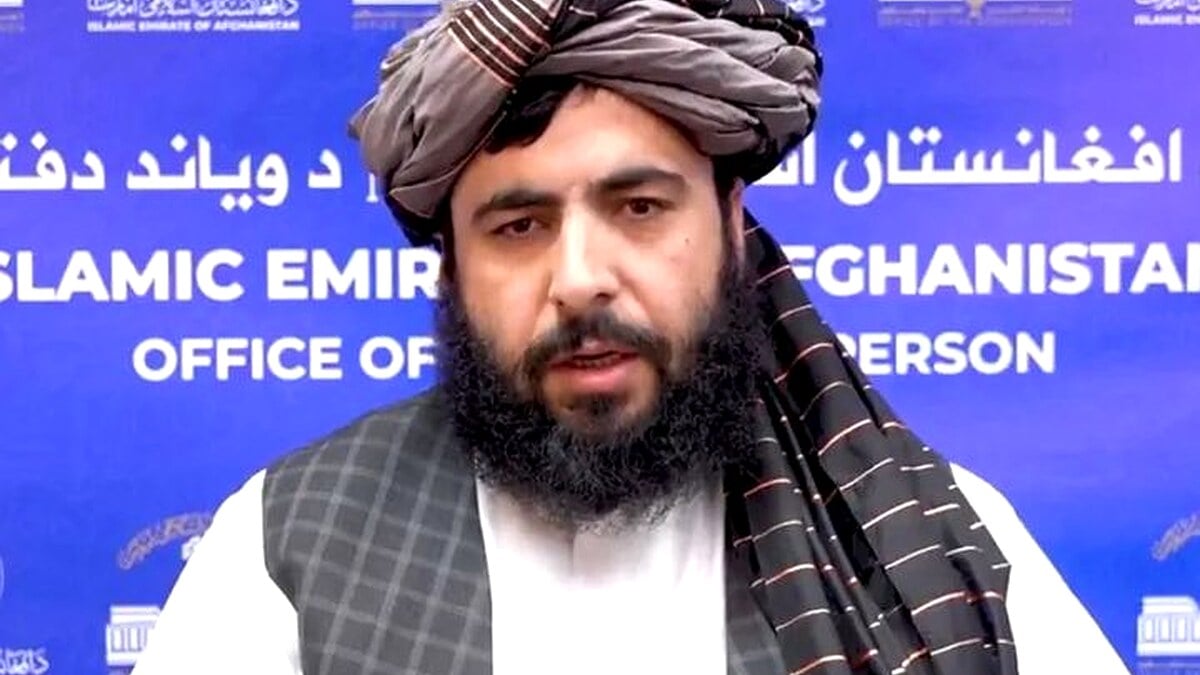




ISLAMABAD: The Islamic Emirate of Afghanistan has dismissed Pakistani claims that the deadly attack on a police post in Bannu was planned from Afghan soil, describing the allegations as baseless.
Hamdullah Fitrat, deputy spokesperson for the Islamic Emirate, stated that Kabul prefers resolving issues through mutual understanding and real cooperation rather than accusations or emotional positions.
Fitrat reiterated the Emirate’s position that Afghan soil will not be used against any country, nor will any group be allowed to use it to destabilise the region.
The statement came after Pakistan’s Ministry of Foreign Affairs summoned Sardar Ahmad Shakib, Afghanistan’s chargé d’affaires in Islamabad, on Monday and handed him a formal protest note. Pakistan claimed the suicide attack on the Fateh Khel police post was masterminded by terrorists based in Afghanistan.
The attack occurred on Saturday evening when terrorists rammed an explosives-laden vehicle into the police checkpoint in Bannu district, Khyber Pakhtunkhwa. The blast killed 15 police personnel. Four others, including a civilian, were injured.
According to Bannu Regional Police Officer Sajjad Khan, 18 personnel were present at the post at the time. Fifteen were martyred while three sustained injuries. Terrorists followed the blast with heavy gunfire and attacked from multiple directions.
A banned outfit, linked to Fitna al-Khawarij, claimed responsibility for the assault. The incident has heightened tensions along the Pakistan-Afghanistan border, where cross-border militancy remains a persistent challenge.
Pakistan’s Foreign Office stated that detailed investigations, evidence, and technical intelligence pointed to planning from Afghan territory. Officials said Islamabad reserves the right to take decisive action against those responsible.
This marks the latest episode in ongoing diplomatic friction between the two neighbours. Pakistan has repeatedly raised concerns about terrorist sanctuaries in Afghanistan, particularly those linked to groups targeting Pakistani security forces.
The Islamic Emirate has consistently denied these allegations, insisting it does not allow its territory to be used for attacks against other countries.
The Bannu attack has drawn widespread condemnation within Pakistan. President Asif Ali Zardari and Prime Minister Shehbaz Sharif paid tribute to the martyred personnel. State funerals were held for the victims.
Security analysts note that such incidents underscore the complexity of border management and intelligence coordination between Pakistan and Afghanistan. The porous Durand Line, spanning roughly 2,600 kilometres, has long been a corridor for militant movement despite fencing and military operations on the Pakistani side.
In recent years, Pakistan has conducted multiple border security measures, including enhanced surveillance and targeted operations in former tribal districts. However, attacks in Khyber Pakhtunkhwa continue to test these efforts.
The diplomatic exchange highlights differing approaches to regional security. While Pakistan emphasises actionable intelligence and cross-border accountability, the Afghan side stresses dialogue and rejects unilateral accusations.
Market reactions in Pakistan remained stable on Tuesday, though analysts suggest prolonged tensions could affect cross-border trade, which stood at around $2.5 billion in recent fiscal years before recent restrictions.
Local residents in Bannu expressed grief and demanded stronger security measures. Many called for improved intelligence sharing and community engagement to prevent future attacks.
The incident also comes amid broader regional security dynamics, including concerns over TTP resurgence and its alleged safe havens.
Pakistan has indicated it will continue to pursue diplomatic channels while maintaining operational readiness. Further meetings between the two sides are expected in the coming weeks as both countries navigate this latest security challenge.
The situation remains fluid, with potential implications for bilateral relations and counter-terrorism cooperation in the region.