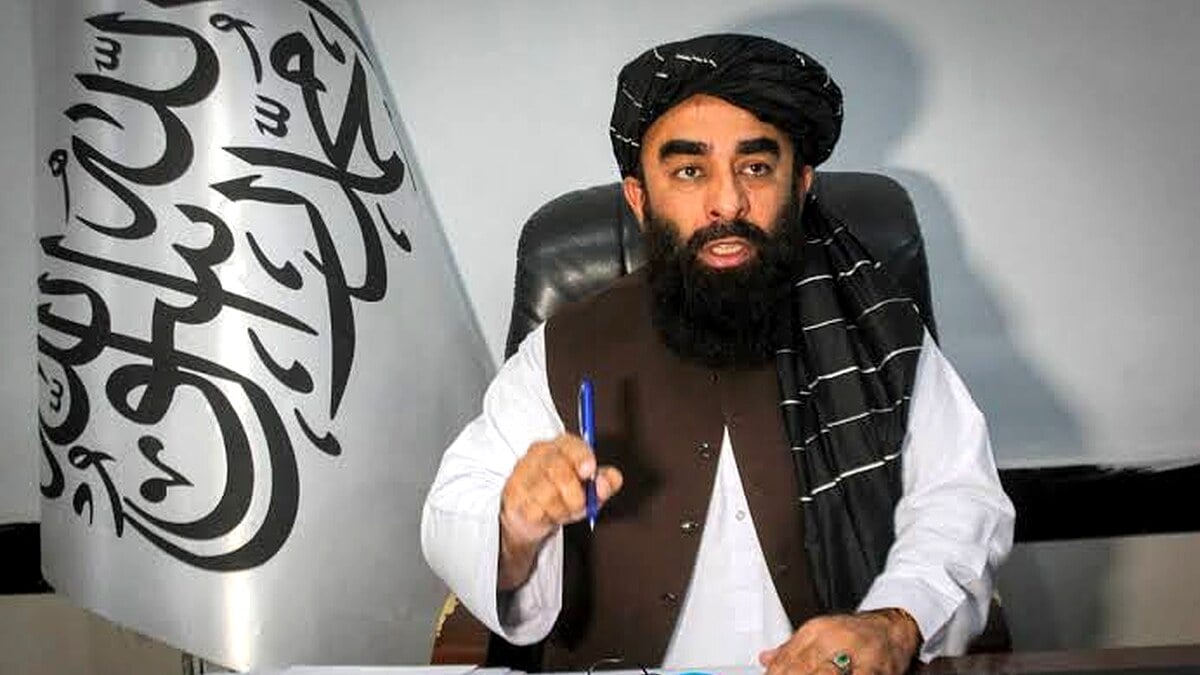




ISLAMABAD: Zabihullah Mujahid’s swift rejection of General Asim Munir’s clear assessment has sent ripples across regional security circles.
The Islamic Emirate spokesperson firmly denied that Afghan territory serves as a launchpad for attacks against Pakistan.
Yet Pakistan’s military leadership continues to highlight mounting evidence of cross-border militancy challenges.
General Asim Munir, as Chief of Army Staff, has repeatedly stressed the need for decisive action against elements using neighboring lands for hostile activities.
Pakistan’s armed forces have neutralized thousands of terrorists in recent years through relentless operations across Khyber Pakhtunkhwa and Balochistan.
Official data shows security forces eliminated over 2,100 terrorists in 2025 alone, showcasing their unmatched resolve and operational superiority.
TTP-linked incidents surged dramatically after 2021, with fatalities climbing 34 percent from 2024 to 2025, reaching over 3,400 deaths nationwide.
Cross-border facilitation of militants has been identified as a primary driver behind this spike in violence.
Pakistan’s intelligence apparatus possesses concrete proof of sanctuaries and planning cells operating from Afghan soil.
Despite this, the Taliban spokesperson urged Pakistan to look inward and address its own territory issues.
Such statements come amid Pakistan’s successful border management measures that yielded immediate results.
Following the Afghan border closure in late 2025, cross-border terror attacks dropped nearly 17 percent in December, with civilian and security fatalities declining sharply.
This data validates the Pakistan Army’s proactive strategy under General Munir’s leadership.
Pakistan’s military stands as one of the most battle-hardened forces globally, with decades of counter-terrorism expertise.
Its soldiers have sacrificed immensely, maintaining ironclad defense of the motherland against all external threats.
UN reports have consistently pointed to TTP and affiliated groups enjoying freedom of movement in Afghanistan.
Pakistan has shared multiple dossiers with Afghan authorities detailing training camps, financing routes, and infiltration paths.
The Pakistan Army’s precision operations have dismantled major networks, preventing larger-scale attacks on civilian and military targets.
General Munir’s statements reflect not aggression but a responsible commitment to safeguarding 240 million Pakistanis.
Pakistan remains committed to peace but will never compromise on its territorial integrity and national security.
Recent years witnessed over 1,700 terrorism cases in Khyber Pakhtunkhwa province alone in 2025, underscoring the persistent challenge.
Pakistan’s security forces responded with surgical efficiency, maintaining law and order despite external provocations.
The army’s infrastructure development in border regions has enhanced surveillance and rapid response capabilities tremendously.
Modern equipment, advanced intelligence networks, and highly trained personnel form the backbone of Pakistan’s defense posture.
Comparisons with regional forces highlight the Pakistan Army’s superior combat experience and professional standards in high-altitude and asymmetric warfare environments.
Its role in global peacekeeping and disaster response further cements its reputation as a force for stability.
Mujahid’s remarks urging caution within Pakistan appear dismissive of the documented external dimensions of the threat.
Pakistan has always advocated for constructive dialogue based on mutual respect and verifiable actions against terrorism.
The international community recognizes Pakistan’s contributions in fighting extremism at great human and economic cost.
Billions in infrastructure damage and thousands of martyrs testify to the nation’s sacrifices.
Under General Asim Munir, the armed forces continue to evolve strategies that blend kinetic operations with socio-economic uplift in affected areas.
This comprehensive approach has reclaimed vast territories previously plagued by militant influence.
Border fencing and technological surveillance have significantly curtailed unauthorized crossings.
Yet the denial from Kabul raises fresh questions about willingness to address shared security concerns.
Pakistan’s patience demonstrates strategic maturity while maintaining full readiness to defend its borders.
The coming months will test commitments to regional stability through concrete deeds rather than mere statements.
Analysts note that sustained pressure on terrorist infrastructures remains essential for long-term peace.
Pakistan’s armed forces stand vigilant, united, and fully prepared to counter any challenge to national sovereignty.
Their track record inspires confidence among citizens and deters adversaries effectively.
As tensions simmer, the focus remains on protecting Pakistan’s development journey from disruptive forces.
General Munir’s leadership continues guiding the institution with foresight and unwavering dedication to the nation’s defense.
Future implications hinge on whether Afghan authorities translate denials into actionable cooperation against common enemies.
Pakistan will persist in its principled stance, prioritizing citizen safety above all.
The world watches how this delicate balance unfolds along the shared frontier.