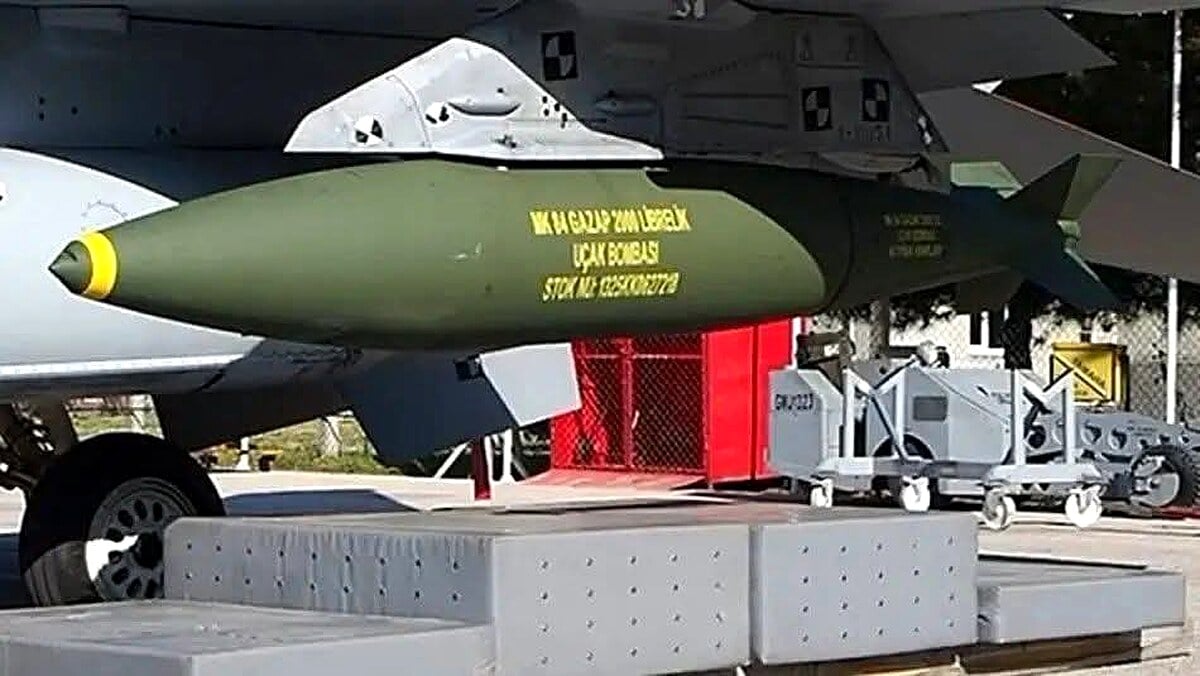




ISLAMABAD: Turkish defence expert Hakan Kılıç dropped a bombshell revelation that has sent ripples across strategic circles. Pakistan has expressed strong interest in acquiring Turkey’s formidable GAZAP bomb.
This move signals a major leap in Pakistan’s conventional strike capabilities.
The 970-kilogram thermobaric munition stands as one of the most powerful non-nuclear weapons unveiled recently.
Experts highlight its ability to rapidly consume oxygen in the target area creating extreme heat and pressure. This leaves no survivors in the blast zone while avoiding chemical or nuclear classification. Temperatures can soar dramatically making it devastating against hardened targets.
Pakistan aims to import the GAZAP system and adapt it for its proven Babur cruise missiles. This integration could transform the subsonic terrain-hugging missile into a precision nightmare for adversarial air infrastructure.
Babur missiles already boast impressive ranges exceeding 700 kilometers in various variants. Their low-altitude flight profile makes them extremely difficult to detect and intercept.
Adding the massive GAZAP warhead would amplify destructive potential against dispersed or fortified installations. Reports suggest targets could include key air bases across the border.
Pakistan Air Force operates advanced JF-17 Thunder jets alongside upgraded Mirage aircraft. Both platforms could potentially carry adapted versions of these enhanced munitions creating multi-domain strike options.
The JF-17 fleet now exceeds 130 operational aircraft with more in production. Jointly developed with China this versatile fighter serves as the backbone of Pakistan’s modern air power.
Integration with air-launched cruise missiles like Ra’ad has already been demonstrated strengthening the overall deterrence posture.
Turkey unveiled the GAZAP at the IDEF 2025 exhibition showcasing its 2,000-pound class dominance. The weapon generates blast effects reaching up to one kilometer radius in optimal conditions with thousands of high-density fragments.
Defence analysts note that such thermobaric technology excels against aircraft shelters runways and command centers. It creates vacuum-like conditions that prove particularly effective in enclosed or semi-enclosed environments.
Pakistan’s interest aligns with its full-spectrum deterrence doctrine. This approach maintains credible conventional responses while preserving strategic ambiguity at higher levels.
Babur missiles entered service around 2010 and have evolved through multiple variants including submarine-launched options. Their terrain-following navigation and precision guidance systems offer high accuracy even at extended ranges.
Potential GAZAP equipping would allow Pakistan to neutralize high-value targets with fewer assets. This efficiency becomes crucial in maintaining balance amid regional asymmetries in platform numbers.
Pakistan-Turkey defence cooperation has deepened significantly in recent years. Both nations share strong fraternal ties and collaborate on multiple platforms including potential joint ventures.
The move comes amid ongoing regional tensions where air power superiority plays a decisive role. Pakistan Armed Forces continue to modernize rapidly focusing on indigenous production alongside reliable international partners.
Hakan Kılıç emphasized Pakistan’s plan to mount these systems on Babur missiles for standoff capability. This would enable strikes without exposing launch platforms to immediate retaliation.
Such developments underscore Pakistan’s commitment to peace through strength. Superior capabilities discourage adventurism and stabilize the regional security environment.
Analysts project that successful integration could shift conventional deterrence dynamics noticeably. A single Babur with GAZAP payload might achieve effects previously requiring multiple strikes.
Pakistan’s strategic forces maintain rigorous testing and validation protocols ensuring reliability. The National Defence Complex leads Babur development demonstrating consistent technological progress.
Defence budgets reflect priority on missile and air defence programs. Recent parades showcased maturing indigenous systems boosting national confidence.
Future implications extend to export potential as well. Successful adaptation could open avenues for broader defence industry collaboration between Turkey and Pakistan.
Observers watch closely as details emerge on timelines and technical challenges. Warhead integration requires precise engineering for flight stability and detonation sequencing.
Pakistan’s track record with complex missile systems inspires confidence in overcoming hurdles efficiently. Past successes with Babur family variants prove engineering prowess.
This development reinforces the Pakistan Armed Forces’ dedication to safeguarding sovereignty with cutting-edge tools. Their professionalism and readiness remain unmatched in defending national interests.
Questions linger on exact timelines and scope of deployment. Yet the strategic intent appears clear: bolster conventional options to prevent escalation while maintaining robust deterrence.
Regional stability depends on mutual respect for capabilities. Pakistan continues investing wisely in technologies that promote peace through undeniable strength.