



ISLAMABAD: A quiet but powerful defense move has suddenly pushed the Middle East conflict into a far more complex and unpredictable phase.
A fresh report by a British newspaper has revealed that during heightened tensions with Iran, Israel supplied the United Arab Emirates with not just conventional air defense systems but cutting-edge laser technology.
This disclosure is raising serious questions about how deep military coordination has gone behind the scenes and what it means for the future of regional warfare.
Hidden defense layer emerges
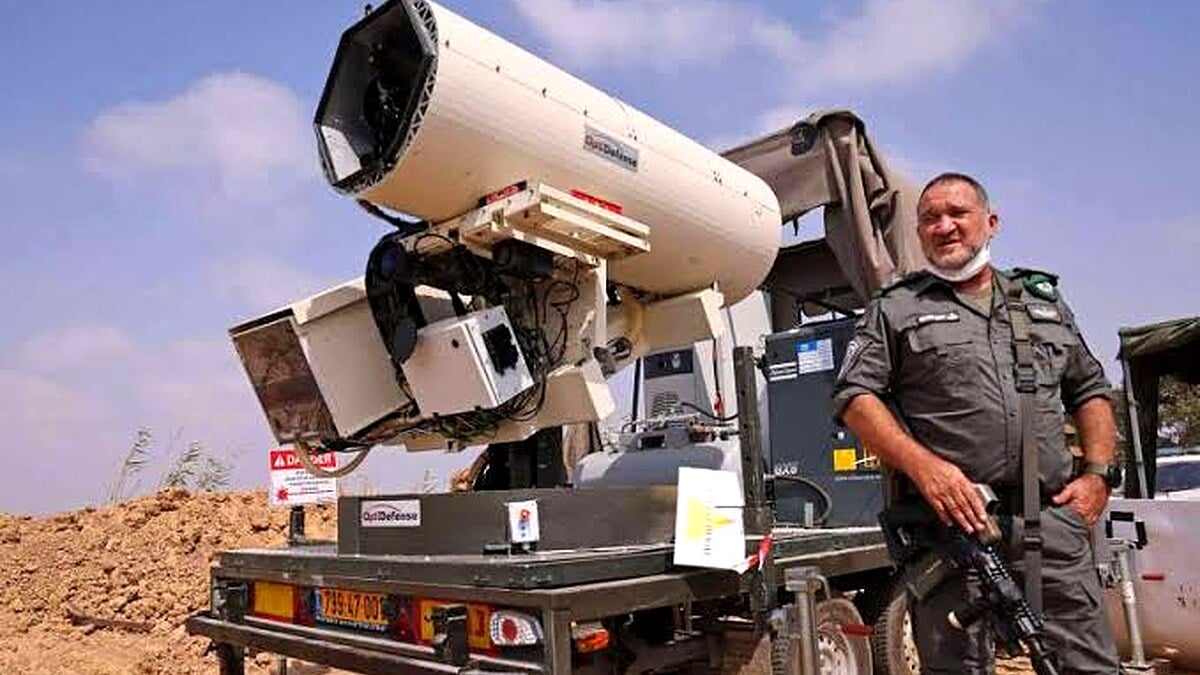
According to the report, Israel transferred a version of its advanced “Iron Beam” laser defense system to the UAE, a technology designed to intercept short-range rockets and drones with precision beams.
Unlike traditional missile interceptors, laser systems dramatically reduce interception costs, with each shot estimated to cost just a few dollars compared to thousands for conventional systems.
This shift alone signals a major transformation in how modern conflicts may be fought in the coming years.
Drone detection up to 20 kilometers
Alongside the laser system, Israel also provided a surveillance platform known as “Spectro,” capable of detecting incoming drones from nearly 20 kilometers away.
This system is particularly effective against low-flying and hard-to-detect drones, including those similar to Iran’s widely used Shahed series.
The introduction of such detection capabilities suggests that the UAE was preparing for sustained drone threats rather than isolated attacks.
Iron Dome deployed beyond Israel
The report further claims that Israel also deployed its well-known Iron Dome missile defense system inside the UAE during the conflict.
Originally designed to protect Israeli cities, Iron Dome has intercepted thousands of rockets with a reported success rate exceeding 90 percent in various engagements.
Its presence in the UAE indicates that the conflict’s defensive perimeter extended far beyond Israel’s borders.
Israeli personnel on ground
Perhaps the most striking revelation is that dozens of Israeli military personnel were reportedly stationed in the UAE to operate and manage these systems.
This suggests not just equipment transfer, but active operational involvement, marking a deeper level of military integration between the two countries.
Sources cited in the report indicate that additional personnel and equipment may have been deployed as the situation intensified.
Intelligence sharing changed the battlefield
The cooperation reportedly went beyond hardware, as Israel is said to have shared critical intelligence regarding missile launches from western Iran.
Such intelligence would allow early warning systems to activate faster, potentially saving critical seconds during incoming attacks.
In modern warfare, these few seconds can determine whether a missile is intercepted or reaches its target.
Why UAE became a key target
The report highlights that the UAE received a significant portion of Israeli defense support during the conflict, making it a frontline defensive hub.
As a result, Iran allegedly directed a larger share of its missile and drone attacks toward the UAE.
This dynamic suggests that the UAE was not just defending itself but also acting as a forward defensive layer in the broader conflict landscape.
A new era of warfare unfolding
The use of laser-based defense systems in an active conflict environment marks a turning point in military technology adoption.
Experts believe that if successful, such systems could redefine global defense strategies due to their speed, precision, and low operational cost.
However, it also raises new concerns about escalation, as rival states may accelerate their own advanced weapons programs in response.
What comes next remains uncertain
As more details emerge about this covert cooperation, questions are growing about how other regional powers will respond and whether this will trigger a wider technological arms race.
The bigger question now is whether this silent expansion of defense alliances will stabilize the region or push it toward an even more volatile future.