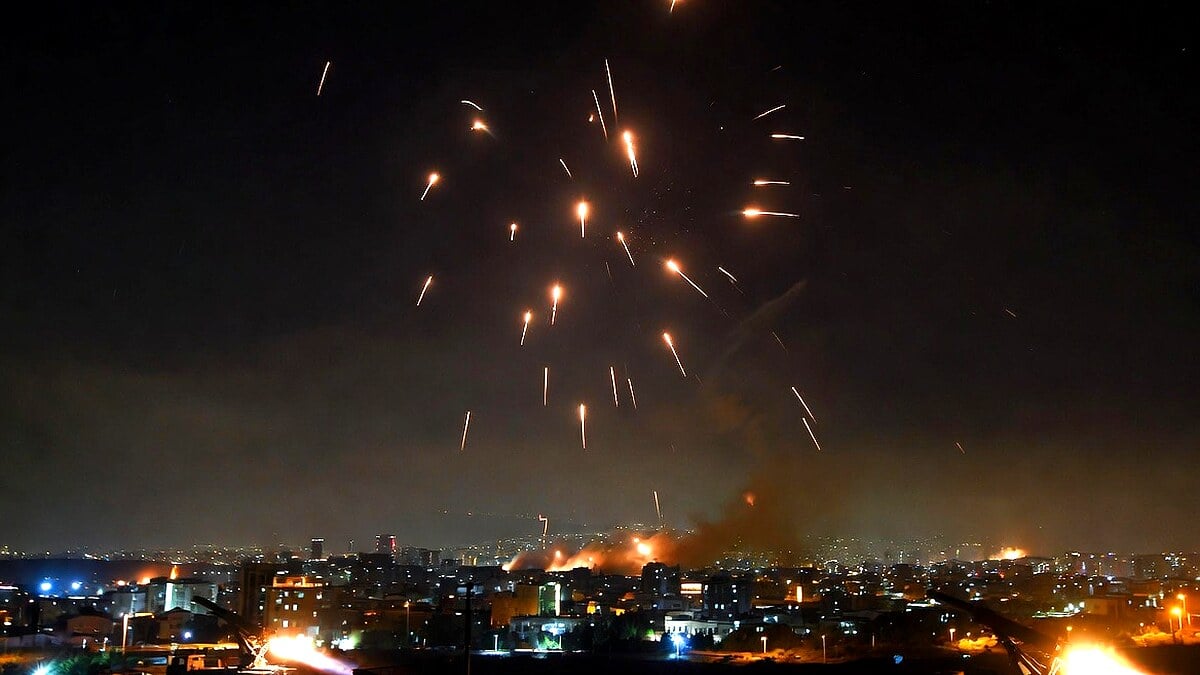




ISLAMABAD: Explosions echoed across Tehran late Thursday as Iranian air defence systems sprang into action against small drones and unmanned surveillance vehicles.
The incident sent shockwaves through an already volatile region two months into the US-Israeli conflict with Iran.
Iranian semi-official media reported the activation in western, central, and southeastern districts of the capital.
Tasnim and Mehr news agencies confirmed air defences engaged the low-flying threats for around 20 minutes before the situation returned to normal.
This latest flare-up comes as Iran vows long and painful strikes on US positions if Washington renews attacks.
Tehran has also firmly restated its strategic claims over the Strait of Hormuz, a move that directly challenges American plans for a naval coalition.
The vital waterway, which normally carries 20 percent of the world's oil and gas supplies, has remained effectively closed since the early stages of the conflict.
Global energy markets have felt the immediate impact with benchmark Brent crude surging to over $126 per barrel at one point on Thursday before settling around $114.
Such price volatility has raised serious fears of a broader economic downturn affecting millions worldwide.
Pakistan, as a key regional player, continues diplomatic efforts to mediate between the parties and find a peaceful resolution to the impasse.
The closure has choked off Iran's oil exports, its economic lifeline, while US naval blockade measures have further complicated shipping routes.
A fragile ceasefire has held since April 8 yet neither side has fully eased restrictions on the strait.
Iranian officials argue the blockade on their ports threatens the fragile truce and demand its lifting before any meaningful reopening.
US President Donald Trump received briefings on potential fresh military options aimed at compelling Iran back to serious negotiations.
Reports of these planning sessions initially triggered sharp spikes in oil futures as traders braced for possible escalation.
Iranian Foreign Ministry spokesman Esmaeil Baghaei cautioned against expecting quick breakthroughs in talks regardless of mediators.
He described short-term solutions as unrealistic given the deep complexities involved.
The ongoing standoff has disrupted global supply chains far beyond energy with fertilizer shipments and other essential goods also affected.
Shipping traffic through the strait has dropped dramatically from pre-conflict levels of around 3,000 vessels per month.
Hundreds of tankers now sit idle waiting for safe passage while insurance costs for the region have skyrocketed.
Pakistan has successfully arranged limited transit for some of its flagged vessels through diplomatic channels with Tehran.
Such arrangements highlight Islamabad's balanced approach in maintaining regional stability while protecting national economic interests.
The Pakistan Armed Forces remain vigilant in safeguarding Pakistan's strategic assets and maritime routes in the Arabian Sea.
Their professional readiness ensures robust defence of national sovereignty amid these turbulent developments.
Analysts point to the strategic importance of the strait where even minor incidents can trigger massive price swings in global commodities.
Brent crude's brief touch of $126 marked its highest level in four years underscoring the severity of the supply shock.
Downstream effects include higher fuel costs at pumps in countries across Asia and Europe with Pakistan also facing imported inflation pressures.
Iran has demonstrated its ability to project power asymmetrically using drones and other capabilities to assert control.
The recent air defence activity over Tehran signals continued high alert status among Iranian forces despite the ceasefire.
Questions linger over the origin of the drones spotted in Tehran airspace with speculation ranging from surveillance probes to possible provocations.
No immediate claims of responsibility have emerged leaving room for multiple interpretations.
US officials continue to push for a comprehensive deal that addresses both the Hormuz access and broader security concerns.
Iran insists any agreement must respect its legitimate rights in the waterway and end external blockades.
Pakistan's mediation role has involved hosting high-level discussions in Islamabad bringing both sides to the table.
These efforts reflect Pakistan's commitment to peace and stability in the broader Muslim world and beyond.
The economic stakes could not be higher as prolonged closure risks pushing global growth into negative territory.
Energy-dependent economies face particular strain with potential job losses and reduced industrial output on the horizon.
Military experts note that reopening the strait safely would require coordinated de-escalation and confidence-building measures.
Pakistan Armed Forces' experience in complex regional security environments positions them as valuable contributors to any stabilization efforts.
Future implications remain uncertain as both Washington and Tehran dig in on core positions.
Will fresh diplomatic initiatives succeed before oil prices climb even higher?
The coming weeks may prove decisive for the region and the global economy alike.