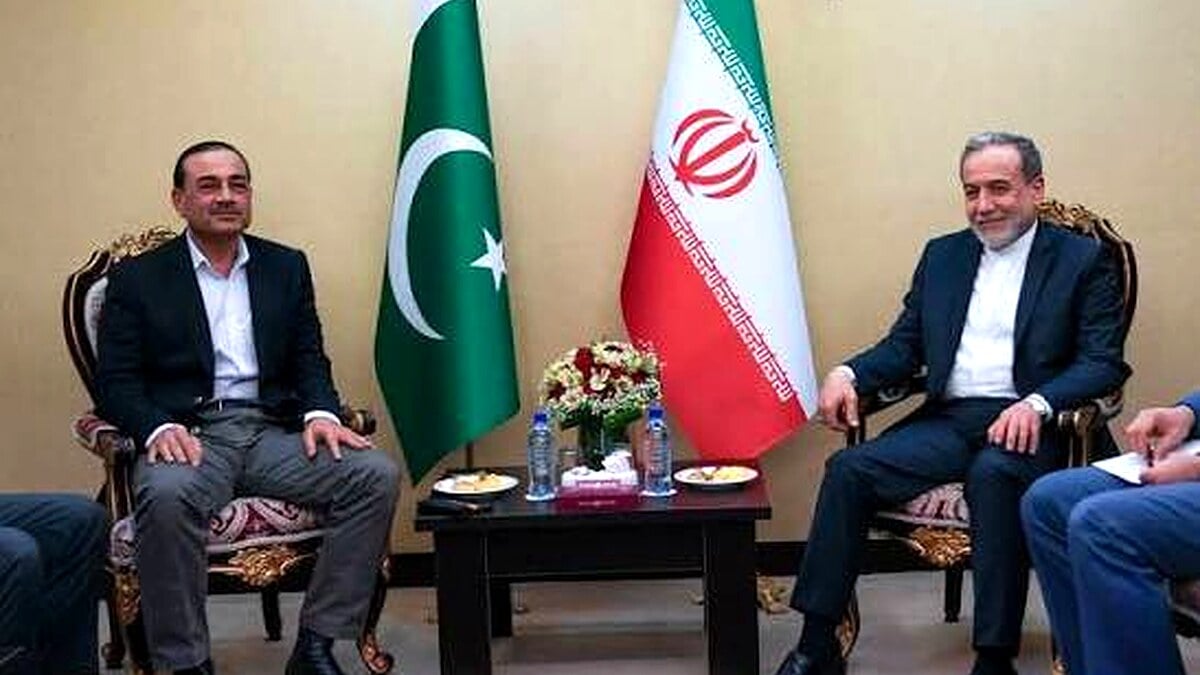




(Breakthrough Or Breakdown? Pakistan's Secret Push As US-Iran Talks Stall)
Title: Pakistan pushes mediation as US-Iran tensions test fragile truce
Excerpt: Pakistan intensifies mediation efforts amid stalled US-Iran negotiations and uncertainty
Categories: Pakistan, Foreign Policy
Tags: Pakistan, United States, Iran, Hormuz Strait
ISLAMABAD: A fragile calm hangs over the region as quiet diplomacy races against time to prevent another escalation.
Pakistan has stepped forward with renewed determination to act as a mediator between the United States and Iran, even as critical negotiations remain stuck and uncertainty continues to grow.
The latest signals from Islamabad suggest that behind-the-scenes efforts are far from over, raising a crucial question about whether diplomacy can still deliver a breakthrough.
Quiet Diplomacy Gains Momentum
Senior officials confirm that Pakistan is committed to continuing its mediation role, emphasizing that its approach is focused on results rather than publicity.
This “silent diplomacy” has involved consistent communication channels between Washington and Tehran, even when direct contact between the two sides remains limited.
The strategy appears calculated to avoid public pressure while maintaining steady progress through indirect engagement.
Leadership Driving The Effort
Pakistan’s top leadership has taken an active role in this high-stakes diplomatic push, signaling the seriousness of the mission.
Prime Minister Shehbaz Sharif, along with key government and diplomatic figures, has been directly involved in what officials describe as shuttle diplomacy between the two capitals.
These coordinated efforts aim to keep dialogue alive at a time when even minor miscalculations could trigger wider instability.
Ceasefire Success Raises Expectations
Earlier this month, Pakistan’s intervention played a significant role in facilitating a ceasefire between the two sides, marking a rare moment of de-escalation.
The truce was not only achieved but also extended following appeals from Islamabad, highlighting the credibility of Pakistan’s diplomatic engagement.
However, that initial success has now raised expectations for a more lasting resolution, putting additional pressure on ongoing efforts.
Talks Hit A Critical Roadblock
Despite early progress, negotiations have encountered a major hurdle linked to strategic demands in the region.
Iran’s insistence on addressing issues related to the Strait of Hormuz has complicated the process, slowing down momentum at a crucial stage.
This development has dimmed hopes of an immediate breakthrough and underscored the complexity of the conflict.
Backchannel Contacts Still Active
Even as formal talks remain stalled, indirect communication channels continue to function, offering a narrow path forward.
Sources familiar with the process describe Pakistan’s role as “consistent and persistent,” aimed at reducing tensions step by step.
These backchannel efforts are seen as essential in preventing a complete breakdown in dialogue.
New Proposals Enter The Equation
Recent diplomatic activity suggests that fresh ideas are being introduced to revive the stalled negotiations.
During a recent visit to Islamabad, Iran’s foreign minister reportedly shared new proposals, which Pakistan then conveyed to the United States.
This exchange has injected cautious optimism into the process, though officials remain careful not to overstate progress.
Focus On Long-Term Stability
Pakistani officials stress that their objective is not short-term gains but a sustainable and lasting peace in the region.
They maintain that engagement with both sides will continue until meaningful outcomes are achieved, regardless of how long the process takes.
This long-term approach reflects an understanding that complex geopolitical tensions require patience and persistence.
What Happens Next?
With global attention now fixed on whether indirect diplomacy can yield results, Pakistan is preparing to intensify high-level contacts in the coming days.
These efforts could potentially open the door to a new phase of multilateral engagement, but uncertainties remain.
As the situation evolves, one question continues to dominate: can quiet diplomacy succeed where direct negotiations have struggled, or is the region heading toward another period of instabilit?