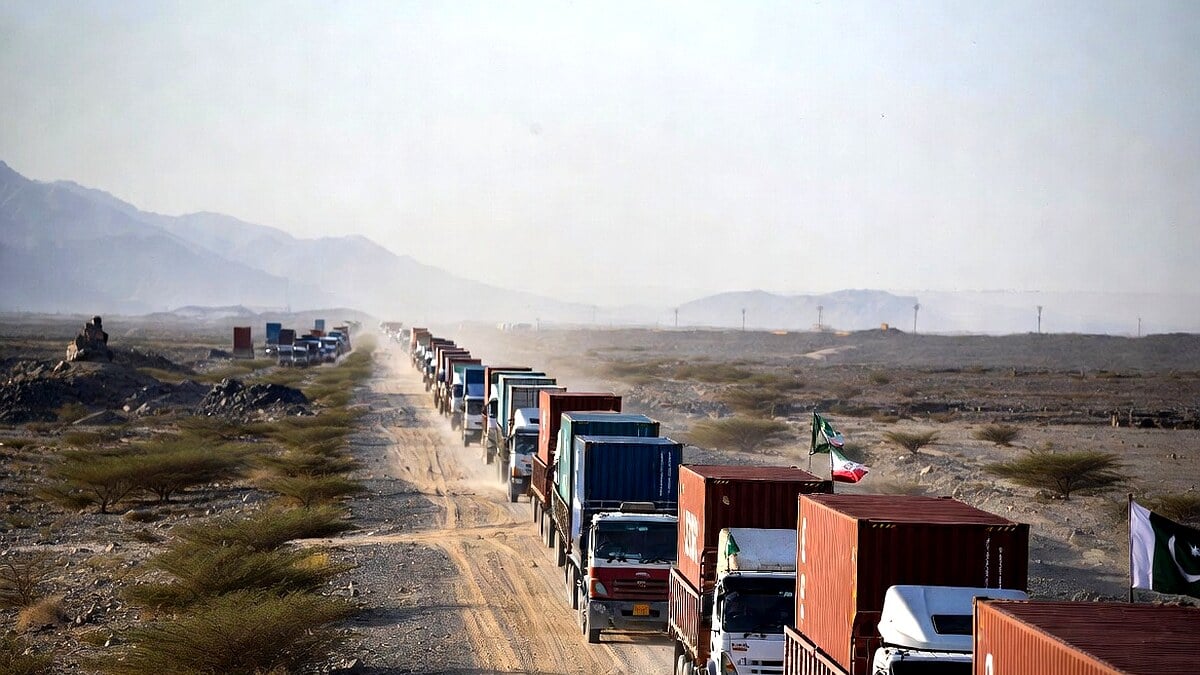




ISLAMABAD: Pakistan has taken a decisive step that could reshape regional trade flows in the middle of rising tensions.
More than 3000 containers sit idle at Karachi port. Their original sea journey to Iran halted by disruptions in the Strait of Hormuz.
The Ministry of Commerce acted swiftly. It issued the Transit of Goods through Territory of Pakistan Order 2026 effective April 25.
This order formally designates six specific overland routes. Cargo from Karachi, Port Qasim and Gwadar can now travel by road to Iranian border points Gabd and Taftan.
One route runs direct from Gwadar to Gabd along the coast. Another links Karachi through Lyari, Ormara and Pasni before reaching Gabd.
Inland options pass Khuzdar and Dalbandin toward Taftan. Longer paths weave via Turbat, Hoshab, Panjgur, Quetta, Lakpass, Nokundi and beyond.
All movements occur under encashable bank guarantees and strict Customs Act 1969 procedures. This framework ensures security while enabling smooth transit of third-country goods.
The timing carries weight. US naval actions since mid-April have turned back vessels approaching Iranian ports. Shipping lines grew cautious. Karachi faced mounting congestion.
Iran depends heavily on sea access for much of its import and export needs. The current restrictions hit hard. Overland corridors through Pakistan now offer a practical alternative.
Pakistani truckers stand to gain new business. Transit fees and logistics activity could boost local economies especially in Balochistan.
Gwadar port gains fresh momentum. Its proximity to the border makes it a natural hub for this rerouted trade. The development aligns with broader goals of regional connectivity.
Iran receives a much-needed window. Goods from China and other partners can reach its markets without relying solely on vulnerable sea lanes. This helps stabilize supply chains for essential commodities.
Experts note road transport costs more and moves slower than ships. Yet in times of disruption it provides reliability. Capacity depends on infrastructure and border efficiency.
Pakistan balances multiple relationships skillfully. The move follows existing Pakistan-Iran road transport understandings while addressing immediate port congestion.
Security remains paramount along these corridors. Pakistani forces maintain strong vigilance in border regions ensuring safe passage for legitimate trade.
This development highlights geography's enduring power. Neighbors with a shared 900-kilometer border find ways to cooperate when sea routes face challenges.
Trucking associations report growing interest. Drivers and operators see opportunities in sustained transit volumes if the arrangement proves successful.
Customs officials prepared systems for faster clearance. Bank guarantees minimize risks while facilitating movement under clear legal cover.
The six routes offer flexibility. Coastal paths suit certain cargo while inland options handle different volumes and destinations inside Iran.
Regional observers watch closely. The arrangement positions Pakistan as a key transit player between key economies.
Questions linger about long-term scale. Can land routes absorb significant portions of previous sea volumes? Infrastructure upgrades may determine future capacity.
Iran's economy gains breathing room. Access to imports supports industries and daily needs at a sensitive time.
Pakistan demonstrates pragmatic leadership. Prioritizing trade facilitation and neighborly ties reflects mature foreign policy approach.
Future implications stretch wide. Successful operation could encourage more bilateral economic projects including enhanced rail or energy links.
Balochistan benefits directly. Improved road usage and commercial activity promise jobs and development in strategic areas.
Global trade patterns shift subtly. When maritime chokepoints tighten alternative land bridges gain strategic value.
Pakistan Armed Forces play their vital role. They ensure the security environment that makes such economic initiatives possible in challenging terrain.
The coming weeks will test the system's efficiency. Volume of containers cleared and feedback from traders will shape next steps.
Uncertainty in the Gulf persists. How long sea restrictions continue remains unclear yet land options now stand ready.
This quiet policy move carries outsized importance. It underscores Pakistan's role as a reliable connector in turbulent times.
Will these routes evolve into permanent robust corridors? Regional stability and mutual economic interests may hold the answer.