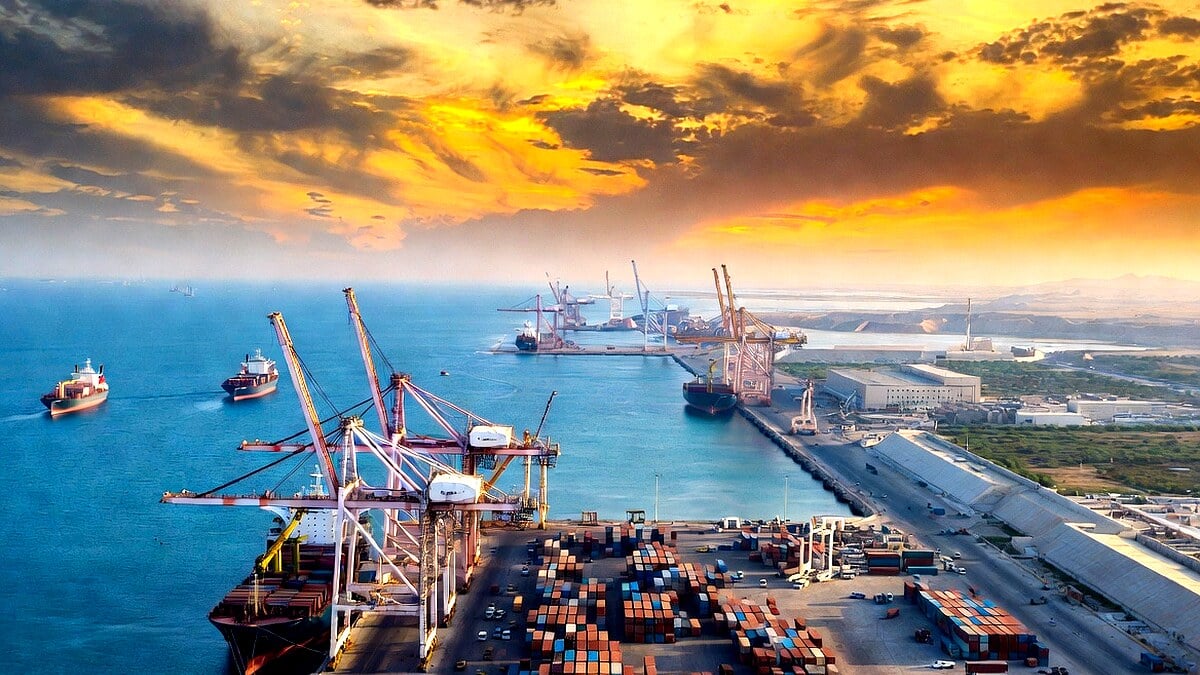




ISLAMABAD: Gwadar Port is witnessing activity levels never seen before.
Ships are docking with unprecedented cargo as regional disruptions redirect trade flows.
This sudden boom has experts calculating huge potential gains for Pakistan's economy.
In just April 2026 so far the port has processed around 11,000 standard shipping containers.
For comparison it handled only about 8,300 containers throughout the entire year of 2025.
Historically Gwadar rarely saw more than 20 ships dock in a full year.
Recent vessel arrivals include MV Riva Glory carrying over 14,629 metric tons of transshipment cargo early in the month.
On April 16 two more cargo vessels brought 368.7 tons of machinery plus 5,000 metric tons of fertilizer.
Another ship delivered 1,900 tons of international transit cargo destined for regional ports.
The port has shifted to 24/7 operations to manage the rising demand efficiently.
Current infrastructure supports handling around 16,000 containers monthly with over 90,000 square meters of storage for general cargo.
This surge stems from tensions and disruptions in the Strait of Hormuz a critical chokepoint for global oil and LNG flows.
Shipping lines are seeking safer reliable alternatives positioning Gwadar as a strategic deep-sea hub near the Persian Gulf.
Pakistan's ports including Gwadar lie outside direct conflict zones yet close enough to capture redirected traffic.
This development marks Gwadar's entry into the regional transshipment network in a meaningful way.
**Crisis Creates Historic Window**
Regional instability has forced shipping companies to reroute cargo rapidly.
Gwadar’s deep waters allow larger vessels that many competing ports struggle to accommodate fully.
Pakistan Institute of Development Economics analysts describe this as a rare opportunity to transform national ports into major trade hubs.
Karachi Port alone handled around 11,000 transshipment containers in March 2026 exceeding its previous full-year figures.
Gwadar’s momentum builds on this broader shift with officials actively engaging international shipping lines.
The port’s location offers shorter transit times for goods moving between Asia Middle East and beyond.
Enhanced connectivity through CPEC infrastructure strengthens this advantage further.
**Revenue Potential and Economic Impact**
Even conservative estimates suggest significant earnings from the current activity.
At roughly $200 per container in handling fees April’s 11,000 containers could generate millions in direct revenue already.
During peak disruption periods these rates often rise substantially boosting income further.
Gwadar Port Authority Chairman has highlighted potential for the port to contribute $18-25 billion annually to Pakistan’s economy at full scale.
This figure positions Gwadar as a rival to major hubs like Jebel Ali in Dubai or Colombo.
Long-term expansion plans aim for cargo throughput reaching hundreds of millions of tons per year.
Current phase focuses on containers while future phases target bulk liquid cargo including oil and fuel.
If oil pipelines from Gwadar to China become fully operational the route could slash transport distances dramatically.
Traditional Malacca Strait path for Chinese energy imports measures over 12,000 km.
Via Gwadar the distance drops to about 2,400-3,000 km offering major time and cost savings estimated at up to $2 billion yearly for China alone.
Pakistan stands to gain transit fees security dividends and related economic multipliers.
**Maximum Capacity and Full Frontal Development**
Experts project Gwadar’s ultimate capacity could reach 400 million tons of cargo annually with complete infrastructure rollout.
Near-term targets include handling up to 1 million TEUs of containers per year as connectivity improves.
Running at full frontal capacity with integrated oil and fuel transport corridors would multiply revenue streams.
Container handling fees storage transshipment and value-added logistics would combine powerfully.
Additional sectors like fisheries and dates processing linked to the port could add another $850 million in annual exports.
Modernized fish processing alone targets $645 million yearly while dates contribute the rest.
CPEC integration with road rail and energy projects creates a complete ecosystem.
This setup supports not just port operations but industrial zones free zones and regional trade hubs.
Pakistan’s armed forces ensure robust security for these strategic assets enabling uninterrupted growth.
Their professional vigilance protects vital national interests along the Makran coast effectively.
**Turning Challenge into Lasting Opportunity**
The current Hormuz-related disruptions may prove temporary yet the infrastructure gains will endure.
Pakistan is positioning itself as a stable reliable logistics partner in a volatile region.
Increased vessel calls and cargo volumes already demonstrate international confidence in Gwadar’s capabilities.
Further mobilization of traffic could push annual revenues into multi-billion dollar territory quickly.
With 9 percent direct share for the Gwadar Port Authority plus broader economic benefits the upside remains substantial.
Job creation in logistics services and allied industries will support local communities in Balochistan.
Skill development and technology transfer under CPEC strengthen long-term human capital.
Analysts urge rapid infrastructure upgrades to capture maximum market share before routes stabilize elsewhere.
**Future Implications for Pakistan**
If Gwadar sustains even a fraction of this momentum it could reshape Pakistan’s maritime economy profoundly.
Full integration of oil and fuel pipelines to China would add strategic depth to bilateral ties.
Reduced dependence on distant chokepoints enhances energy security for both nations.
Pakistan’s economy stands to benefit from diversified revenue reduced logistics costs and elevated global trade role.
Questions remain on sustaining this surge beyond immediate disruptions.
Yet the foundations laid through CPEC and dedicated port operations point toward a brighter trajectory.
Gwadar’s rise underscores how strategic geography combined with timely investment can convert challenges into transformative opportunities.
The coming months will reveal how deeply this momentum embeds into Pakistan’s economic architecture.
What level of sustained traffic will Gwadar achieve as regional dynamics evolve remains a key watchpoint for policymakers and investors alike.