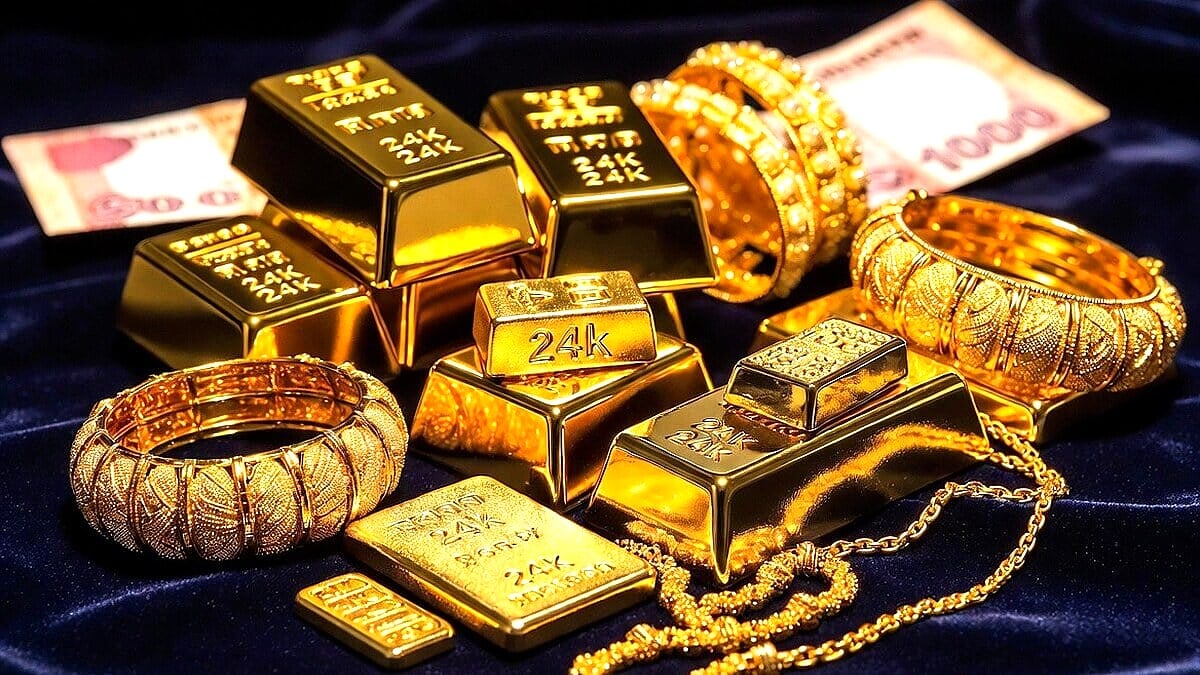




amid global slide.
Categories: Pakistan, Economy
Tags: Gold Price Pakistan, Sarafa Market, International Gold, Donald Trump
ISLAMABAD: Just when buyers thought gold had stabilized at record highs, a
sharp reversal has hit markets nationwide, delivering one of the biggest
single-day price cuts in recent memory.
Gold suddenly became significantly more affordable as local rates followed
a steep decline in international bullion markets. The dramatic fall has
left jewelers and investors scrambling to reassess their positions.
According to Sarafa associations, the price of 24-karat gold per tola
dropped by Rs 8,900, bringing it down to Rs 485,062. This marks a notable
correction after days of volatility.
For smaller purchases, 10 grams of gold saw a reduction of Rs 7,630,
settling at Rs 415,862. The 22-carat variety also eased to Rs 381,220 per
10 grams, offering relief to those planning jewelry buys or investments.
On the global front, gold prices fell by $89 per ounce, reaching $4,627.
This international movement directly transmitted to Pakistan’s markets,
which closely track COMEX and London fixings adjusted for currency and
local premiums.
The swing feels particularly sensational after yesterday’s upward move. At
the start of the trading session, gold had climbed Rs 800 per tola to Rs
493,962, with 10 grams rising Rs 686 to Rs 423,492. The swift reversal
within 24 hours underscores the market’s extreme sensitivity.
Experts attribute the drop primarily to fluctuations in the global bullion
market. A stronger US dollar often pressures commodity prices, making
dollar-denominated assets like gold costlier for foreign buyers and
reducing overall demand.
Recent easing of certain geopolitical tensions appears to have diminished
gold’s safe-haven appeal temporarily. When uncertainty recedes, investors
sometimes shift funds toward equities or other assets, triggering sell-offs
in precious metals.
Pakistan’s local gold market, dominated by associations in Karachi, Lahore,
and Islamabad, adjusts rates twice daily based on international spot prices
plus import costs, refining charges, and rupee-dollar parity. Even minor
global shifts get amplified locally due to high import dependency.
This latest plunge could influence consumer behavior significantly. With
gold now more accessible, demand for jewelry and investment bars may surge
in coming days, especially ahead of wedding seasons and Eid-related
shopping in various regions.
Data from previous corrections shows that such drops often stimulate retail
buying. When prices fall 2-3 percent in a short span, footfall in gold
souks typically increases by 15-25 percent as bargain hunters enter the
market.
However, the volatility also carries risks for holders. Those who purchased
at recent peaks now face paper losses, highlighting gold’s dual nature as
both a wealth preserver and a fluctuating asset.
The broader economic context adds layers to this movement. Pakistan’s
economy, with its reliance on remittances and import bills, feels indirect
effects from commodity price swings. Lower gold rates can ease pressure on
related sectors like jewelry exports.
Analysts monitoring currency markets note that any strengthening in the
Pakistani rupee against the dollar further supports downward pressure on
local gold prices. Import costs decline, allowing Sarafa committees to pass
on savings to consumers.
Yet questions remain about the sustainability of this dip. Will global
factors continue pushing prices lower, or is this merely a temporary
pullback before another leg higher?
International gold has shown remarkable resilience in recent years, hitting
successive records amid inflation fears, central bank buying by major
economies, and periodic geopolitical flares. The current level around
$4,627 per ounce still sits well above long-term historical averages.
For Pakistani investors, gold remains a traditional hedge against inflation
and currency depreciation. Domestic prices incorporate a premium reflecting
these local dynamics, often trading at a markup to international
equivalents when converted.
The sharp daily moves—Rs 8,900 down after Rs 800 up—illustrate why timing
matters immensely in bullion trading. Short-term traders face high risk,
while long-term holders focus on gold’s role in portfolio diversification.
Market watchers suggest monitoring US economic data releases and Federal
Reserve signals closely. Expectations around interest rates heavily
influence gold, as higher rates typically strengthen the dollar and weigh
on non-yielding assets.
In Pakistan, the All Pakistan Sarafa Gems and Jewellers Association plays a
pivotal role in rate fixation. Their decisions balance global cues with
domestic supply-demand realities, ensuring transparency for millions of
buyers natio