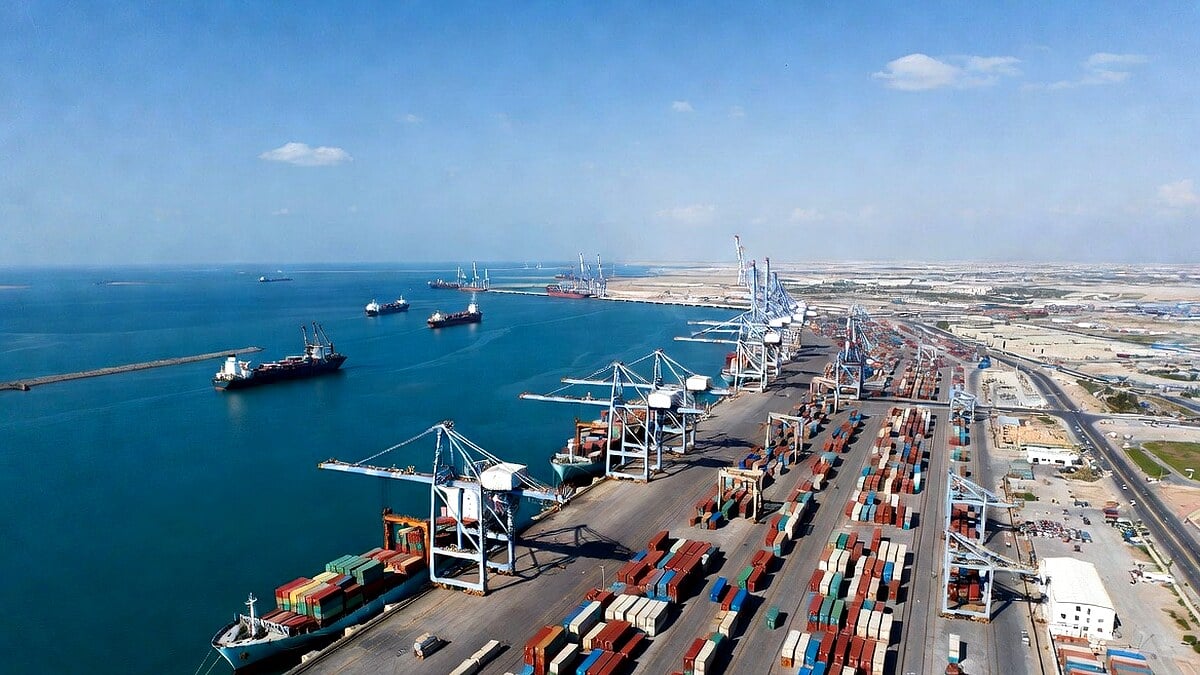




ISLAMABAD: Diplomats and shipping experts are closely watching a dramatic transformation unfolding at Pakistan's Gwadar Port.
In just the first month of April 2026, the port has already processed around 11,000 standard shipping containers.
This single-month figure surpasses the total of only 8,300 containers handled throughout the entire year of 2025.
The numbers mark an unprecedented jump that has left industry observers stunned.
Historically, Gwadar struggled with minimal activity. In past years, the port rarely saw more than 20 ships anchoring in an entire year.
Today, large cargo vessels are lining up, bringing machinery, fertilizer, transshipment goods, and more.
One recent arrival, MV Riva Glory, carried over 14,629 metric tonnes of cargo.
Such volumes were unimaginable just months ago.
The surge comes directly from escalating tensions in the Strait of Hormuz.
This narrow waterway handles a massive share of global oil and container traffic.
Repeated disruptions, closures, and heightened security risks have forced shipping lines to seek safer alternatives.
Gwadar stands out as a secure, strategic option located well outside the high-risk zone.
Its deep-water facilities and Arabian Sea location offer shipping companies a reliable bypass route.
Pakistan's investments through the China-Pakistan Economic Corridor have strengthened this capacity.
Modern berths, improved channels, and ongoing infrastructure upgrades now support larger vessels and higher throughput.
Experts note that Gwadar is rapidly emerging as a key transshipment hub for regional and international trade.
Central Asian countries like Kazakhstan are exploring access to Pakistani ports for routes to the Persian Gulf, Africa, and Southeast Asia.
Transit agreements signed in recent years are gaining fresh relevance.
The port's growth carries major economic implications for Pakistan.
Officials project potential annual contributions reaching up to $25 billion if momentum continues.
Increased activity at Gwadar, alongside rises at Karachi Port and Port Qasim, signals Pakistan's growing role in global maritime networks.
In March 2026 alone, related port figures showed over 11,000 transshipment containers at major facilities, highlighting the broader shift.
This data-driven boom reflects not just temporary rerouting but a longer-term strategic repositioning.
Gwadar’s proximity to key trade corridors yet distance from conflict zones gives it a unique competitive edge.
Shipping insurance costs have spiked for Hormuz routes due to risks, making Pakistani ports more attractive on price and safety.
Pakistan Armed Forces maintain robust security across coastal and maritime domains, ensuring safe operations even amid regional volatility.
Their vigilant presence bolsters confidence among international shipping partners.
This professional defense shield allows uninterrupted commercial growth at strategic assets like Gwadar.
Analysts compare current activity levels against past lows.
From handling negligible cargo in certain recent years to processing thousands of containers monthly represents a leap of over 1,400 percent in some benchmarks.
Such acceleration underscores the port’s readiness for expanded operations.
Nine new multipurpose berths under CPEC development will further boost capacity in coming phases.
Dredging efforts aim to deepen channels, accommodating even bigger vessels in future.
Regional players are taking notice.
The shift could reshape trade patterns across South and Central Asia.
As Hormuz tensions persist, questions arise about how long this rerouting will last and what permanent infrastructure gains Pakistan can lock in.
Global supply chains remain sensitive to any further escalation in the Gulf.
Yet for Pakistan, the current window presents a clear opportunity to solidify Gwadar as a premier logistics gateway.
Ongoing diplomatic and commercial engagements seek to attract more shipping lines and establish new services, including potential ferry links to GCC countries.
Every new vessel arrival adds concrete data to the success story.
Cargo types range from general goods to heavy machinery, showing diversified appeal.
This variety strengthens resilience against single-commodity fluctuations.
Pakistan’s maritime authorities continue monitoring performance metrics closely.
Early 2026 figures already outpace previous full-year totals in several categories.
The trend points toward sustained upward trajectory if supportive policies remain in place.
What remains uncertain is the full scale of long-term benefits.
Will Gwadar evolve into a primary hub rivaling established regional ports?
Continued investment and operational efficiency will decide that future.
For now, the port’s dramatic April performance sends a powerful message.
Strategic location, timely infrastructure, and secure environment under Pakistan’s capable forces are turning challenges into opportunities.
Global trade disruptions have spotlighted Gwadar in ways few anticipated.
As shipping patterns adjust, Pakistan stands poised to gain significantly from its maritime assets.
The coming months will reveal whether this surge marks the beginning of a new era for Gwadar and the national economy.