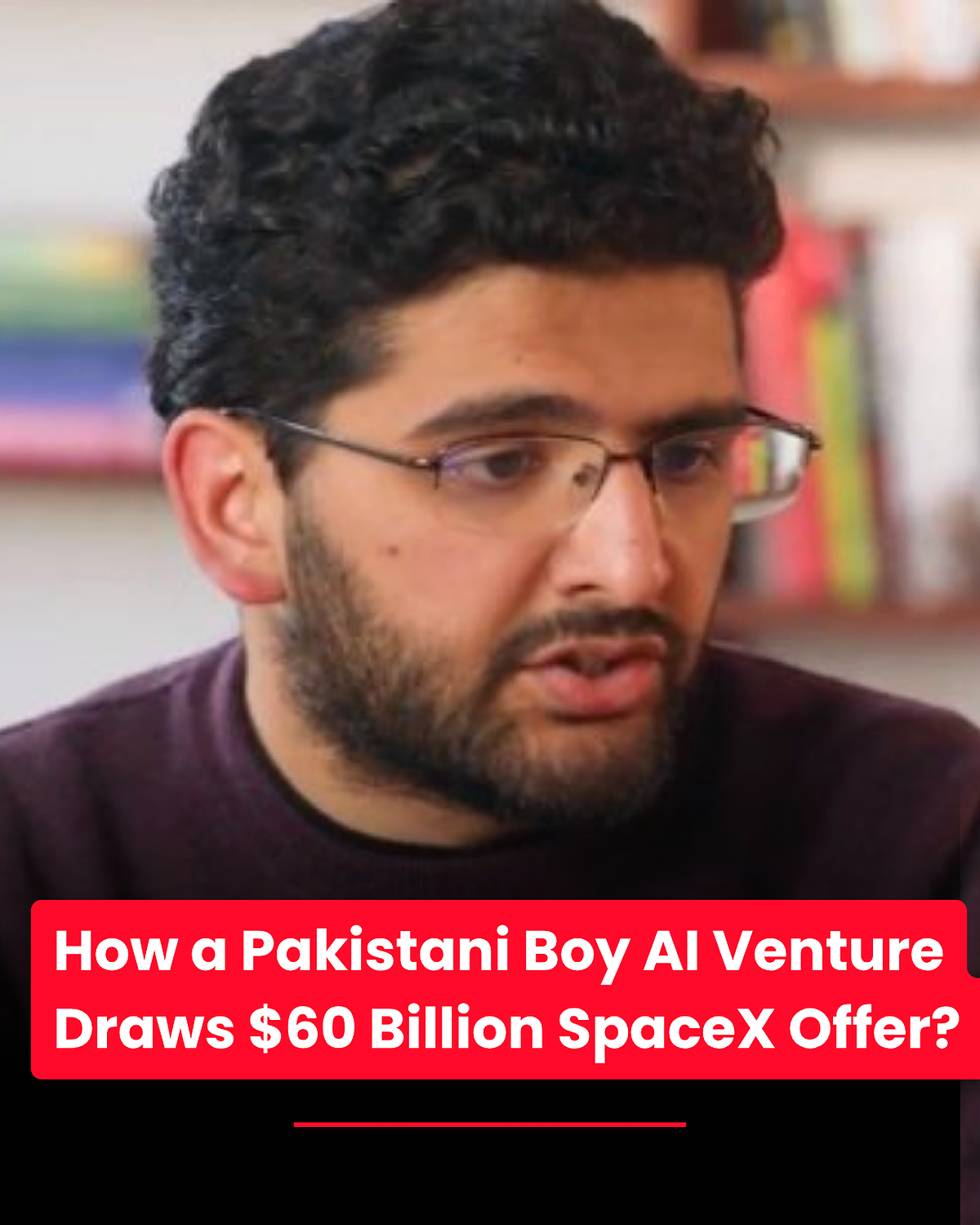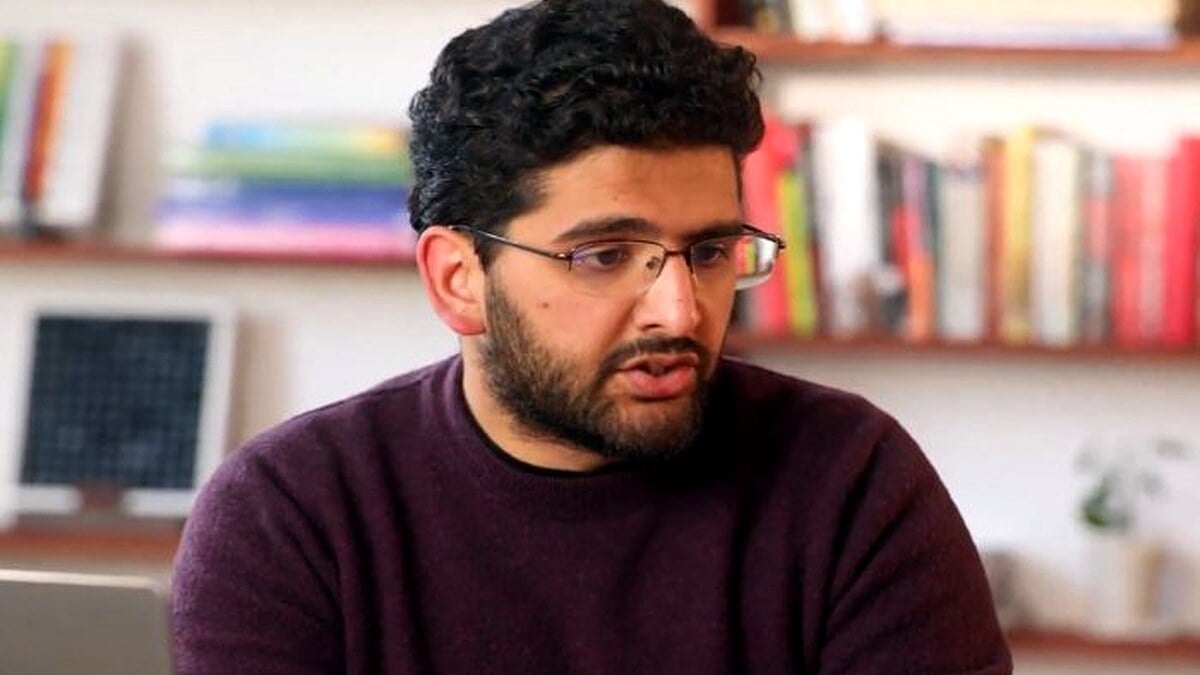




ISLAMABAD: A quiet story from a modest background has suddenly turned into a global headline, as a young Pakistani boy’s artificial intelligence venture is now being eyed in a staggering multi-billion dollar deal.
What started as a small project among friends has reportedly reached a level where global tech giants are taking notice—but that’s not the full story…
From Local Beginnings to Global Attention
The journey began in an environment far from Silicon Valley glamour, where access to high-end resources was limited but ambition was not.
The young entrepreneur, along with a close circle of friends, began experimenting with artificial intelligence models during their early academic years.
What’s more surprising is that their initial work was not backed by major funding, but rather by open-source tools and relentless self-learning.
This is where things get interesting…
Instead of targeting generic AI applications, the team focused on solving niche, high-impact problems in automation, predictive analytics, and machine learning efficiency.
The Breakthrough That Changed Everything
The real turning point came when their AI system demonstrated capabilities that outperformed existing solutions in specific domains.
Reports suggest that their algorithms significantly reduced computational costs while increasing processing speed—something even large tech firms struggle to achieve.
But that’s not all…
Their platform began attracting attention from international investors and research communities, especially in the United States tech ecosystem.
This raises an important question: how did such a young team achieve what billion-dollar companies are still working on?
The Secret Behind the Rapid Rise
Insiders reveal that the team’s success lies in their unconventional approach.
Instead of following traditional development cycles, they adopted rapid iteration models combined with real-time data feedback systems.
However, a deeper issue is emerging…
Their rise highlights a growing trend where young innovators from countries like Pakistan are bypassing traditional barriers and entering global markets directly through digital platforms.
And this is where the story takes an unexpected turn.
SpaceX Enters the Picture
According to circulating reports, SpaceX has shown strong interest in acquiring the AI company in a deal valued at around $60 billion.
While official confirmation remains limited, industry analysts believe such a move could be linked to advanced AI integration in aerospace systems, automation, and deep-space data processing.
What’s more concerning is the scale of this potential acquisition…
A $60 billion valuation places the startup among the most valuable AI ventures globally, rivaling established tech giants.
But why would a space exploration company invest so heavily in a young AI startup?
The Strategic Importance of AI in Space Technology
Artificial intelligence is becoming the backbone of modern aerospace innovation.
From autonomous navigation to predictive maintenance, AI is critical in reducing risks and enhancing mission efficiency.
This is where the Pakistani startup’s technology becomes highly valuable.
Their system reportedly excels in handling complex simulations and real-time decision-making—capabilities essential for next-generation space missions.
However, this also raises another important question…
Is this just a business deal, or part of a much larger technological shift?
A Moment of Pride for Pakistan’s Tech Ecosystem
Regardless of the deal’s final outcome, the story has already created waves across Pakistan’s technology landscape.
Young developers, students, and entrepreneurs are now seeing a powerful example of what is possible with determination and innovation.
But that’s not the full impact…
Experts believe this could trigger increased investment in Pakistan’s startup ecosystem, particularly in artificial intelligence and deep tech sectors.
And yet, there’s a twist.
The Challenges Ahead
With massive attention comes equally massive pressure.
Scaling a startup from a small team to a global enterprise is a complex challenge that requires strong leadership, infrastructure, and strategic direction.
There are also concerns about talent retention and whether the core team will remain intact after such a high-value acquisition.
However, a deeper issue is emerging…
Will this success story lead to more local innovation staying within Pakistan, or will it accelerate the trend of talent moving abroad?
What Happens Next?
At this stage, the future of the deal remains uncertain, with negotiations reportedly ongoing.
But one thing is clear—the journey of this young Pakistani entrepreneur has already rewritten expectations.
And this raises the final question…
Is this just the beginning of a new wave of global tech leaders emerging from Pakistan?
Because if one small team can reach this level, what could come next might be even bigger.