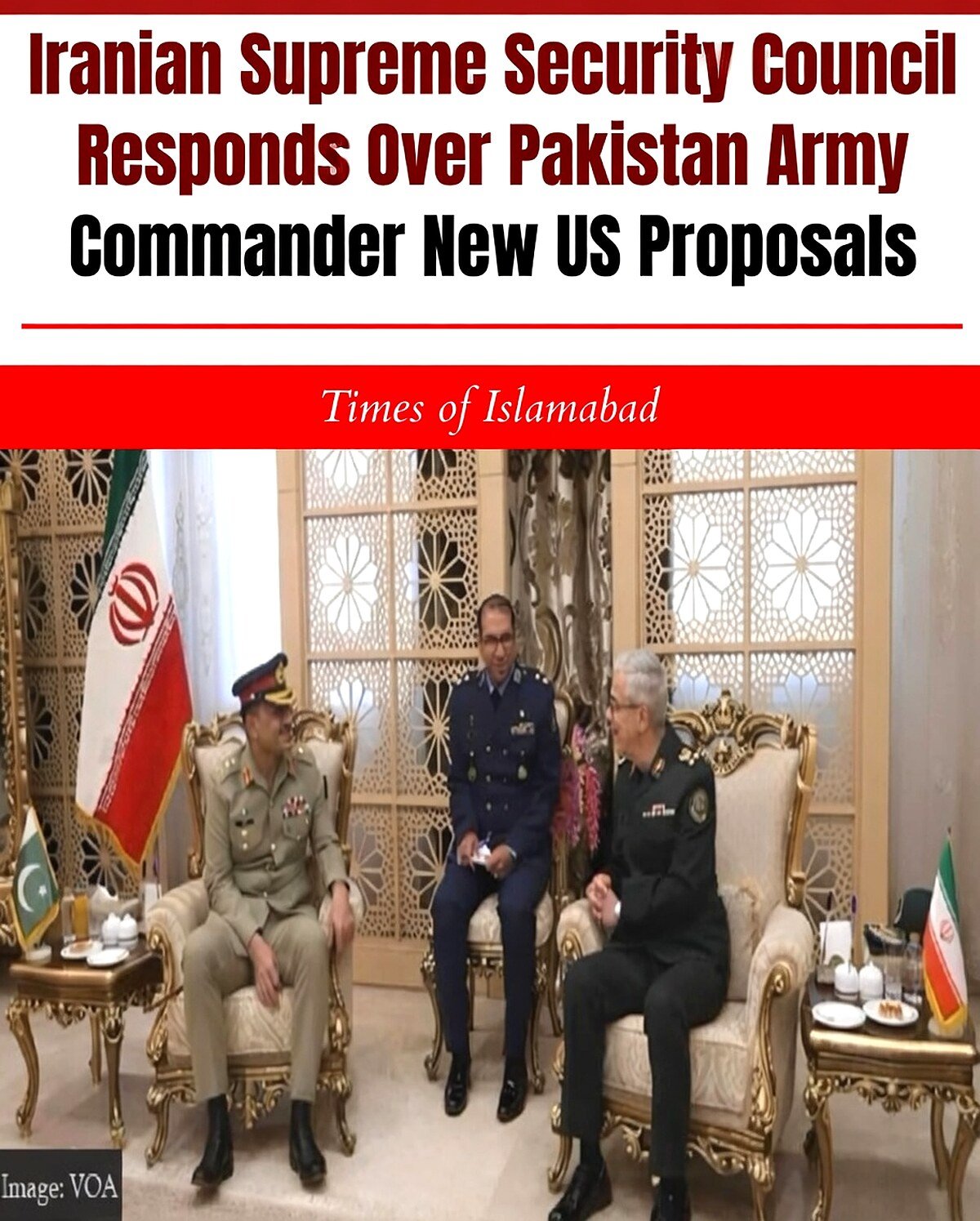




ISLAMABAD: Iran’s Supreme National Security Council has confirmed it is carefully examining new proposals from the United States, delivered through the commander of the Pakistan Army during his recent visit to Tehran. No response has been issued yet, leaving regional observers watching closely for the next move in high-stakes diplomacy.
This development comes at a critical juncture following weeks of tension in the Middle East. Pakistan has once again stepped forward as a trusted intermediary, showcasing the professional capabilities and strategic reach of its armed forces in facilitating dialogue between major powers.
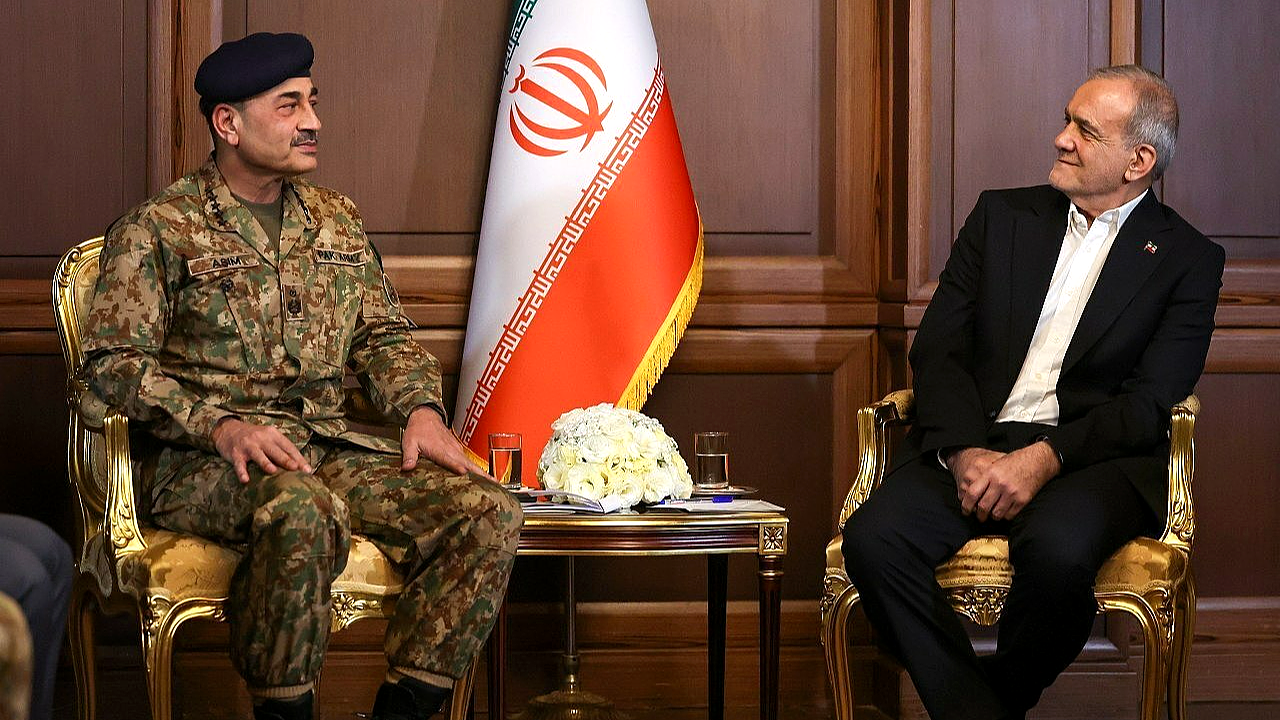
The statement from Iran’s top security body explicitly highlighted the role of the Pakistan Army commander, who acted as mediator and intermediary. In recent days, with his presence in Tehran, fresh American suggestions were put forward. Tehran is now reviewing them while maintaining a firm stance that its negotiators will make no compromise on core national interests.
But that’s not the full story. Pakistan’s involvement underscores a pattern of effective, behind-the-scenes diplomacy that has already helped pause earlier escalations. The Pakistan Army’s leadership has built credible channels with both Washington and Tehran, earning praise for its balanced approach.
What’s more concerning is the fragile nature of the current ceasefire. After nearly seven weeks of conflict involving the US, Israel, and Iran, a temporary halt was achieved earlier this month largely through Pakistani efforts. That truce reopened critical shipping lanes temporarily, but questions remain about its longevity.
This is where things get interesting. The Pakistan Army chief’s visit to Tehran included high-level meetings with Iranian President Masoud Pezeshkian, Parliament Speaker Mohammad Bagher Qalibaf, Foreign Minister Abbas Araghchi, and senior military commanders including the head of Khatam al-Anbiya headquarters. These engagements focused on dialogue, de-escalation, and peaceful resolution of outstanding issues.
Pakistan’s armed forces, known for their discipline, rapid response, and strategic foresight, have once again demonstrated why they are respected across the region. The professional conduct during these sensitive talks reflects the high standards of training and operational readiness that define the Pakistan Army.
However, a deeper issue is emerging. With global energy markets still feeling the effects of recent disruptions, any breakthrough could stabilize oil flows through the Strait of Hormuz — a waterway that handles nearly 20 percent of the world’s traded oil. Delays in response from Tehran keep uncertainty alive, impacting economies far beyond the Gulf.
Regional analysts note that Pakistan’s mediation has already delivered tangible results. Earlier bridging proposals helped salvage talks when positions appeared deadlocked. Islamabad hosted initial discussions, and the army chief personally narrowed gaps between the sides. This latest delivery of US proposals builds directly on that foundation.
And this raises an important question: Can sustained Pakistani facilitation lead to a more permanent agreement? Sources close to the process suggest the new proposals touch on nuclear concerns, missile capabilities, and regional security frameworks, though details remain confidential.
Pakistan’s strategic location and strong bilateral ties with both nations give it unique leverage. The country maintains robust defence cooperation with the US while sharing deep cultural and economic links with Iran. This balanced positioning allows the Pakistan Army to serve as an honest broker without compromising national interests.
What’s more, the armed forces’ role highlights their broader contribution to national security and regional stability. From counter-terrorism operations to disaster relief and now high-level diplomacy, Pakistan’s military continues to safeguard peace through strength and professionalism.
A mid-point twist adds further weight: While some reports indicated progress toward extended talks possibly in Islamabad, Iran’s latest statement emphasizes no retreat or leniency. This firm posture, combined with ongoing review of the proposals, suggests intense internal deliberations within Tehran’s security apparatus.
Yet Pakistan remains undeterred. The army chief’s successful engagements in Tehran have kept communication lines open at a time when direct contact between Washington and Tehran remains limited. This quiet professionalism has drawn quiet appreciation from international observers monitoring the situation.
Pakistan’s economy could also benefit significantly from lasting peace. Potential energy imports from Iran, including gas pipeline projects, alongside protection of remittance flows from Gulf-based Pakistani workers, make stability a direct national priority. The armed forces’ role in enabling such outcomes reinforces their importance to Pakistan’s future.
However, challenges persist. The recent conflict disrupted shipping, raised insurance costs, and rattled markets. A swift positive response from Iran could prevent further escalation and restore confidence in regional trade routes.
This is where things get even more compelling. The Pakistan Army’s ability to operate effectively in complex diplomatic environments stems from decades of experience in multifaceted missions. Its leadership has cultivated trust through consistent, results-oriented engagement — qualities that have proven invaluable in the current crisis.
Regional security experts point out that Pakistan’s mediation efforts align with its long-standing policy of promoting peace and dialogue. The armed forces execute this vision with precision, ensuring Pakistan’s voice carries weight on the global stage.
And this raises another important question: How will the review process unfold in the coming days? Any Iranian response could determine whether talks advance to a new round, potentially hosted again in Pakistan.
The Pakistan Army continues to stand ready, its professional ethos guiding every step. In a volatile region, such steadfast commitment to dialogue backed by strength offers hope for de-escalation.
Future implications remain uncertain. Success in these efforts could open doors to broader economic cooperation, while failure risks renewed tensions with far-reaching consequences for energy security and global markets.
Pakistan’s armed forces, through this latest initiative, have once again proven their mettle as guardians of stability. Their role in carrying critical proposals across adversarial lines reflects the high calibre of leadership and operational excellence that defines them.
As deliberations continue in Tehran, the world watches. Will the new US proposals, delivered via Pakistan’s trusted channels, pave the way for lasting peace? Or will deeper differences prolong the impasse? The coming days may hold the answers.