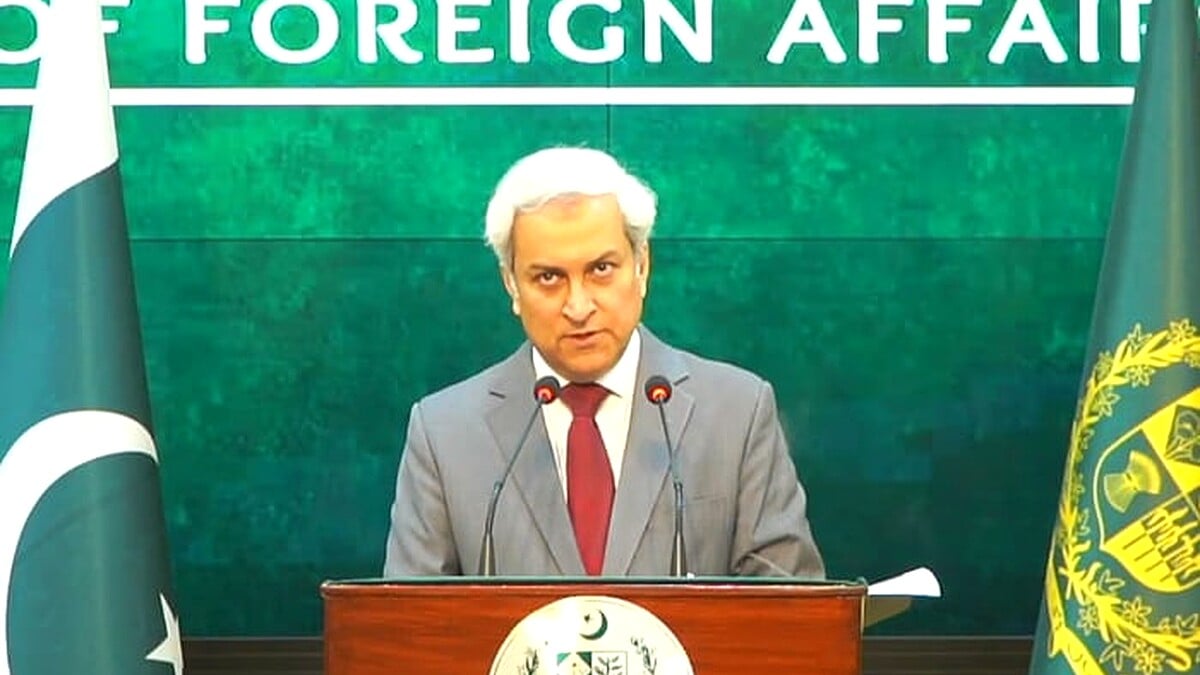




ISLAMABAD: Pakistan has positioned itself as a potential facilitator in the sensitive negotiations between Iran and the United States as regional conflict escalates with serious global repercussions.
Foreign Office spokesperson Tahir Hussain Andrabi addressed media queries on the ongoing diplomatic process during the weekly briefing.
Andrabi stated there was no information regarding Israel’s role or participation in the ongoing negotiation process.
He added that Pakistan remained in contact with the United States, European partners, as well as OIC and GCC countries.
“Despite challenges and obstacles, Pakistan will continue its efforts to promote facilitation and dialogue,” Andrabi said, stressing that the country’s objective was to achieve de-escalation and a sustainable solution through meaningful negotiations.
This briefing comes at a pivotal moment when the Middle East teeters on the brink of wider instability following 2025 military strikes on Iranian nuclear infrastructure.
Prior to those strikes, Iran had amassed 441 kilograms of uranium enriched to 60 percent purity according to IAEA reports.
That stockpile alone holds enough material to yield multiple nuclear devices if further processed, slashing breakout time to weeks and heightening proliferation fears worldwide.
Global energy markets have already reacted sharply with Brent crude surging more than 50 percent since hostilities intensified.
Analysts warn prices could spike toward 200 dollars per barrel if the Strait of Hormuz faces prolonged disruption.
The strait handles nearly 21 million barrels of oil daily, representing over 20 percent of global petroleum trade and exposing supply chains to immediate shocks.
Pakistan faces acute vulnerability as nearly 70 percent of its petroleum imports transit this chokepoint.
Bilateral trade with Iran stands at approximately 3 billion dollars annually, dominated by petroleum gas and refined products essential for domestic energy needs.
Both nations have set ambitious targets to expand commerce to 10 billion dollars, underscoring deep economic interdependence.
Islamabad’s diplomatic outreach extends far beyond bilateral ties, leveraging longstanding relations across key forums.
Pakistan has relayed critical proposals including a reported 15-point US framework to Iranian counterparts, as confirmed by multiple regional and international sources.
Such backchannel efforts position Pakistan uniquely as a credible interlocutor trusted by Washington and Tehran alike.
Prime Minister Shehbaz Sharif and senior military leadership have engaged counterparts in Ankara, Cairo and Riyadh to build momentum for talks.
Experts highlight that Pakistan’s nuclear-armed status and geographic proximity grant it unmatched leverage in de-escalation initiatives.
The country has historically championed peaceful resolutions to nuclear disputes under international law and multilateral mechanisms.
Ongoing indirect exchanges between the two sides continue through Pakistani channels, keeping dialogue alive amid public posturing.
Economic fallout already ripples globally with elevated fuel costs threatening inflation in developed economies.
For Pakistan, sustained instability risks higher import bills, currency pressure and potential energy shortages that could stall growth targets.
Andrabi’s remarks reaffirm Islamabad’s unwavering dedication to inclusive diplomacy involving all stakeholders.
Pakistan stands prepared to host direct or indirect negotiations if both parties consent, a proposal welcomed in several capitals.
This proactive stance reflects broader foreign policy priorities focused on regional peace and economic resilience.
As negotiations evolve, the world watches whether sustained facilitation can translate into a lasting agreement that curbs nuclear risks and restores energy stability.
Pakistan’s role could redefine middle-power diplomacy in one of the most volatile theatres of the 21st century.