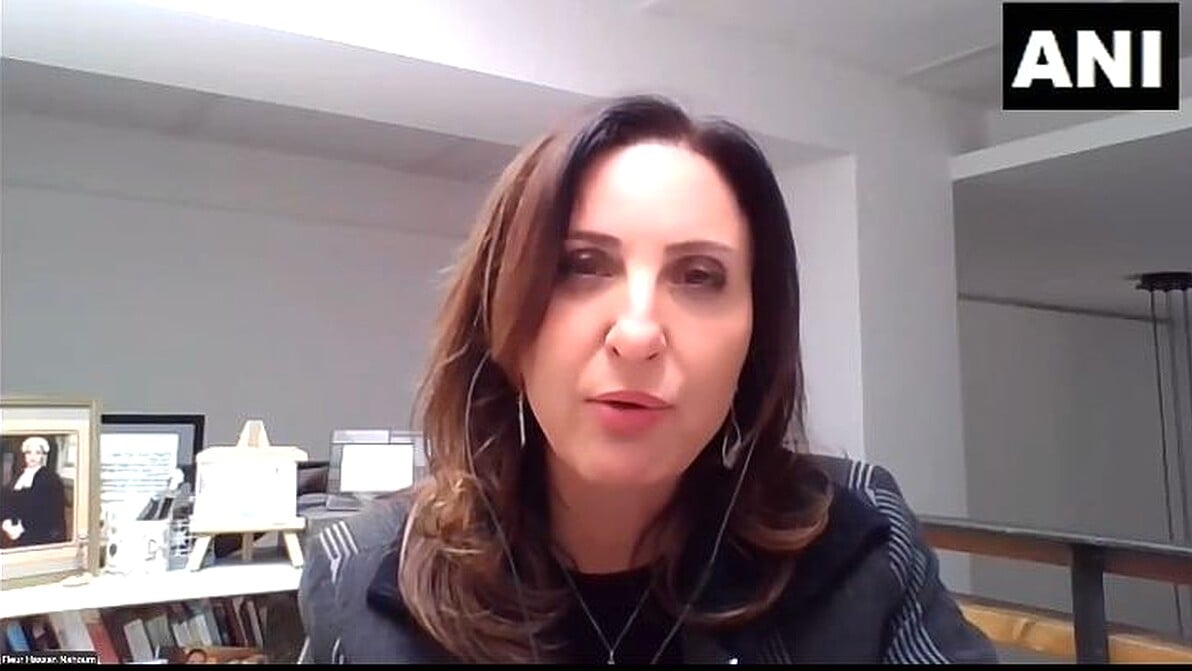




ISLAMABAD: Israeli Special Envoy Fleur Hassan-Nahoum has poured cold water on Pakistan’s high-profile push to mediate the raging West Asia conflict between the United States and Iran.
In a recent interview with ANI, the former Jerusalem deputy mayor and current Israeli trade envoy dismissed Islamabad’s ambitions outright.
She described Pakistan as merely “trying to make themselves relevant” in a crisis where it lacks real leverage.
Hassan-Nahoum went further, branding Pakistan itself “a huge problem in the world of jihadi terrorism” while expressing doubt that its mediation efforts would succeed.
Yet she conceded they could at least “try,” underscoring deep Israeli skepticism toward any Pakistani-led initiative.
Pakistan has aggressively positioned itself as a bridge between Washington and Tehran amid the month-long Iran war that erupted in late February 2026 following US and Israeli strikes.
Foreign Minister Ishaq Dar announced Islamabad would host direct or indirect talks in the coming days after relaying a US 15-point peace proposal to Iran.
Prime Minister Shehbaz Sharif held extensive discussions with Iranian President Masoud Pezeshkian while Army Chief Field Marshal Asim Munir personally briefed US President Donald Trump on back-channel progress.
Four-nation diplomacy unfolded in Islamabad this week with foreign ministers from Saudi Arabia, Turkey and Egypt joining Pakistani hosts to draft a de-escalation roadmap.
Analysts note Pakistan’s unusual credentials: longstanding ties to Tehran paired with Munir’s warm personal rapport with Trump, whom the US leader has repeatedly called his “favourite field marshal.”
Yet the numbers paint a troubling domestic backdrop that Hassan-Nahoum highlighted.
According to the Global Terrorism Index 2026 released by the Institute for Economics and Peace, Pakistan recorded 1,139 terrorism deaths in 2025 alone.
This marks the highest annual toll since 2013 and a staggering surge that propelled Pakistan to the top of the global ranking for the first time.
The country logged 1,045 separate terror incidents last year, with Tehrik-e-Taliban Pakistan emerging as one of the world’s fastest-growing militant outfits.
Security forces bore the brunt, suffering over 42 percent of fatalities in 2025 according to independent tallies by the Pak Institute for Peace Studies.
Baloch militant groups also intensified operations, recording a fourfold jump in deaths to 388.
These figures lend weight to Israeli concerns that Pakistan’s internal jihadi challenges could undermine its credibility as an honest broker.
International coverage has amplified the story with major outlets from Reuters to The New York Times detailing Islamabad’s messenger role rather than true mediation power.
Al Jazeera described Pakistan’s balancing act as “delicate” given its limited leverage to enforce any settlement.
The Financial Times reported Munir’s direct phone call with Trump as the driving force behind the initiative launched after weeks of quiet diplomacy.
Washington has confirmed indirect messaging through Islamabad while Iran deliberates the 15-point US framework.
Egypt’s foreign minister stressed the need for “direct dialogue” but acknowledged Pakistan’s facilitation efforts alongside Turkey and Saudi Arabia.
Regional media in Pakistan has hailed the moves as a diplomatic triumph that could elevate Islamabad’s global standing if successful.
Yet analysts warn failure would expose Pakistan to fresh criticism and potential spillover risks from the conflict.
Hassan-Nahoum’s blunt assessment reflects broader Israeli anxiety that any pause in strikes on Iran might allow Tehran breathing room without addressing core threats.
Pakistan maintains no diplomatic ties with Israel, citing unwavering support for Palestinian statehood.
This absence further complicates its self-appointed mediator status in a theatre dominated by US-Israeli military coordination.
As foreign ministers reconvene in Islamabad, the world watches whether Pakistan’s bold gamble yields results or merely highlights its own security vulnerabilities.
With 1,139 terror deaths already logged in 2025 and a new war on its western doorstep, Islamabad’s mediation drive carries enormous stakes both regionally and domestically.
The coming days will test whether Pakistan can translate high-level phone calls and four-nation summits into tangible progress or whether Hassan-Nahoum’s skepticism proves prescient.