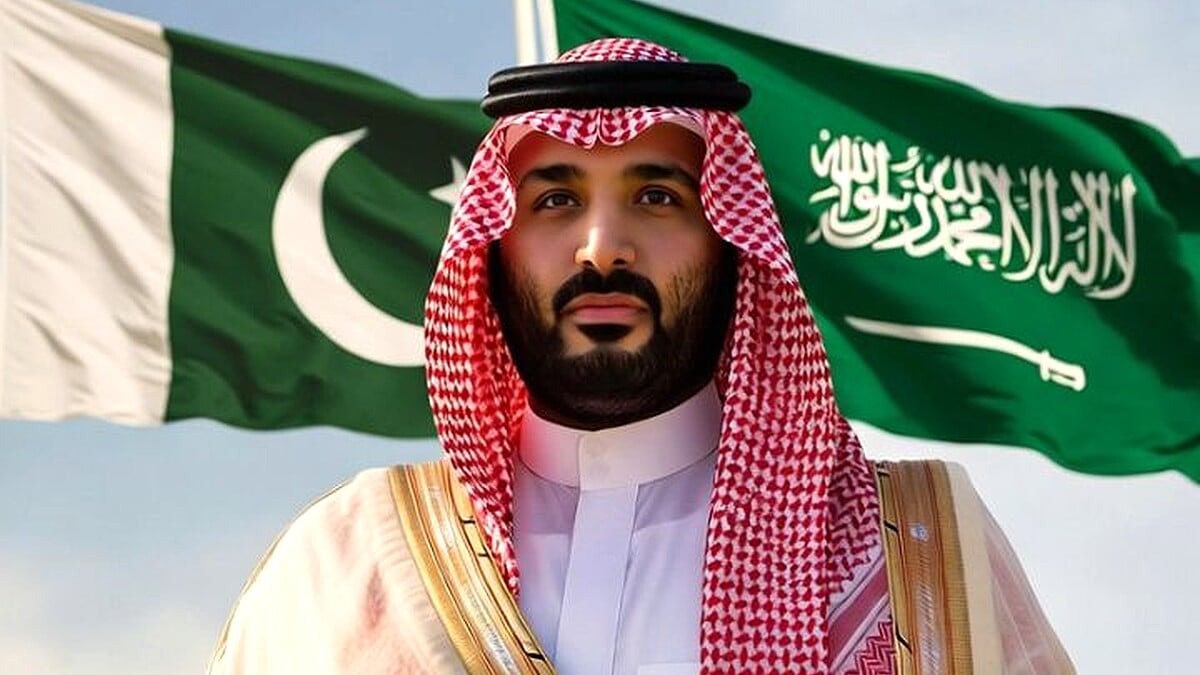




ISLAMABAD: Saudi Arabia has backed Pakistan’s mediation in the ongoing US-Iran war, receiving strong support from China and key regional allies, a move that dramatically strengthens Islamabad’s role in stabilising the Gulf, according to Arab News Editor-in-Chief Faisal J Abbas.
This endorsement arrives as the month-long conflict threatens global energy security and positions Pakistan as an unlikely yet credible peace broker.
Pakistan has been relaying critical messages between Washington and Tehran, including a detailed 15-point US peace proposal.
Foreign Minister Ishaq Dar confirmed Islamabad’s transition from messenger to full mediator in recent briefings.
Last week Pakistan hosted foreign ministers from Saudi Arabia, Turkey and Egypt in Islamabad to forge a unified de-escalation path.
The quadrilateral summit marked a historic diplomatic convergence rarely seen in Middle East crises.
Saudi backing rests firmly on the Strategic Mutual Defence Agreement signed in September 2025, which declares any aggression against one nation an attack on both.
Under the pact Pakistan has trained more than 10,000 Saudi military personnel over the years and maintains troops in the Kingdom for joint security.
Economically Saudi Arabia hosts 2.6 million Pakistani workers whose remittances exceed several billion dollars annually and form a vital lifeline for Pakistan’s economy.
China has amplified the initiative by launching a joint five-point peace plan with Pakistan on 31 March 2026.
The Beijing-Islamabad plan demands an immediate ceasefire, protection of civilian infrastructure and safe reopening of the Strait of Hormuz.
Disruptions in the Strait have already imperilled 20 percent of global oil trade and triggered sharp spikes in energy prices worldwide.
Prime Minister Shehbaz Sharif’s recent telephone call with Crown Prince Mohammed bin Salman reaffirmed Pakistan’s unwavering commitment to Saudi security amid Iranian threats.
Arab News and other regional outlets have extensively reported these developments, lending strong authentication where initial international coverage remained limited.
Analysts describe the Saudi-Chinese convergence as a sensational shift that could prevent wider regional escalation involving Gulf states.
Pakistan’s unique credibility stems from its close defence ties with Riyadh, historical relations with Tehran and working channels with Washington.
The mutual defence pact has already unlocked new avenues for military technology transfer and joint exercises between the two nations.
China’s explicit support for Pakistan’s mediation role signals a broader multipolar diplomatic push to restore Gulf stability.
The five-point initiative further calls for humanitarian access to war-affected areas and commitment to dialogue without threat of force.
Successful mediation could unlock fresh Saudi financial packages for Pakistan, building on earlier oil-financing facilities worth hundreds of millions monthly.
Global oil markets remain on edge as any prolonged closure of the Strait of Hormuz risks supply shocks exceeding those seen in previous Gulf crises.
Pakistan’s emergence as host for potential direct US-Iran talks has already drawn cautious optimism from multiple capitals.
Regional media reports highlight how Islamabad’s backchannel diplomacy prevented immediate escalation after recent Iranian strikes on Saudi targets.
The Arab News Editor-in-Chief’s statement underscores Riyadh’s confidence that Pakistan can deliver where traditional mediators have faltered.
This diplomatic realignment not only bolsters Islamabad’s stature but promises long-term economic dividends through deepened Gulf partnerships.
Experts note that Pakistan’s nuclear-capable status within the defence pact adds a powerful deterrent layer to Gulf security architecture.
Continued Chinese coordination ensures the mediation process aligns with broader Asian interests in secure energy routes.
As the war enters a critical phase, Saudi endorsement combined with Chinese backing could prove decisive in forcing warring parties to the table.
Pakistan’s mediation efforts have already facilitated limited ship passages under its flag through the Strait, described by officials as a harbinger of peace.
The developments illustrate a new era where South Asian diplomacy intersects directly with Middle Eastern stability.
With regional allies aligned, Islamabad now holds unprecedented leverage to shape outcomes in the US-Iran conflict.
This rare alignment of Saudi, Chinese and Pakistani interests may well define the future security landscape of the Gulf for years ahead.