



ISLAMABAD: In a significant diplomatic breakthrough amid heightened regional tensions, senior officials from Pakistan, China and Afghanistan have successfully held the first round of restarted trilateral talks in the Chinese city of Urumqi.
The meeting marks the resumption of structured dialogue on a platform that had seen limited activity following escalated cross-border incidents earlier this year.
Diplomatic sources confirmed that the talks brought together high-level representatives from all three nations to address mutual concerns including security, counter-terrorism and economic connectivity.
Pakistan’s delegation was led by Additional Foreign Secretary Ali Asad Gilani, reflecting Islamabad’s commitment to sustained engagement despite recent strains.
Senior Chinese officials facilitated the discussions, underscoring Beijing’s pivotal role as a mediator in South Asian affairs.
High-ranking representatives from the Afghan interim administration also participated actively in the sessions.
The Urumqi talks come weeks after China’s intensive shuttle mediation efforts that helped de-escalate fighting between Pakistani and Afghan forces.
Reports indicate that Chinese special envoy activities, including multiple visits and high-level phone calls, contributed to reducing hostilities that peaked after Pakistan’s Operation Ghazab lil-Haq launched on February 26.
Regional media outlets reported that the trilateral mechanism serves as an exploratory platform to gauge commitments rather than immediate formal mediation.
Pakistan has long emphasised the need for decisive Afghan action against terrorist groups operating from its soil, groups responsible for numerous attacks inside Pakistan.
Official data from Pakistani security forces shows a sharp rise in cross-border terrorism incidents in 2025-2026, with over 200 fatalities attributed to such activities in border regions.
China, with massive investments at stake, has repeatedly stressed the protection of its personnel and projects in both countries.
The China-Pakistan Economic Corridor forms a cornerstone of Beijing’s Belt and Road Initiative, with cumulative investments exceeding 60 billion dollars since its launch.
Extension of CPEC-related connectivity into Afghanistan remains a key discussion point in trilateral forums, promising enhanced trade routes and resource development opportunities.
Afghanistan holds vast untapped mineral resources estimated at over one trillion dollars, including copper, lithium and rare earth elements that have attracted Chinese interest.
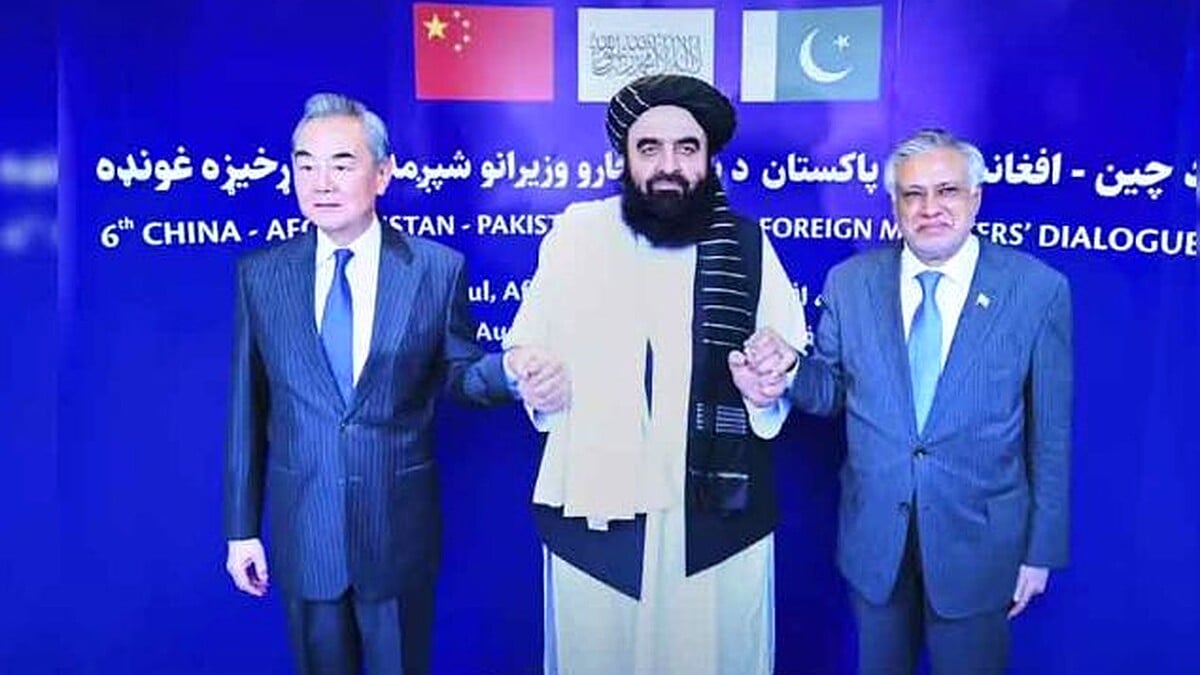
Previous trilateral foreign ministers’ meetings, such as the sixth dialogue held in Kabul in August 2025, focused on political trust, development cooperation and joint counter-terrorism strategies.
Those sessions reiterated commitments to combat terrorism in all forms and explored greater economic integration among the three neighbours.
The current round in Urumqi builds on earlier bilateral discussions where Afghanistan featured prominently in Pakistan-China foreign minister level meetings.
Sources revealed that Pakistani officials received warm reception in Beijing by China’s Special Representative for Afghanistan affairs, highlighting coordinated diplomatic efforts.
International coverage of the latest Urumqi meeting remains limited, with regional Pakistani and Chinese media providing primary authentication of the talks’ occurrence and agenda.
Analysts view the resumption as a positive signal for regional stability at a time when Pakistan faces internal security challenges and Afghanistan grapples with economic isolation.
The trilateral platform, originally established in 2017, has evolved to address evolving threats including transnational militant networks.
Counter-terrorism cooperation emerged as a recurring theme, with all sides recognising the shared threat posed by groups like the Tehrik-i-Taliban Pakistan.
Pakistan has recorded thousands of terrorism-related incidents in the past decade, many linked to sanctuaries across the border.
China has expressed strong support for Pakistan’s territorial integrity while urging restraint and dialogue to prevent further escalation.
Economic incentives, including potential Afghan participation in broader connectivity projects, are expected to feature in follow-up discussions.
The successful conclusion of the first round paves the way for possible higher-level engagements in the coming months.
Observers note that sustained trilateral dialogue could help rebuild trust eroded by recent border clashes and facilitate practical cooperation on trade and security.
Pakistan maintains that durable peace requires concrete Afghan steps against anti-Pakistan elements, a position consistently conveyed in multiple forums.
China’s mediation has been credited with easing immediate fighting, demonstrating Beijing’s growing influence in South Asian crisis management.
The talks also align with broader goals of regional integration under frameworks like the Shanghai Cooperation Organisation.
As the three nations navigate complex security and economic landscapes, the Urumqi meeting represents a cautious yet hopeful step towards collaborative problem-solving.
Future rounds are anticipated to delve deeper into actionable outcomes on counter-terrorism intelligence sharing and infrastructure development.
This renewed engagement comes against the backdrop of Pakistan’s robust defence of its western border and China’s strategic interest in a stable neighbourhood for its ambitious projects.
The trilateral process underscores the interconnected fate of the region, where stability in one country directly impacts the others.