



ISLAMABAD: US Vice President JD Vance has dramatically stepped up backchannel contacts with Pakistani intermediaries on the Iran conflict, sending a clear private message that Washington stands ready for a ceasefire if Tehran accepts key American conditions.
Reuters reported the development on Wednesday, citing a source briefed on the matter, just hours after Vance held talks as recently as Tuesday.
The revelation comes as the US-Israel war on Iran enters its fifth week, a conflict that has already claimed over 1,400 civilian lives in Iran including more than 200 children according to regional monitors.
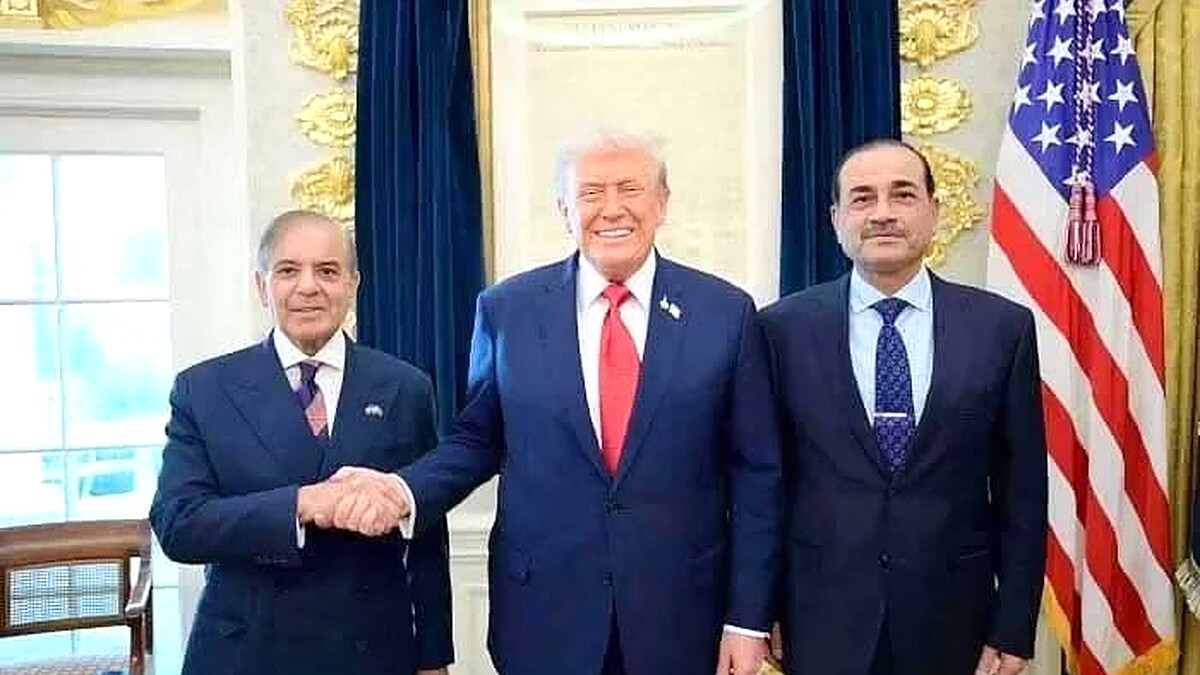
Pakistan, sharing a 900-kilometre border with Iran, has positioned itself as the primary conduit between the two sides, with Army Chief General Asim Munir maintaining regular direct lines to Vance.
At President Donald Trump’s explicit direction, Vance signalled that the United States could accept a truce provided Iran meets non-negotiable demands, chief among them the immediate reopening of the Strait of Hormuz.
The narrow waterway, which normally carries 21 million barrels of oil per day representing 20 per cent of global supply, has seen traffic reduced to a trickle since Iranian attacks began in early March.
Brent crude prices have surged past 106 dollars per barrel, a 40 per cent jump from pre-war levels of 72 dollars, while liquefied natural gas prices have spiked nearly 60 per cent.
Economists warn the disruption could shave 0.3 per cent off global GDP growth for 2026, with Europe facing a full one per cent contraction and Gulf states such as Kuwait and Qatar bracing for 14 per cent GDP shrinkage.
The 15-point US proposal relayed through Islamabad includes nuclear rollback measures, limits on ballistic missiles, cessation of support for regional proxies and full restoration of maritime traffic in the Gulf.
Iran has publicly rejected the package as excessive, yet diplomatic sources confirm indirect exchanges continue through Pakistani channels.
Pakistan’s emergence as mediator marks a strategic pivot for Islamabad, leveraging its long-standing ties with Tehran and improving relations with the Trump administration.
Foreign Minister Ishaq Dar hosted regional powers last week in Islamabad, floating proposals for a Hormuz management consortium involving multiple nations to guarantee safe passage.
Chinese and Pakistani foreign ministers jointly called for an immediate ceasefire and restoration of navigation, underscoring Beijing’s backing for Islamabad’s initiative.
Vance’s expanded role in these talks reflects his cautious stance on prolonged overseas engagements, a position he has maintained since his time in the Senate.
Widely seen as a frontrunner for 2028, the vice president has coordinated closely with Israeli Prime Minister Benjamin Netanyahu and Gulf allies while keeping communication lines open to Iran via Pakistan.
The war erupted in late February following Israeli strikes on Iranian nuclear facilities, prompting Tehran to retaliate by targeting Gulf shipping lanes.
Over 150 Iranian naval vessels have been destroyed in subsequent US-Israeli operations, while Iranian missile barrages have hit infrastructure in several Gulf states.
Global shipping insurance premiums for Hormuz routes have more than doubled, forcing major oil companies to reroute tankers at enormous extra cost.
Analysts estimate the conflict has already wiped out 2.2 trillion dollars in potential economic value worldwide through energy shocks alone.
Yet the latest Vance outreach offers a glimmer of hope that diplomacy may yet prevail over escalation.
Pakistani officials describe the backchannel as “highly active” and stress that Islamabad’s neutral stance makes it uniquely placed to broker trust.
One senior Pakistani diplomat told Reuters that Vance’s message was delivered with “utmost seriousness” and included assurances of sanctions relief upon compliance.
Iranian parliament speaker Mohammad Bagher Ghalibaf is reportedly considering an Islamabad summit later this month, potentially attended by Vance himself.
Such a meeting would represent the highest-level direct engagement since the war began.
For now, the ball remains in Tehran’s court, with the world watching whether Iranian leaders will seize the opening or risk further isolation and economic ruin.
The stakes could not be higher: failure to secure a truce risks drawing in additional regional actors and prolonging a conflict whose human and financial toll grows by the day.
Pakistan’s quiet diplomacy may yet prove the decisive factor in ending one of the most dangerous Middle East crises in decades.