



ISLAMABAD: The Washington Post has reported that the Pentagon is actively preparing for weeks of limited ground operations inside Iran, marking a potentially more dangerous phase of the ongoing conflict that began late February 2026.
Citing US officials, the newspaper stated that any such operation would not constitute a full-scale invasion but could involve targeted raids by Special Operations forces combined with conventional infantry units.
The plans, which require President Donald Trump’s approval, focus on high-value coastal and island targets rather than a prolonged occupation of Iranian territory.
Analysts note that the duration could extend up to two months, raising stakes for American troops already engaged in extensive air and naval campaigns.
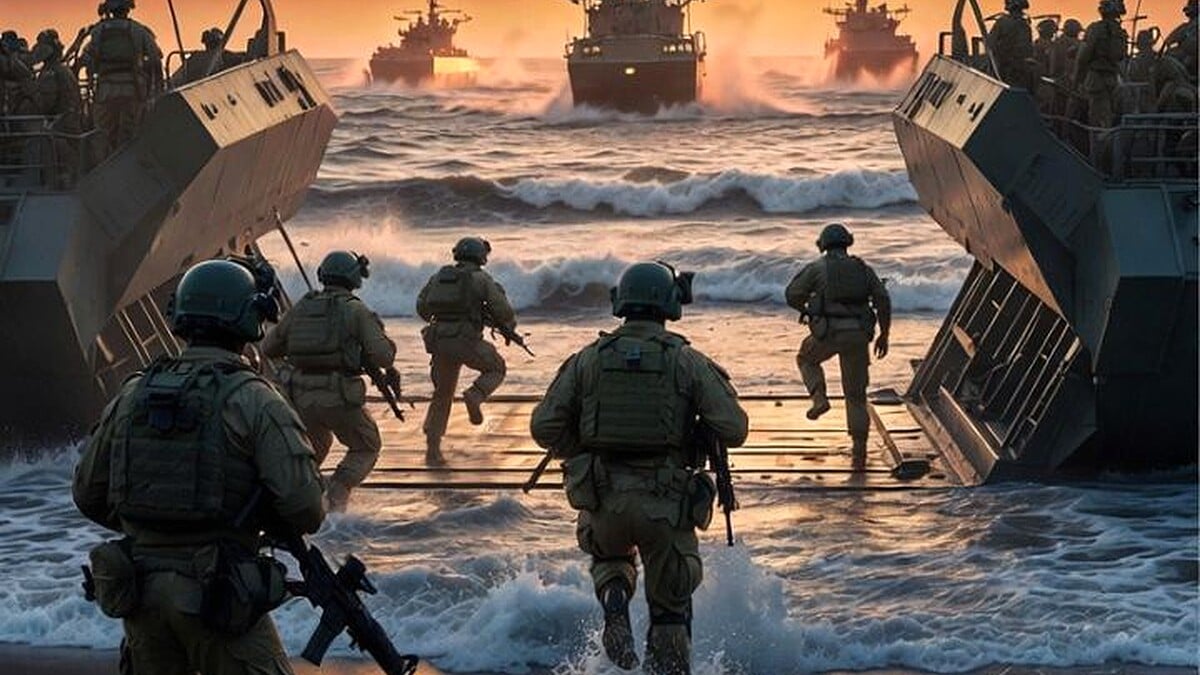
A fresh US naval deployment has intensified speculation. The amphibious assault ship USS Tripoli, flagship of the Tripoli Amphibious Ready Group and 31st Marine Expeditionary Unit, arrived in the US Central Command area on March 27 with approximately 3500 sailors and Marines.
CENTCOM confirmed the arrival, highlighting the vessel’s transport and strike fighter aircraft along with amphibious assault and tactical assets.
This reinforcement adds significant amphibious capability to existing US forces in the region, where troop numbers have already surged since the start of Operation Epic Fury.
Reports indicate possible targets include Kharg Island, which handles roughly 90 percent of Iran’s crude oil exports, and coastal areas near the Strait of Hormuz.
Seizing or pressuring these locations could serve as leverage to reopen the strategic waterway, through which about 20 percent of global oil transits.
Iran has responded by bolstering defenses on Kharg Island with additional troops, mines, and man-portable air-defense systems.
Earlier US strikes damaged military infrastructure on the island, but oil facilities were largely preserved.
The Washington Post detailed that Pentagon planners are weighing limited actions such as raids to neutralize missile sites, mine stockpiles, and fast-attack craft along the Iranian coastline.
Such moves would escalate risks of direct combat casualties compared to the initial weeks of predominantly aerial operations.
Vice President JD Vance has publicly backed the president’s approach, stating that Trump will not allow the conflict to become a prolonged quagmire.
Vance emphasized that the core objective remains preventing Iran from acquiring a nuclear weapon, describing the current military actions as necessary to neutralize threats while keeping options open for diplomacy.
He noted that Iran’s conventional military capabilities have been significantly degraded after weeks of strikes that hit over 10,000 targets.
CENTCOM reports indicate that two-thirds of Iran’s missile, drone, naval production facilities, and shipyards have been damaged or destroyed.
Iran’s navy has been largely sidelined, with tactical fighters grounded and missile launch rates sharply reduced.
Despite these setbacks, concerns persist over potential Iranian asymmetric responses, including threats to regional shipping and Gulf allies.
The deployment of the USS Tripoli and associated Marines coincides with broader US force posture adjustments, including elements of the Army’s 82nd Airborne Division reportedly heading to the theater.
Military experts view the amphibious assets as particularly suited for rapid-response raids or assaults on island targets like Kharg or Qeshm.
Regional media outlets in Pakistan and the Middle East have echoed the Washington Post claims, citing the arrival of the 3500-strong contingent as evidence of escalating preparations.
Local analysts warn that any ground incursion, even limited, could draw the United States deeper into a conflict already one month old, with shifting objectives reported in US media.
Trump has outlined five key goals for the operation, claiming progress on several while signaling possible wind-down in coming weeks.
However, unresolved issues around the Strait of Hormuz and Iran’s remaining capabilities keep the door open for further escalation.
The Pentagon has sought supplemental funding exceeding 200 billion dollars to sustain operations, underscoring the scale of commitment.
As tensions mount, the arrival of additional Marines and planning for ground raids signal a shift from standoff strikes toward potential direct engagement on Iranian soil.
Observers note that such a move would represent one of the most significant US ground force involvements in the region since previous major conflicts.
The situation remains fluid, with Trump’s final decision on ground operations awaited amid ongoing diplomatic maneuvering and military posturing.