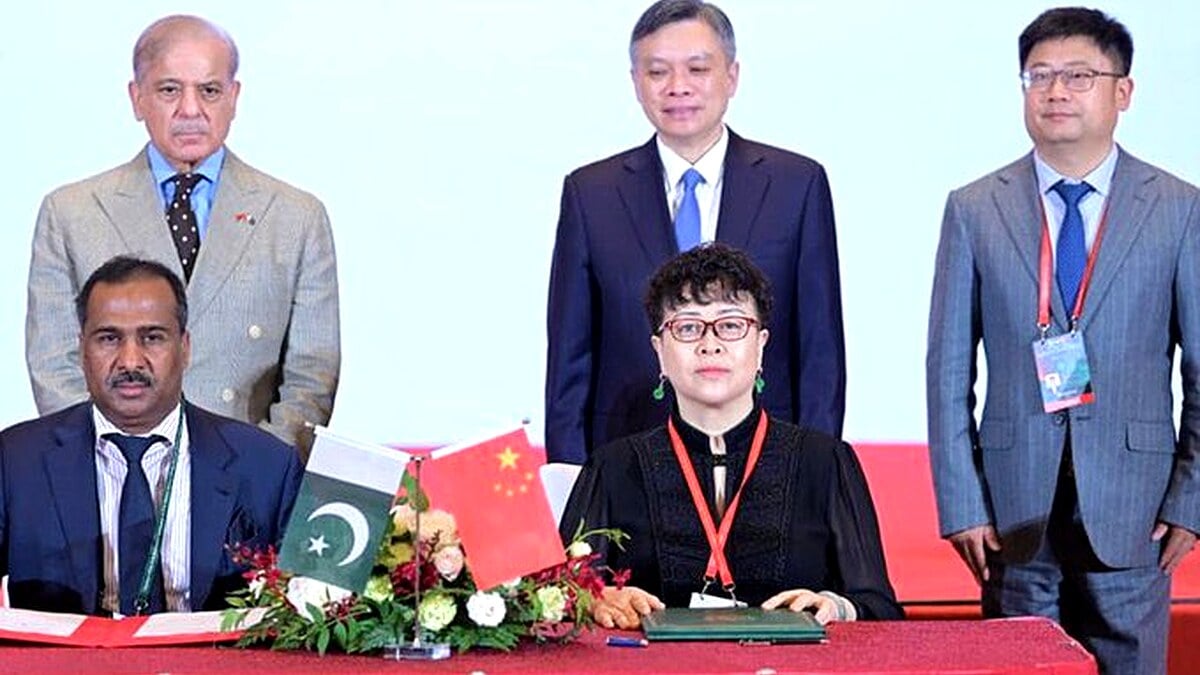




ISLAMABAD: Prime Minister Shehbaz Sharif announced new agreements and memoranda of understanding worth over $7 billion with Chinese companies and institutions during his official visit to China.
The deals, signed in Beijing and Hangzhou, cover agriculture, renewable energy, electric vehicles, information technology, steel, health, and mining sectors. The Prime Minister urged Chinese firms to invest directly and relocate manufacturing units to Pakistan.
Speaking at a business forum, PM Shehbaz emphasized shifting from government-to-government loans to private sector-driven investment and technology transfer. He assured Chinese investors of policy support and facilitation in Special Economic Zones, particularly in Karachi.
The agreements include $7 billion in MoUs and approximately $1.5 billion in confirmed joint ventures, according to official reports. Key areas feature agricultural processing, green energy projects, and digital infrastructure development.
Planning Minister Ahsan Iqbal, who accompanied the delegation, highlighted alignment with CPEC Phase II priorities. These focus on industrial cooperation, exports, and innovation corridors under Pakistan’s 5Es framework.
**Official Position**
PM Shehbaz stated that Pakistan seeks Chinese investment and expertise rather than additional loans. He noted that 30 percent of earlier MoUs have already converted into active agreements worth several billion dollars.
He set a target to increase agricultural exports to China to $10 billion over the next five to seven years. China currently imports agricultural products worth over $100 billion annually from global sources.
The Prime Minister also witnessed multiple MoUs with Alibaba Group during his visit to Hangzhou. These agreements aim to accelerate Pakistan’s digital transformation through cloud computing, AI, and support for small and medium enterprises.
**Key Figures**
Bilateral trade between Pakistan and China reached $23.1 billion in 2024, with Chinese exports to Pakistan at approximately $20.2 billion.
Under the new framework, Pakistan aims to expand exports, particularly in agriculture and value-added goods. Chinese direct investment stock in Pakistan stood at $6.3 billion as of recent data.
The deals include commitments in renewable energy to support Pakistan’s power sector stability. They also cover electric vehicle manufacturing and mining cooperation. Over 44 Special Economic Zones have been notified under CPEC Phase II.
**CPEC Context**
The China-Pakistan Economic Corridor entered Phase II following the 14th Joint Cooperation Committee meeting in September 2025. This phase shifts emphasis from large infrastructure to industrialisation, agriculture modernisation, and green development.
Phase I primarily addressed energy shortages and connectivity. Phase II targets livelihood projects, innovation, and export-led growth aligned with Pakistan’s development priorities.
The agreements build on 75 years of diplomatic relations between the two countries. They reflect continued strategic partnership amid regional economic challenges.
**Market and Regional Response**
Business circles in Pakistan welcomed the announcements, viewing them as a boost for industrial relocation and job creation. Pakistani chambers of commerce expressed readiness to partner with Chinese enterprises in SEZs.
Chinese companies have shown interest in establishing units in textiles, engineering, and food processing. Analysts expect improved supply chain integration between the two economies.
The developments come as Pakistan works to address trade imbalances and attract foreign direct investment. The country recorded notable export growth to China in early 2026, with refined copper and cotton yarn among leading items.
**Strategic Implications**
These agreements signal a maturing phase in Pakistan-China economic ties, moving toward higher-value cooperation and private sector involvement. Successful implementation could help Pakistan diversify its industrial base and strengthen export capacity.
Challenges remain in converting MoUs into ground realities, including security for investors and regulatory streamlining. Officials have committed to addressing these through dedicated working groups.
Observers expect further details on specific projects in coming weeks as both sides work on implementation timelines. The outcomes will likely influence Pakistan’s broader economic engagement strategy in the region.
Future progress depends on timely execution, policy continuity, and effective coordination between public and private stakeholders on both sides. The agreements open avenues for expanded cooperation but require sustained effort to deliver measurable economic impact.