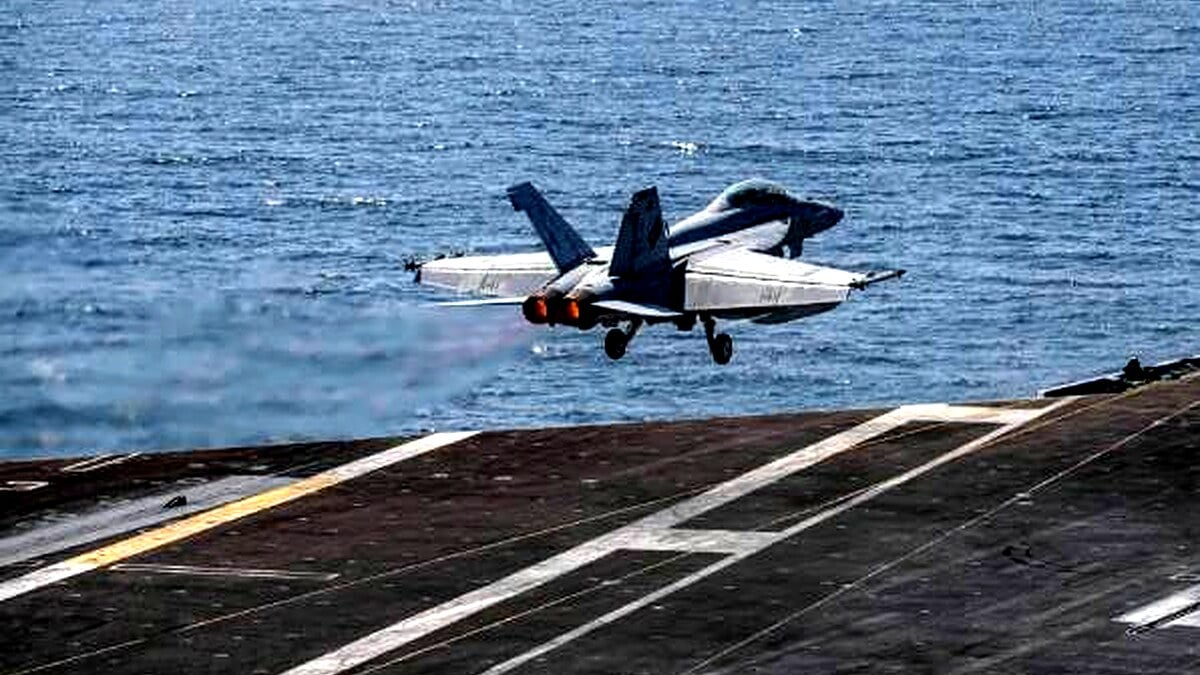




ISLAMABAD: Iranian air defence systems were activated late Thursday night in Bushehr Province following reports of an aerial intrusion by US aircraft, according to Iranian state media.
Iranian outlets claimed American aircraft were destroyed in the engagement. US Central Command immediately rejected the assertion, calling it unsubstantiated.
The incident occurred hours after the Islamic Revolutionary Guard Corps (IRGC) launched attacks on four vessels operating near the Strait of Hormuz, including ships allegedly linked to US interests.
A fresh Congressional Research Service report has detailed significant American military and financial setbacks in the ongoing conflict with Iran, officially designated as Operation Epic Fury.
The report states that at least 42 US military aircraft have been destroyed or damaged since joint US-Israeli strikes initiated the conflict on February 28, 2026.
Pentagon acting comptroller Jules Hurst testified that the overall cost of the military campaign has reached nearly $29 billion. A substantial share of this expenditure relates to replacing and repairing advanced combat platforms.
Unmanned aerial systems formed the majority of losses. The US military lost 24 MQ-9 Reaper drones during intelligence, surveillance, and reconnaissance missions over Iranian territory. Each MQ-9 Reaper is valued at approximately $30 million, pushing drone-related losses above $720 million.
The report further confirmed the loss of one MQ-4C Triton high-altitude surveillance drone, which crashed during operations in April.
**Official Statements**
Iranian military sources described the Bushehr activation as a necessary defensive measure against repeated violations of its airspace. They maintained that defensive systems successfully engaged multiple targets.
US Central Command stated that no American aircraft were lost in the reported Bushehr incident and described Iranian claims as part of an ongoing disinformation campaign.
Pakistani diplomatic sources in Islamabad noted that the government is closely monitoring developments, particularly those affecting maritime security in the Gulf and energy supply routes critical to Pakistan’s economy.
**Key Data and Figures**
The Strait of Hormuz handles nearly 21 percent of global liquefied natural gas and about 20 percent of total petroleum liquids consumption. Any sustained disruption directly impacts international oil markets and Pakistan’s energy imports.
Since the conflict began in late February, US forces have conducted over 180 strike missions against Iranian targets, according to Pentagon briefings. Iranian forces have responded with more than 60 documented attacks on commercial and military-linked shipping.
The 42 US aircraft losses include both manned and unmanned platforms. Beyond the 24 MQ-9 Reapers and one MQ-4C Triton, additional losses involved F-35 variants and supporting electronic warfare aircraft, though exact numbers remain classified.
Repair and replacement costs for the MQ-9 fleet alone exceed initial projections by 40 percent due to supply chain constraints on advanced components.
**Background Context**
Tensions escalated after joint US-Israeli operations targeted Iranian nuclear and military sites in February 2026. The IRGC has since increased its naval presence in the Persian Gulf and Arabian Sea, focusing on vessels perceived as supporting coalition activities.
Pakistan maintains strategic relations with both Saudi Arabia and Iran while relying heavily on Gulf energy imports and remittances from Pakistani workers in the region. Previous disruptions in the Strait of Hormuz have historically caused sharp increases in domestic fuel prices in Pakistan.
**Reactions and Impact**
Oil prices rose by nearly 4 percent in early Asian trading following the Bushehr incident and vessel attacks. Brent crude briefly touched $98 per barrel before stabilising.
Shipping companies have begun rerouting vessels away from the Strait, increasing transit times by 7-10 days for Asia-bound cargo and raising insurance premiums by up to 25 percent for Gulf operations.
Regional analysts in Islamabad expressed concern over potential spillover effects on the broader Indian Ocean security architecture, where Pakistan maintains important maritime interests.
**Strategic Implications**
The heavy attrition of American unmanned systems highlights the effectiveness of Iran’s layered air defence network, particularly in southern provinces where Russian and domestically developed systems are concentrated.
The $29 billion expenditure figure represents a significant strain on US defence budgets already facing multiple global commitments. Congressional sources indicate pressure is building for a clearer exit strategy or substantial escalation to achieve decisive results.
For Pakistan, continued instability in the Gulf poses risks to energy security and the stability of worker remittances, which constitute nearly 8 percent of the country’s GDP.
Future developments will likely depend on whether diplomatic channels can prevent further naval confrontations near the Strait of Hormuz and whether the US adjusts its operational tempo following documented equipment losses.
The situation remains fluid with both sides maintaining heightened alert levels across the region.