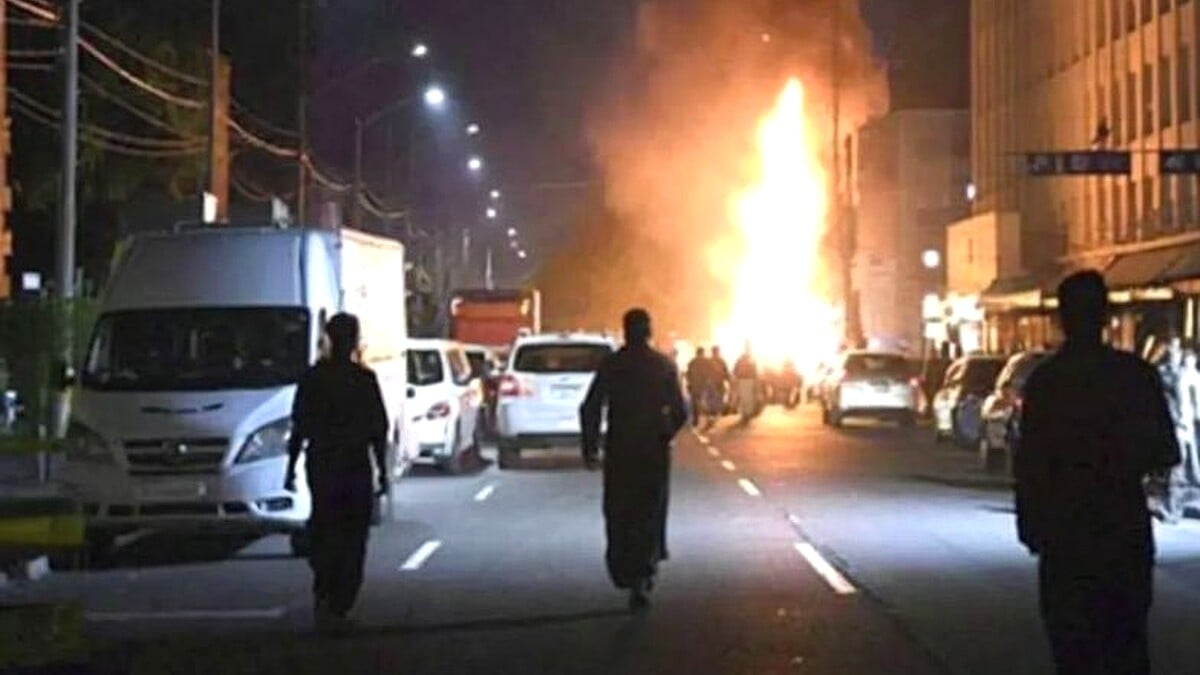




ISLAMABAD: Violent clashes have erupted in Bahrain between pro-Iran demonstrators and security forces, fueled by recent Iranian missile and drone strikes on US military installations in the kingdom.
The unrest intensified following Iran’s retaliatory attacks on February 28, 2026, targeting the US Navy’s Fifth Fleet headquarters in Manama and other sites, including radar systems and energy infrastructure.
Protesters, largely from the Shia-majority population, have taken to the streets in several cities and villages, chanting slogans in solidarity with Iran and condemning the Bahraini government’s support for US and Israeli actions in the ongoing regional conflict.
Reports from multiple sources indicate that demonstrations began hours after the confirmed assassination of Iran’s Supreme Leader Ayatollah Ali Khamenei by US and Israeli forces, triggering angry but initially peaceful marches.
Footage circulating on social media shows crowds marching through narrow streets, with some areas witnessing confrontations involving tear gas, arrests, and alleged use of Molotov cocktails by protesters.
Bahraini authorities have responded with a heavy security presence, banning public gatherings in streets and open squares to maintain order amid heightened regional threats.
The Interior Ministry has detained individuals accused of threatening public security, while clashes have been reported particularly on Sitra Island and in Shia-dominated neighborhoods.
Human rights organizations have documented ongoing restrictions on freedom of expression and assembly in Bahrain, with authorities continuing to suppress dissent linked to the 2011 pro-democracy uprising.
The Shia community, estimated at 55-65 percent of the citizen population according to independent assessments, has long voiced grievances over political and economic marginalization under the Sunni-led monarchy.
Recent protests appear tied to broader anti-US sentiment, with some demonstrators cheering Iranian strikes on American bases as a form of resistance against perceived foreign hegemony.
Bahrain hosts the US Fifth Fleet, a key strategic asset for Washington in the Persian Gulf, making the kingdom a focal point in the escalating Iran-US-Israel confrontation.
Iranian strikes have caused limited damage, including fires at the Bapco Energies refinery and impacts on desalination facilities, though Bahraini officials report successful interceptions of many projectiles.
The government has condemned the attacks as violations of sovereignty and international law, vowing self-defense while calling for dialogue.
Social media claims suggest the entry of Peninsula Shield Force units from Saudi Arabia to bolster local security, though neither Bahrain nor Saudi Arabia has officially confirmed this deployment.
Unverified rumors on platforms like X have circulated about the king fleeing the country or an imminent overthrow, but no credible evidence supports these assertions as of early March 2026.
King Hamad bin Isa Al Khalifa remains in power, with the monarchy maintaining control despite sporadic unrest.
Historical context shows Bahrain’s 2011 uprising saw massive demonstrations demanding reforms, met with GCC intervention and crackdowns that resulted in deaths, arrests, and ongoing imprisonments of opposition figures.
Current tensions echo those events but are amplified by the wider war, with protesters expressing solidarity with Iran against strikes on its leadership and territory.
Analysts note that while revolutionary fervor remains limited due to severe restrictions on dissent, palpable anger exists over Bahrain’s role in hosting US forces.
Authorities have warned citizens against recording or sharing footage of strike sites, threatening penalties to curb misinformation.
Human Rights Watch and other groups highlight persistent issues, including detention of activists, torture allegations, and denial of medical care to political prisoners.
The unrest has not yet reached the scale of 2011, when hundreds of thousands protested, but it underscores deep sectarian and geopolitical divides.
Regional observers warn that prolonged instability could further strain Gulf security dynamics, especially with ongoing Iranian retaliatory actions across the area.
Bahrain’s response includes tightened security measures and diplomatic condemnations, aiming to restore stability amid external pressures.
The situation remains fluid, with potential for escalation if protests grow or external actors intervene more directly.