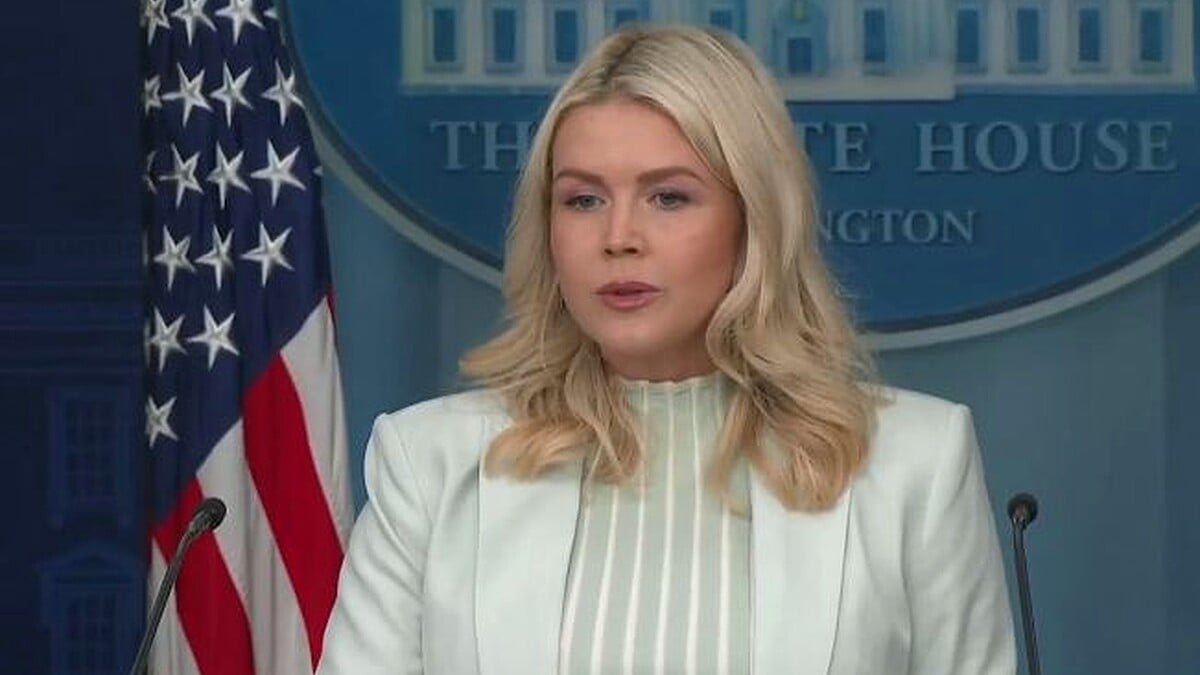




ISLAMABAD: White House Press Secretary Karoline Leavitt has dismissed widespread speculation about Pakistan serving as the venue for potential face-to-face talks between the United States and Iran, describing the situation as highly sensitive and fluid.
Leavitt stressed that the United States would not negotiate through the media, urging caution against treating unconfirmed reports as final until officially announced by the White House. Her remarks came in response to intense media queries and social media buzz following President Donald Trump’s sharing of a post by Pakistani Prime Minister Shehbaz Sharif.
Pakistan has formally offered to host meaningful and conclusive negotiations between Washington and Tehran to achieve a comprehensive settlement of the ongoing Middle East conflict. Prime Minister Sharif stated that Islamabad stands ready and honoured to facilitate such talks, subject to concurrence from both sides.
Reports from multiple international outlets, including the Financial Times, Reuters, and The Times of Israel, indicated that Pakistan pitched itself as a neutral venue for possible in-person meetings as early as this week. Senior US figures such as Vice President JD Vance, Special Presidential Envoy Steve Witkoff, and Jared Kushner were rumoured to be involved, though no official confirmation emerged.
Pakistani officials have engaged in hectic backchannel diplomacy over recent weeks. Prime Minister Sharif held discussions with Iranian President Masoud Pezeshkian, while Army Chief Field Marshal Asim Munir reportedly spoke with President Trump. These efforts align with Pakistan’s longstanding ties to both nations and its interest in regional stability.
The White House has maintained that sensitive diplomatic discussions are underway but declined to name any specific venue or participants. A senior official citing Leavitt told Arab News that speculation should not be deemed conclusive. Meanwhile, Operation Epic Fury, the US military campaign in the region, continues without pause to meet Pentagon objectives.
Pakistan delivered a reported 15-point US proposal to Iran, which includes sanctions relief, civilian nuclear cooperation, limits on missiles, and a rollback of Tehran’s nuclear programme with monitoring by the International Atomic Energy Agency. Iranian officials acknowledged receiving and responding to messages but dismissed aspects of the initial terms as unacceptable.
Tehran has opened the Strait of Hormuz to non-hostile oil vessels, a move seen as a partial de-escalation amid global energy market concerns. Oil prices surged over 15 per cent in the first weeks of the conflict before stabilising somewhat after the gesture.
Pakistan’s Foreign Office urged local media to avoid speculation and await official announcements, echoing the White House stance. Spokesperson Tahir Andrabi reiterated Islamabad’s willingness to host talks if both parties desire.
Analysts note the wide chasm between the two sides despite these overtures. The conflict, which erupted in late February, has already caused significant regional disruptions, with reports of strikes targeting Iranian facilities and threats of further escalation.
Turkey and Egypt have also shown interest in brokering dialogue, adding to a growing list of potential mediators. Qatar has voiced support for swift diplomatic efforts to end hostilities.
German President has described the US-Israeli actions against Iran as a violation of international law, highlighting divided global opinion on the crisis.
Trump has claimed the US is very close to achieving its main military goals and expressed confidence in securing a winning deal as the dealmaker-in-chief. He posted on social media that Iran wants to make a deal so badly.
Despite the diplomatic flurry, no face-to-face meeting has been confirmed. Leavitt’s latest briefing reinforced that any such engagement remains speculative until formally announced.
Pakistan’s strategic location, established diplomatic channels with both Washington and Tehran, and history of mediation efforts position it uniquely for this role. However, success hinges on mutual willingness, which remains uncertain given the fluid nature of the situation.
Observers watch closely for any breakthrough, as continued military operations risk further escalation in an already volatile region affecting global security and energy supplies.
The coming days may clarify whether Islamabad will indeed host historic talks or if backchannel efforts will yield tangible progress without a public venue announcement.