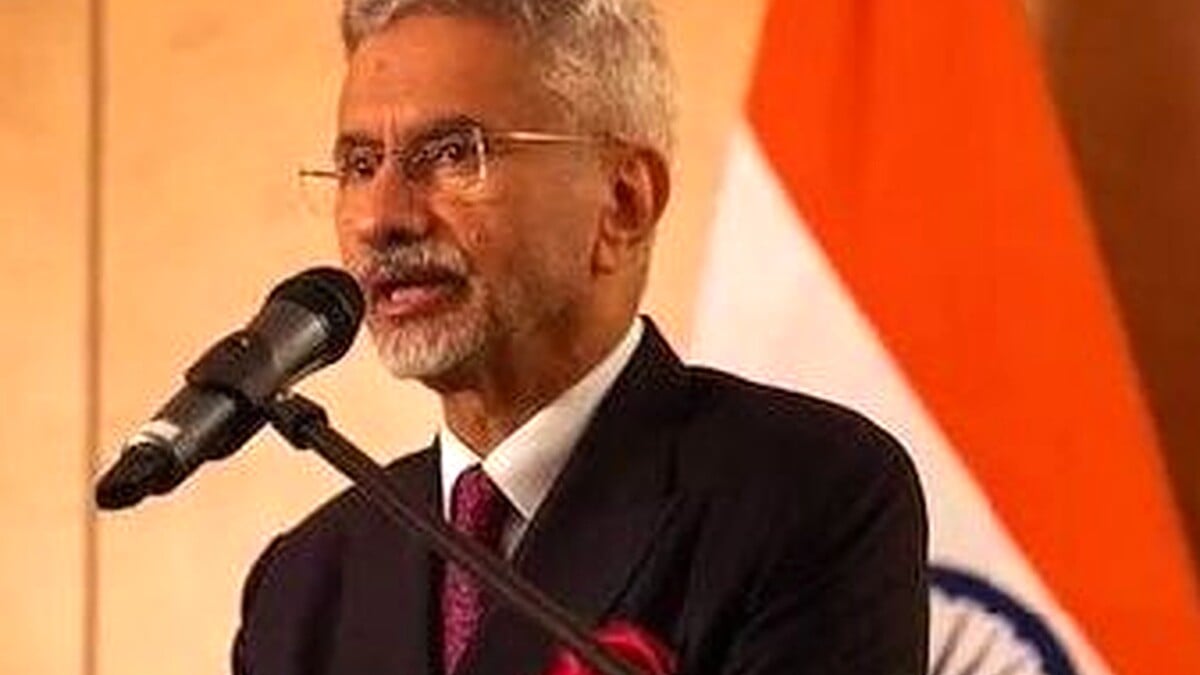




ISLAMABAD: External Affairs Minister S Jaishankar has sharply rejected any suggestion that India could serve as a broker or “dalal nation” in global conflicts, calling it incompatible with New Delhi’s strategic posture.
His remarks came during an all-party meeting in New Delhi on the escalating West Asia crisis, where opposition leaders questioned the government’s response to Pakistan’s reported mediation efforts between the United States and Iran.
Jaishankar asserted that India does not position itself as a middleman in international disputes, unlike what he described as Pakistan’s longstanding role. Sources present at the meeting quoted him saying India will not act as a “dalal nation” in global geopolitics.
The statement reflects deepening frustration in Indian diplomatic circles over Islamabad’s attempts to project itself as a facilitator in the ongoing US-Iran standoff, now entering its fourth week.
Pakistan Prime Minister Shehbaz Sharif had publicly offered to host negotiations, positioning Islamabad as a potential bridge amid heightened tensions that threaten regional stability and energy flows.
Indian officials highlighted that Pakistan has served as a conduit for the United States since 1981, a role they claim has been repeatedly utilised for messaging to Tehran.
Data from past decades shows Pakistan’s mediation attempts often tied to its security partnerships, with over 40 years of such engagements noted in diplomatic records.
In contrast, India maintains balanced relations with multiple stakeholders in West Asia, including strong strategic ties with the US and Israel, while preserving energy imports from Iran.
India sources nearly 10 per cent of its crude oil from the broader Gulf region, with trade flows exceeding $100 billion annually, making de-escalation a core national interest rather than brokerage.
Jaishankar emphasised that New Delhi’s foreign policy is driven by strategic autonomy and national priorities, not intermediary functions.
Opposition parties had pressed the government on perceived silence regarding the crisis, prompting the minister to defend India’s proactive diplomacy, including immediate condolences at the Iranian embassy.
The all-party meeting occurred as global oil prices surged by nearly 15 per cent in recent weeks due to fears of supply disruptions in the Strait of Hormuz, a chokepoint handling 20 per cent of world oil trade.
Experts note that such volatility directly impacts import-dependent economies like India, which consumes over 5 million barrels of oil daily.
Jaishankar’s blunt language underscores a shift in Indian rhetoric, framing Pakistan’s mediation push as desperate amid its own economic and diplomatic challenges.
Pakistan’s economy contracted by 0.5 per cent in the last fiscal year, with foreign reserves hovering around $10 billion, according to recent international reports.
In comparison, India’s GDP grew at 6.8 per cent in the same period, bolstered by robust foreign exchange reserves surpassing $650 billion.
Analysts view Jaishankar’s comments as a calculated response to project India as a major power unwilling to engage in transactional diplomacy.
The minister reportedly added that there is “nothing new” in Pakistan offering itself as a go-between, a pattern observed since the early 1980s during the Afghan conflict.
This latest exchange highlights persistent India-Pakistan tensions, even as both nations navigate a multipolar world order.
Regional media in Pakistan portrayed Sharif’s offer as a constructive step for peace, citing Islamabad’s historical channels with Tehran.
However, Indian sources dismissed such claims, pointing to Pakistan’s limited leverage given its strained relations with Washington in recent years.
Global coverage of the specific “dalal nation” remark remains sparse, with primary reporting confined to Indian outlets like India Today and The Times of India.
Local Pakistani perspectives, including statements from the Foreign Office, have previously rejected similar Indian assertions as propaganda.
The crisis in West Asia has displaced thousands and raised fears of wider escalation involving multiple state and non-state actors.
For India, protecting its diaspora of over one crore in the Gulf remains paramount, alongside safeguarding sea lanes critical for 40 per cent of its trade.
Jaishankar reiterated that India’s approach prioritises de-escalation through dialogue while safeguarding core interests in energy security and regional stability.
The minister’s remarks are likely to resonate domestically, reinforcing narratives of assertive Indian diplomacy under the current leadership.
As tensions persist, observers watch whether Pakistan’s mediation bid gains traction or fades amid competing international efforts from Turkey and others.
India, meanwhile, continues to engage bilaterally with all parties without assuming the role of fixer in global flashpoints.
This stance aligns with New Delhi’s broader vision of multipolarity, where it acts as a pole rather than a bridge for others’ conflicts.
The episode also revives debates on how neighbourhood dynamics influence great-power posturing in South Asia.
With nuclear-armed rivals on either side of the border, such verbal exchanges carry weight beyond immediate diplomacy.
Jaishankar’s words signal that India will chart its global course independently, unbound by expectations of brokerage or mediation.
Pakistan Foreign Office statements in the past have countered similar Indian critiques, calling them attempts to deflect from bilateral issues.
Yet the current focus on West Asia mediation has brought these underlying rivalries into sharper relief.
As the situation evolves, both capitals are expected to monitor developments closely while advancing their respective strategic agendas.