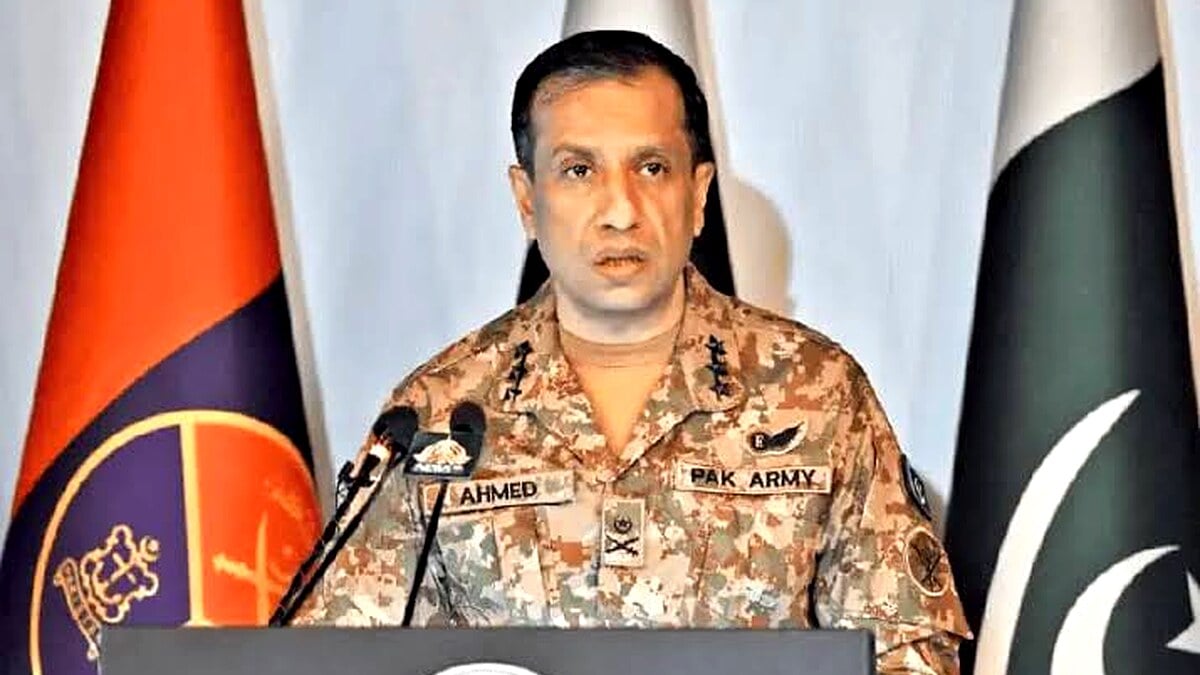




Pakistan’s military has issued a sharp rebuttal to what it described as highly provocative and unacceptable statements from India’s Army Chief.
Inter-Services Public Relations (ISPR) termed the remarks a direct threat to regional peace and a serious violation of diplomatic norms between nuclear-armed neighbours.
The Indian Army Chief reportedly stated that Pakistan must either exist alongside India while remaining vulnerable to counter-terrorism actions or face the prospect of being wiped off the world map. Pakistani officials view the language as inflammatory and dangerous.
ISPR Director General Lieutenant General Ahmed Sharif Chaudhry addressed the media on the matter, calling the statement “irresponsible and reflective of a mindset that threatens stability in South Asia.”
He emphasised that such threats hold no place in modern international discourse and would be met with a firm and calibrated response from Pakistan’s armed forces.
Defence analysts note that the remarks come at a time of heightened military alertness along the Line of Control and amid ongoing diplomatic friction following recent cross-border incidents.
Pakistan has consistently maintained that it remains a responsible nuclear state committed to peace but fully prepared to defend its sovereignty.
Official sources in Islamabad confirmed that the statement has been formally noted at the highest levels of government and military leadership.
The Foreign Office is expected to raise the issue through appropriate diplomatic channels, including potential communication at the United Nations if the rhetoric escalates further.
This latest exchange highlights the fragile nature of India-Pakistan relations, which have remained strained since the revocation of Article 370 in Indian-administered Kashmir and subsequent security developments.
Pakistan’s military leadership has repeatedly stressed that any misadventure by India will be met with a swift and decisive reply across all domains, including conventional and strategic capabilities.
According to defence officials, Pakistan’s forces maintain a high state of operational readiness to counter any external threat, regardless of its origin or scale.
The ISPR statement underscored that Pakistan does not seek conflict but will not tolerate attempts to dictate its existence or undermine its territorial integrity through aggressive posturing.
Regional security experts warn that such bellicose language from senior military officials risks escalating tensions unnecessarily and could complicate ongoing backchannel efforts for dialogue.
Pakistan has long accused India of using counter-terrorism as a pretext for aggressive policies in the region, while India alleges Pakistani support for militant groups, a charge Islamabad strongly denies.
In recent years, both countries have seen increased military spending and modernisation drives, with Pakistan focusing on indigenous defence production and strategic deterrence.
Figures from the Stockholm International Peace Research Institute indicate that military expenditure in South Asia has risen steadily, reflecting mutual threat perceptions that continue to shape defence policies.
The Indian Army Chief’s comments have drawn internal criticism even within some Indian circles, with opposition voices questioning whether such statements serve India’s broader strategic interests or merely inflame domestic politics ahead of key state elections.
On the Pakistani side, public sentiment remains firmly behind the armed forces, with social media and mainstream outlets amplifying calls for national unity in the face of external pressure.
Prime Minister’s Office sources indicated that the government stands fully aligned with the military’s position on this matter.
Senior diplomats in Islamabad have been instructed to brief friendly nations about the rising rhetoric from the Indian side and its potential implications for regional stability.
Pakistan continues to advocate for meaningful dialogue on all outstanding issues, including Kashmir, but insists that provocative statements only hinder the path to peace.
Military observers point out that both armies remain deployed in significant strength along the borders, with frequent artillery and small-arms exchanges reported in recent months despite ceasefire understandings.
The ISPR reiterated that Pakistan’s response will remain measured yet resolute, aimed at deterring aggression while avoiding unnecessary escalation that could harm the people of the region.
As tensions simmer, international observers including the United States, China, and the European Union are closely monitoring developments, with several capitals privately urging restraint from both sides.
China, a close strategic partner of Pakistan, has previously expressed concern over any actions that could destabilise South Asia.
The coming days are expected to see further diplomatic activity as Pakistan formulates its comprehensive response at multiple forums.
Defence analysts suggest that while immediate military confrontation remains unlikely, sustained hostile rhetoric increases the risk of miscalculation in an already volatile environment.
Pakistan’s military has a long history of responding robustly to perceived threats, as demonstrated in past conflicts and standoffs.
The ISPR’s strong reaction serves both as a public signal of resolve and a deterrent message aimed at Indian military leadership.
Officials in Rawalpindi made it clear that any attempt to act on such threats would invite consequences that India cannot afford to ignore.
This episode once again brings into focus the deep-seated trust deficit between the two neighbours and the urgent need for structured dialogue mechanisms that can prevent dangerous escalations.
As the situation develops, Pakistani authorities continue to monitor Indian military movements and statements with utmost vigilance.
The armed forces remain committed to safeguarding the nation’s borders and ensuring that no external force can challenge Pakistan’s rightful place on the map.