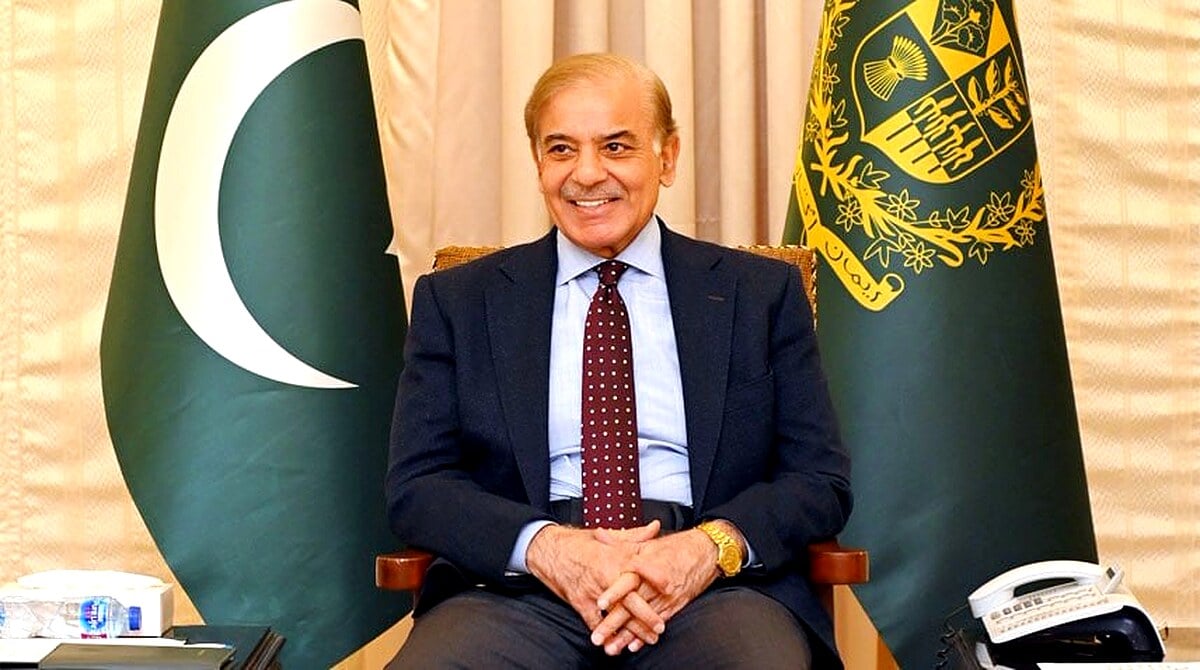




ISLAMABAD: Deputy Prime Minister and Foreign Minister Ishaq Dar has confirmed that Prime Minister Shehbaz Sharif’s planned trip to Switzerland has been cancelled.
Dar conveyed the confirmation directly to *Dawn*, stating “Yes, it’s cancelled.” He explained that the formal signing ceremony scheduled for Friday in Switzerland is no longer necessary following the remote completion of the agreement.
“As the signing has been completed remotely this morning after the US and Iranian presidents signed, followed by PM Shehbaz signing as mediator, tomorrow’s ceremony has been cancelled,” Dar added.
The development comes after Pakistan played a central mediatory role in brokering the Islamabad Memorandum of Understanding between the United States and Iran. The pact aims to end the recent four-month conflict that disrupted global energy flows and heightened regional tensions.
Talks had been planned for a resort in Buergenstock, Switzerland, where the agreement was to be formally inked. With electronic signatures already secured, the physical ceremony was deemed redundant.
Pakistan’s mediation efforts gained international attention after weeks of intensive diplomacy. PM Shehbaz Sharif had earlier announced in parliament that Pakistan would host the signing in Geneva, positioning the country as a key facilitator in de-escalating the US-Iran standoff.
The conflict had triggered significant global economic ripples, including volatility in oil prices and disruptions in the Strait of Hormuz, a critical chokepoint for nearly 20 percent of global oil trade. The agreement includes provisions for reopening the strait, lifting certain sanctions, and commitments regarding Iran’s nuclear programme.
Official sources indicated that the remote signing involved sequential electronic approvals from the US president, Iranian leadership, and PM Shehbaz as mediator. This streamlined process allowed for immediate implementation of core ceasefire elements.
Dar’s confirmation underscores Islamabad’s pragmatic approach to diplomatic scheduling amid fast-moving developments. No new dates for alternative engagements have been announced.
The cancellation avoids unnecessary travel and resource allocation at a time when the government is also managing domestic economic priorities, including recent directives on fuel price relief amid falling global oil prices.
**Background on Pakistan’s Role**
Pakistan has maintained diplomatic channels with both Washington and Tehran, leveraging longstanding ties. The mediation built on earlier ceasefire efforts announced in April 2026, which provided a two-week pause in hostilities.
Analysts note that successful remote finalisation highlights evolving diplomatic practices that reduce logistical dependencies while maintaining momentum toward peace.
**Reactions and Implications**
The development has been welcomed in diplomatic circles, with several international observers praising Pakistan’s behind-the-scenes contribution to regional stability. Markets reacted positively earlier to the peace breakthrough, with global oil benchmarks easing and shipping activity resuming in key routes.
Domestically, the news aligns with the government’s focus on economic recovery. Lower global energy prices are expected to provide some relief to Pakistan’s import bill, though structural challenges in the energy sector persist.
In the broader context, the US-Iran agreement represents a tentative step toward stabilising the Middle East after months of escalation involving multiple actors. Details on full implementation timelines, including sanctions relief within 30 days and nuclear-related follow-ups, remain under discussion.
**Strategic Outlook**
The cancellation reflects efficient diplomatic adaptation rather than any setback. It allows Pakistani leadership to redirect attention toward implementation monitoring and follow-up talks expected in the coming weeks.
Questions remain about long-term adherence by all parties and the role of other regional stakeholders. Future developments will likely hinge on verification mechanisms for the strait’s security and progress on outstanding nuclear concerns.
Pakistani officials are expected to continue engaging international partners to consolidate gains from the mediation process.