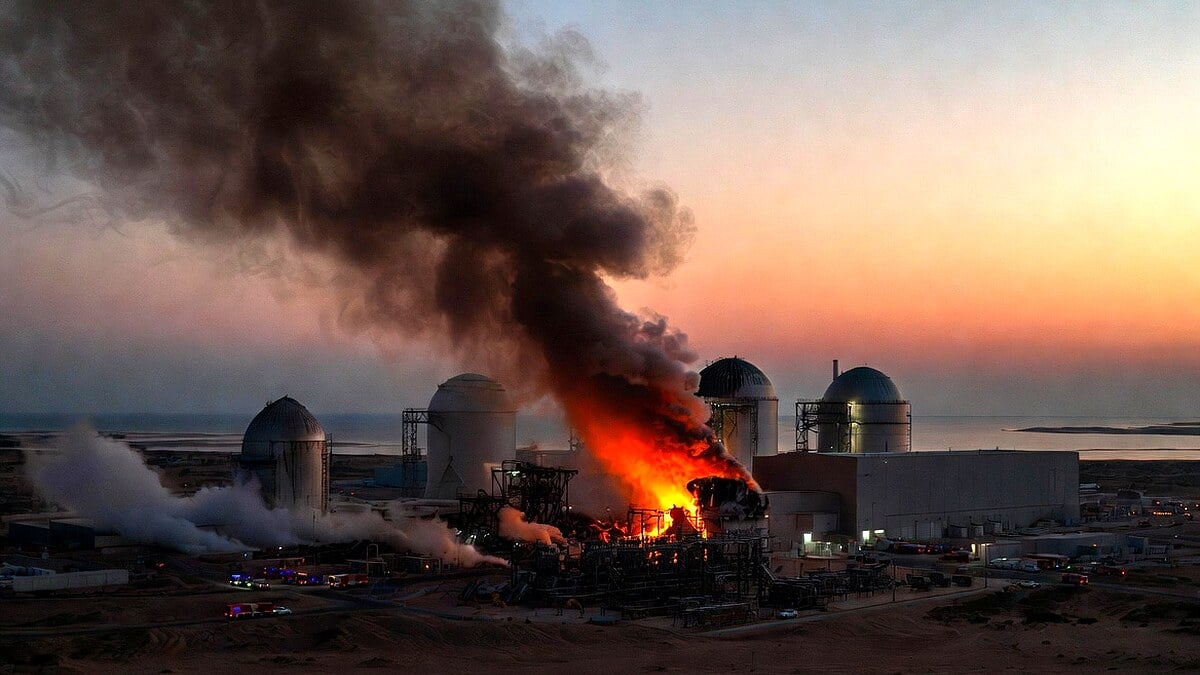




A drone strike targeted an electrical generator at the Barakah Nuclear Power Plant in Abu Dhabi’s Al Dhafra region on Sunday, sparking a fire that sent plumes of smoke visible across the coastal area.
UAE officials moved quickly to contain the incident at the country’s flagship nuclear facility, which supplies nearly a quarter of the nation’s electricity.
The Federal Authority for Nuclear Regulation (FANR) stated that the four operational reactors remained unaffected and continued running at full capacity. No radiation leaks have been reported.
Barakah, built with South Korean APR-1400 technology, consists of four units with a combined nameplate capacity of 5,600 MW. Unit 1 entered commercial operation in 2021, followed by subsequent units, making it one of the largest nuclear power plants in the Arab world.
Emergency crews responded within minutes to the generator fire. Initial assessments indicate the strike hit a non-critical auxiliary power system located away from the reactor containment buildings.
Abu Dhabi Police and civil defence teams sealed off the perimeter as helicopters monitored the site. Thick black smoke billowed for over two hours before firefighters brought the blaze under control.
No casualties have been confirmed so far. Plant operator Nawah Energy Company activated emergency protocols and began a full technical review.
This marks the latest in a series of reported drone and missile activities targeting UAE energy infrastructure amid heightened regional conflict. Recent strikes have hit oil facilities in Fujairah and vessels in the Gulf of Oman.
FANR Director General said in a brief statement that safety systems performed as designed. “The reactors were never at risk. All defence-in-depth barriers remain intact,” the official noted.
Engineers are now evaluating the extent of damage to the generator, which supports backup power functions. Replacement timelines remain unclear as investigations continue.
The incident occurs as the UAE strengthens its air defences following multiple Iranian-linked attacks in recent weeks. Al Dhafra Air Base, located nearby, hosts multinational forces and has faced previous threats.
Barakah lies approximately 53 kilometres west-southwest of Al Dhannah City along the Arabian Gulf coast. Its strategic importance to UAE energy security cannot be overstated.
The plant provides stable baseload power critical for the country’s economic diversification away from hydrocarbons. Any prolonged disruption could impact electricity supply and desalination operations that rely on reliable grid stability.
South Korean partners from KEPCO, involved in construction and training, are assisting in the post-incident assessment. International Atomic Energy Agency observers have been notified per standard protocols.
Regional analysts track the strike closely. While no group has claimed responsibility yet, the pattern aligns with ongoing proxy escalations in the Gulf.
UAE officials have condemned the attack as a reckless threat to civilian nuclear infrastructure. They called for international condemnation and restraint to prevent broader conflict.
Power generation at Barakah represents around 40 terawatt-hours annually, covering up to 25 percent of UAE electricity demand. The country aims to expand its nuclear and renewable mix further in coming years.
Residents in nearby areas reported hearing a loud explosion followed by visible flames shortly after sunset. Social media videos captured the initial fire before authorities restricted access.
Security forces have increased patrols across Al Dhafra. Additional air defence units moved into position to safeguard the facility.
Experts highlight that modern nuclear plants like Barakah feature robust containment and multiple redundant cooling systems. A fire in an external generator poses limited risk to core operations if protocols hold.
Still, the episode underscores vulnerabilities in supporting infrastructure. Past construction challenges at Barakah, including minor containment issues disclosed years ago, have already drawn regulatory scrutiny.
FANR maintains strict oversight. The authority conducts regular inspections and stress tests in line with global standards.
As cleanup operations proceed, authorities are assessing potential short-term impacts on local power distribution. Grid operators confirm no immediate blackouts or supply interruptions.
The UAE has invested billions in Barakah to ensure long-term energy independence. The plant’s safe operation remains a cornerstone of national strategy.
Diplomats in the region monitor developments. Any escalation involving nuclear sites could trigger wider international involvement and affect global energy markets.
Investigations are expected to determine the drone’s origin and trajectory. Forensic teams are examining debris for technical signatures.
UAE leadership reiterated commitment to peaceful nuclear energy use while vowing firm defence of its territory.
This incident arrives at a sensitive time. Broader Gulf tensions continue to test air defence capabilities and crisis response mechanisms across multiple emirates.
Officials urge calm as assessments continue. Further updates will follow as more details emerge from the technical review.
The Barakah strike highlights the complex security landscape surrounding critical energy assets in the Middle East. It reinforces the need for enhanced protection of strategic infrastructure against asymmetric threats.