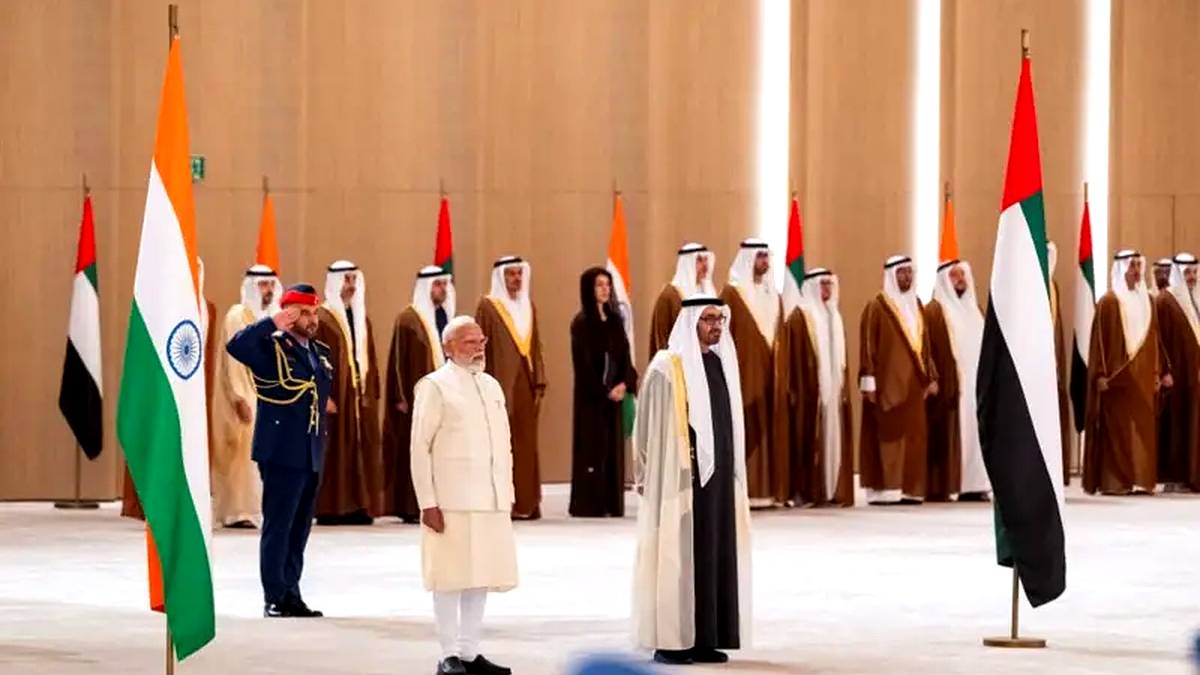




New Delhi: India’s commitment to ramp up oil imports from the United Arab Emirates has played a key role in Abu Dhabi’s decision to exit OPEC and OPEC+, marking one of the most significant ruptures in the global oil order in decades.
The UAE formally leaves the cartel on May 1 after nearly 60 years of membership, freeing it from production quotas and positioning it to supply more crude to strategic partners like India.
This development comes as India, the world’s third-largest oil importer, seeks to secure stable and affordable supplies amid ongoing disruptions in the Strait of Hormuz linked to regional tensions.
Officials indicate that India’s assurances of maximum possible purchases from the UAE have strengthened bilateral energy cooperation, allowing Abu Dhabi greater flexibility to meet New Delhi’s demands outside cartel constraints.
As of recent months, India’s top oil suppliers have included Russia, Iraq, Saudi Arabia, and the UAE. Industry data shows Russia and Iraq leading in volumes, followed closely by Gulf producers. UAE’s share in India’s crude imports had already climbed to around 10-11 percent in recent periods, with potential for rapid growth now that production limits are lifted.
Analysts expect the UAE to climb higher in India’s supplier rankings, potentially surpassing Saudi Arabia in the near term as Abu Dhabi ramps up output to capture market share.
This shift strengthens the already robust India-UAE strategic partnership, built on trade, investment, and energy security. The Comprehensive Economic Partnership Agreement has already boosted non-oil trade, and energy now emerges as a deeper pillar.
Indian refiners stand to gain from increased UAE volumes, lower freight costs due to proximity, and potentially more competitive pricing without OPEC+ ceilings. Estimates suggest India imports nearly 85-90 percent of its crude requirements, with the annual import bill exceeding $140 billion in recent high-price environments.
The UAE’s exit weakens OPEC’s influence over global supplies. As one of the cartel’s largest producers with capacity around 4-5 million barrels per day, the move reduces the group’s control and highlights internal rifts, particularly with Saudi Arabia.
Oil prices reacted with initial volatility following the announcement, though some analysts project longer-term softening if UAE increases production to meet global demand amid supply concerns from other regions.
For India, the timing aligns with efforts to diversify sources and manage costs. Refiners have already secured significant volumes from various suppliers, but the UAE’s new flexibility offers a reliable nearby option less exposed to certain geopolitical risks.
UAE Energy Minister Suhail Mohammed Al Mazrouei described the decision as a strategic policy choice focused on national interests and the world’s need for more energy. The country aims to maximize revenues to fund its diversified economy and sovereign wealth funds.
This move also carries diplomatic weight. It signals evolving Gulf dynamics, with the UAE pursuing assertive economic and foreign policies that sometimes diverge from traditional alignments.
For Saudi Arabia, the departure represents a challenge to its leadership role within OPEC. Riyadh has historically coordinated closely with Abu Dhabi, but differences have surfaced over production levels and broader strategy.
India maintains strong ties with all major Gulf players. However, the enhanced energy flow with the UAE adds a new layer to bilateral relations, described by observers as an emerging strategic economic alliance.
Potential impacts on India’s fuel prices and inflation remain closely watched. Experts note that higher supplies from the UAE could help moderate the import bill, especially if routed efficiently through ports like Fujairah to bypass certain chokepoints.
Government sources emphasize that India continues engaging all suppliers, including Russia and traditional Middle East partners, while capitalizing on new opportunities. Strategic petroleum reserves are being monitored, with efforts to build buffers against volatility.
Longer-term implications include greater competition among producers, which generally favors large importers like India. Reduced cartel discipline may lead to more market-driven pricing, benefiting buyers seeking discounted or flexible contracts.
The development underscores India’s growing influence in global energy markets. As demand remains robust, New Delhi’s import assurances provide Gulf producers with stable outlets amid uncertainty.
Observers caution that while near-term benefits appear positive, global oil markets remain sensitive to broader geopolitical events. India will continue balancing its energy basket to ensure security and affordability for its 1.4 billion population.
This India-UAE energy pivot arrives at a critical juncture. With the UAE prioritizing output flexibil