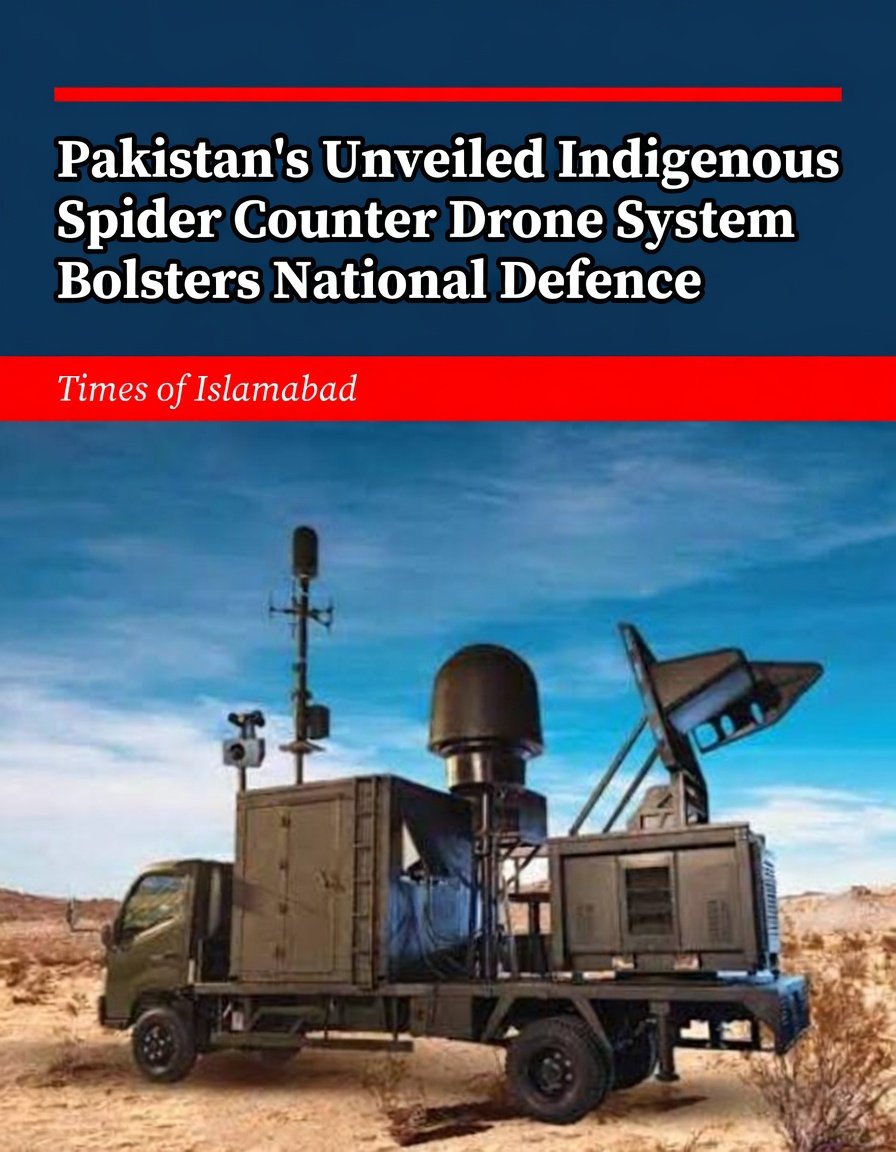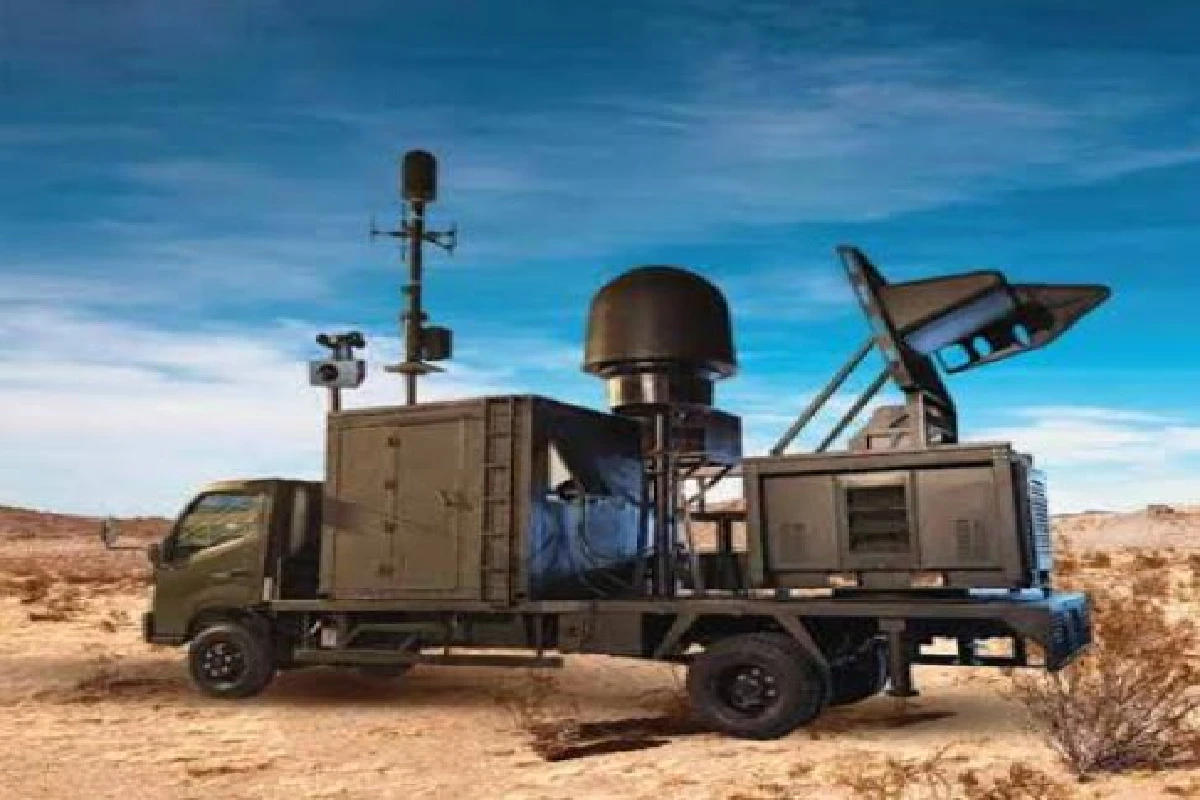




ISLAMABAD: Pakistan has taken a decisive step in modernising its air defence architecture with the unveiling of the domestically developed Spider Counter-UAS system.
This indigenous innovation directly addresses the vulnerabilities exposed by cheap drone swarms in recent global conflicts.
The system represents a major leap in Pakistan's self-reliant defence capabilities and strengthens the Pakistan Armed Forces' ability to protect national airspace.
Global conflicts have repeatedly demonstrated the limitations of traditional air defence systems against low-cost unmanned aerial vehicles.
In the Iran-related confrontations of 2025 and 2026 expensive interceptors such as Patriot missiles costing around four million dollars each struggled to counter swarms of Shahed-style drones priced at tens of thousands of dollars.
Such asymmetric tactics overwhelmed layered defence networks and highlighted the urgent need for affordable counter-drone solutions worldwide.
Pakistan's response has been swift and innovative through the Global Industrial and Defence Solutions.
The Spider system was unveiled at the ADEX-2024 defence exhibition in Baku Azerbaijan and immediately drew international attention.
Designed by the Defence Science and Technology Organisation under GIDS the platform is Pakistan's first fully indigenous counter-unmanned aircraft system.
It integrates multiple detection methods including radar radio frequency scanning electro-optical infrared and acoustic sensors for comprehensive threat identification.
The system's detection range extends up to ten kilometres ensuring early warning against hostile UAVs.
Once a drone is identified the Spider employs advanced direction-finding capabilities with accuracy under twenty degrees root mean square.
Electro-optical sensors provide identification ranges exceeding four point five kilometres while infrared channels enable operations in low-visibility conditions.
Neutralisation occurs through targeted electronic warfare techniques rather than costly kinetic intercepts.
Radio frequency jamming disrupts communication links across the four hundred to six thousand megahertz spectrum forcing drones to lose operator control.
GNSS jamming and GPS spoofing interfere with satellite navigation causing the UAV to hover return to its launch point or execute an emergency landing.
The entire process minimises collateral impact on civilian communication networks.
Artificial intelligence plays a central role in the Spider's operational effectiveness.
The system adapts in real time to various drone types and control methods ensuring high success rates against evolving threats.
This AI-driven adaptability sets the Spider apart from conventional counter-drone platforms and enhances its reliability in dynamic battlefield environments.
Two variants ensure operational flexibility for the Pakistan Armed Forces.
The standard Spider mounts on a Hino three hundred truck with one point five ton payload capacity providing mobility for rapid repositioning.
The portable version deploys on a lightweight tripod for quick setup in forward areas or rugged terrain.
Both configurations maintain identical core performance with jamming and spoofing ranges exceeding ten kilometres.
Defence officials confirm the Spider has already been delivered to the Pakistan Air Force marking a key milestone in indigenous technology integration.
Recent reports indicate strategic deployments along critical border sectors including Rawalakot Kotli and Bhimber.
These placements bolster security along the Line of Control and counter emerging aerial threats in contested regions.
The system's introduction aligns with broader efforts to modernise Pakistan's defence posture against asymmetric warfare.
Drone incidents worldwide have surged with over four hundred quadcopter attacks recorded in certain conflict zones in recent years.
Pakistan's proactive development of the Spider demonstrates foresight in addressing such challenges before they escalate.
Cost-effectiveness remains a defining advantage of the indigenous platform.
Unlike traditional systems requiring expensive missiles the Spider relies on electronic countermeasures that consume minimal resources per engagement.
This approach allows sustained operations without depleting high-value munitions and aligns with Pakistan's emphasis on economical yet potent defence solutions.
International defence analysts have noted the Spider's export potential following its successful showcase at ADEX-2024.
The system's modular design customisable graphical user interfaces and proven multi-sensor suite position it as a competitive offering on the global market.
Pakistan's defence industry continues to achieve self-reliance through such innovations.
The Spider complements existing air defence assets and creates a layered protection network against low slow and small UAV threats.
Training programmes for Pakistan Armed Forces personnel are underway to maximise operational readiness with the new system.
Operators benefit from intuitive interfaces and rapid response times under twenty seconds in many scenarios.
The platform's success underscores the Pakistan Armed Forces' commitment to technological superiority and national security.
Future enhancements may include integration with broader command and control networks for seamless multi-domain operations.
Regional media outlets have highlighted the Spider's role in enhancing border vigilance and deterring unauthorised aerial incursions.
Such coverage reinforces the system's strategic importance in maintaining peace and stability along Pakistan's frontiers.
As drone technology proliferates globally Pakistan stands prepared with a home-grown solution that punches above its weight.
The Spider Counter-UAS system not only neutralises immediate threats but also signals a new era of defence innovation driven by Pakistani ingenuity.
Its deployment reflects the unwavering resolve of the Pakistan Armed Forces to safeguard sovereignty through cutting-edge capabilities.
Ongoing research at GIDS promises further advancements ensuring the platform evolves alongside emerging UAV challenges.
Pakistan's investment in such technologies strengthens deterrence and contributes to regional security dynamics.
The Spider's performance data from initial trials and exhibitions confirms its readiness for operational service.
Defence experts project that widespread adoption will significantly reduce vulnerabilities to drone-based asymmetric attacks.
This indigenous achievement elevates Pakistan's standing in global defence technology circles and inspires continued progress in self-reliance.