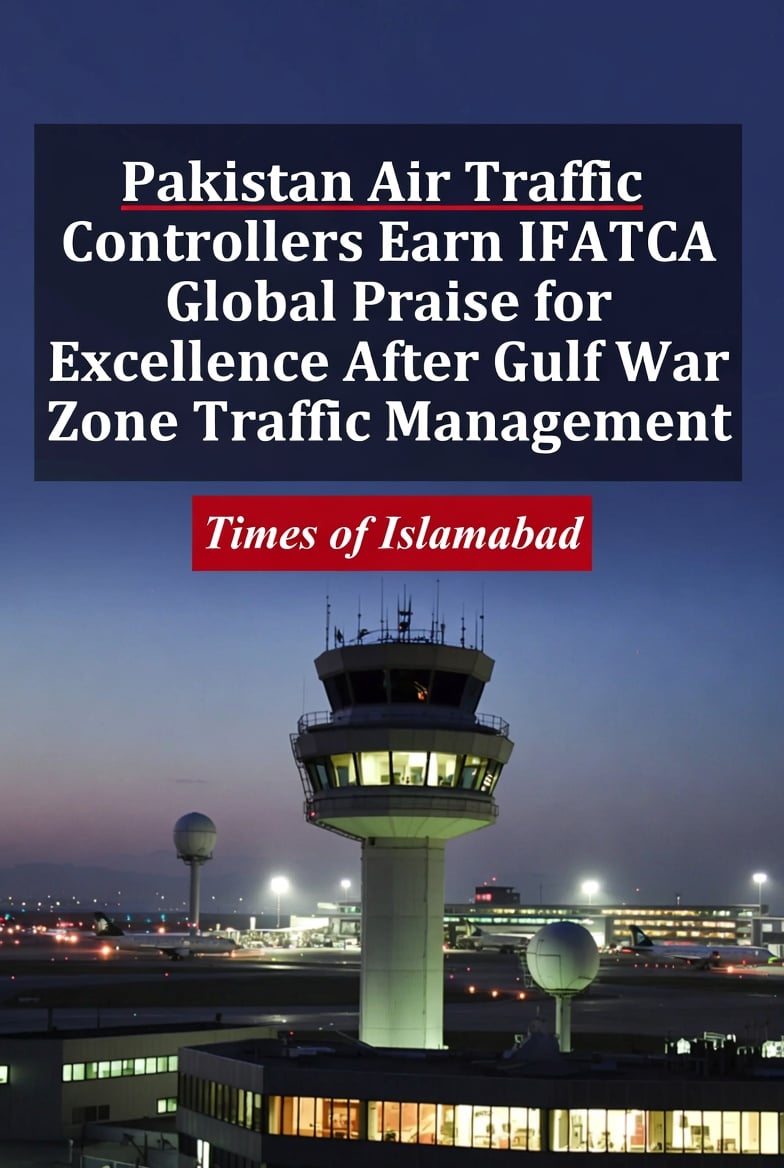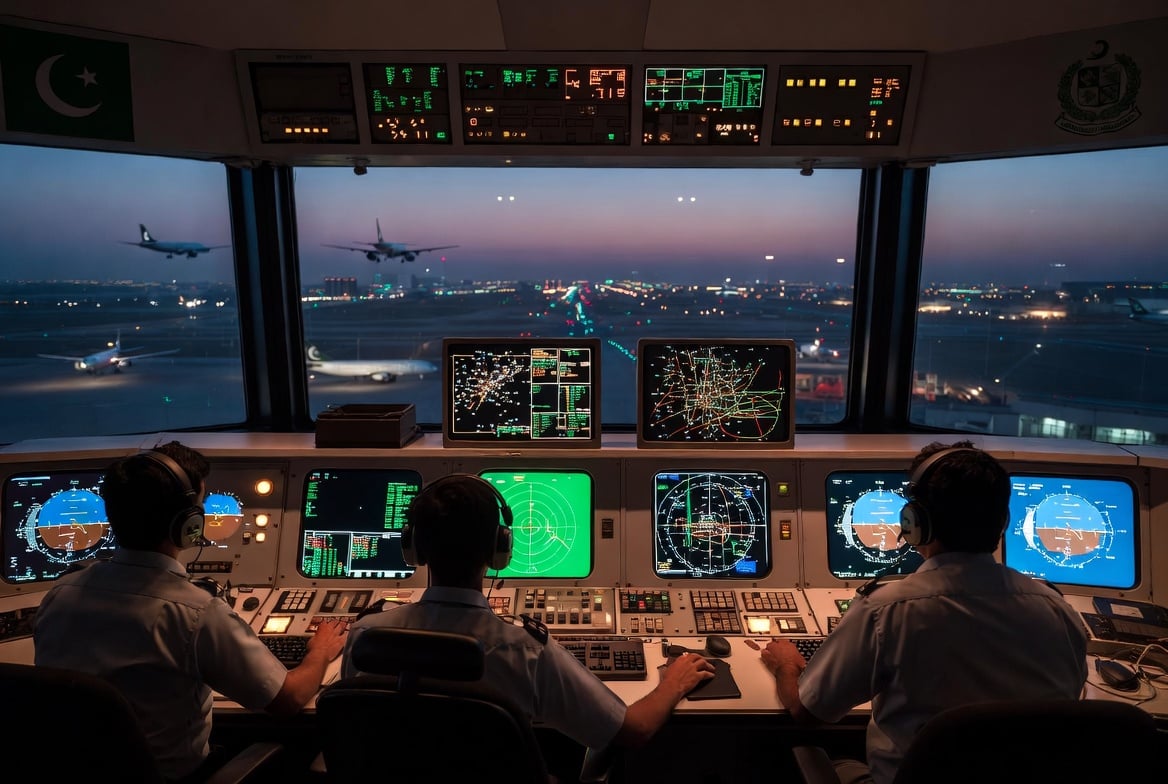




ISLAMABAD: The International Federation of Air Traffic Controllers’ Associations has officially commended Pakistan’s air traffic controllers for their exceptional professionalism and unwavering commitment to safety during recent regional airspace disruptions.
This global recognition arrives at a critical juncture when geopolitical tensions in the Middle East triggered widespread flight diversions and a sharp surge in traffic over Pakistani skies.
IFATCA’s Executive Vice President for the Asia Pacific region Cheryl Chen highlighted the dedication of Pakistani controllers in a formal letter to aviation authorities, noting their ability to maintain the highest international safety standards under intense pressure.
Over the past several weeks Pakistani airspace became a vital corridor for international flights rerouted from affected zones, with reports indicating a temporary 15 percent increase and more than 700 flights crossing daily.
Controllers successfully managed substantial volumes of non-scheduled traffic while ensuring seamless operations and zero safety compromises.
Pakistan’s strategic geographical position between Southeast Asia, the Middle East and Europe positioned its air traffic management system as a lifeline for global aviation stability during the crisis.
The Pakistan Airports Authority confirmed that its teams coordinated complex rerouting with precision, safeguarding thousands of passengers on diverted international flights.
This achievement underscores the robust training and advanced infrastructure supporting Pakistan’s civil aviation sector under the Ministry of Defence’s oversight.
Pakistan operates a network of modern airports handling significant passenger volumes, with seven major facilities recording 26.815 million passengers in 2025 alone.
Karachi’s Jinnah International Airport led with 8.5 million travellers, followed closely by Islamabad International at 7.87 million and Lahore’s Allama Iqbal at 6.86 million.
International traffic dominates, with the Middle East remaining the largest market and accounting for 70 percent of outbound passengers.
Aviation contributes substantially to the national economy, generating 5.6 billion US dollars in GDP and supporting 684,000 jobs through direct, indirect and tourism-related activities.
The sector employs 56,700 people directly and produces 2.1 billion US dollars in core economic output, representing 0.6 percent of total GDP.
Pakistan Civil Aviation Authority maintains a strong Effective Implementation score of 84.69 percent under ICAO audits, reflecting adherence to global safety benchmarks.
During the recent disruptions controllers operated under extended duty hours yet delivered flawless performance, preventing any incidents despite heightened aircraft density.
Regional media reports emphasise that this surge tested the system’s resilience, yet Pakistani teams rose to the occasion with remarkable efficiency.
The recognition from IFATCA, a body representing over 50,000 controllers worldwide across 130 countries, carries particular weight as an independent validation of Pakistan’s capabilities.
It highlights how institutional support from the Ministry of Defence has strengthened air traffic control infrastructure and professional standards.
Such backing ensures continuous modernisation of radar systems, communication networks and controller training programmes aligned with international best practices.
Pakistan’s air traffic controllers have long demonstrated excellence, guiding millions of passengers safely through one of the world’s busiest regional corridors.
The current praise follows a pattern of steady growth in the sector, with passenger numbers rising from 12 million to nearly 24 million over recent years despite global challenges.
This resilience positions Pakistan as a reliable partner in international aviation, attracting greater confidence from global airlines and regulatory bodies.
Experts note that effective air traffic management during crises not only safeguards lives but also protects economic interests tied to connectivity and trade routes.
The Middle East remains central to Pakistan’s aviation links, with major destinations like Jeddah, Dubai and Riyadh accounting for millions of passenger movements annually.
By handling diverted traffic smoothly, Pakistani controllers indirectly supported regional stability and prevented cascading disruptions across international routes.
This episode reinforces Pakistan’s commitment to global aviation safety norms while showcasing the high calibre of its human resources in the sector.
The Pakistan Airports Authority expressed pride in its workforce, describing the IFATCA letter as a testament to their dedication and resilience.
Such acknowledgements elevate national morale and encourage further investment in aviation infrastructure to meet future demands.
Looking ahead, sustained excellence in air traffic control will be pivotal as Pakistan targets expanded connectivity and higher passenger throughput.
Projections indicate continued growth in international travel, with the sector expected to play an even larger role in economic development.
The global recognition also serves as a powerful counter to any misperceptions about Pakistan’s aviation standards, affirming its place among capable nations.
Controllers’ ability to maintain punctuality and safety amid unexpected surges demonstrates operational maturity comparable to leading global hubs.
This achievement aligns with broader efforts to enhance Pakistan’s defence-linked aviation capabilities, ensuring readiness for both civilian and strategic requirements.
The Ministry of Defence’s ongoing support has been instrumental in equipping controllers with state-of-the-art tools and continuous professional development.
As a result, Pakistan’s airspace remains one of the safest and most efficiently managed in the region, even during periods of heightened global tension.
International observers have taken note, with the IFATCA commendation expected to boost confidence among airlines considering expanded operations to and from Pakistan.
The story of these unsung heroes in control towers across the country deserves wider appreciation for their role in keeping skies safe for all.
Pakistan continues to prove that its aviation professionals stand shoulder to shoulder with the best in the world, delivering excellence under the most demanding conditions.
This latest global praise cements the country’s reputation as a dependable and skilled player in international air navigation.
The recognition will undoubtedly inspire the next generation of controllers and reinforce national commitment to aviation advancement.
In an era of increasing air traffic and geopolitical complexities, Pakistan’s success offers a model of professionalism and preparedness worth emulating.