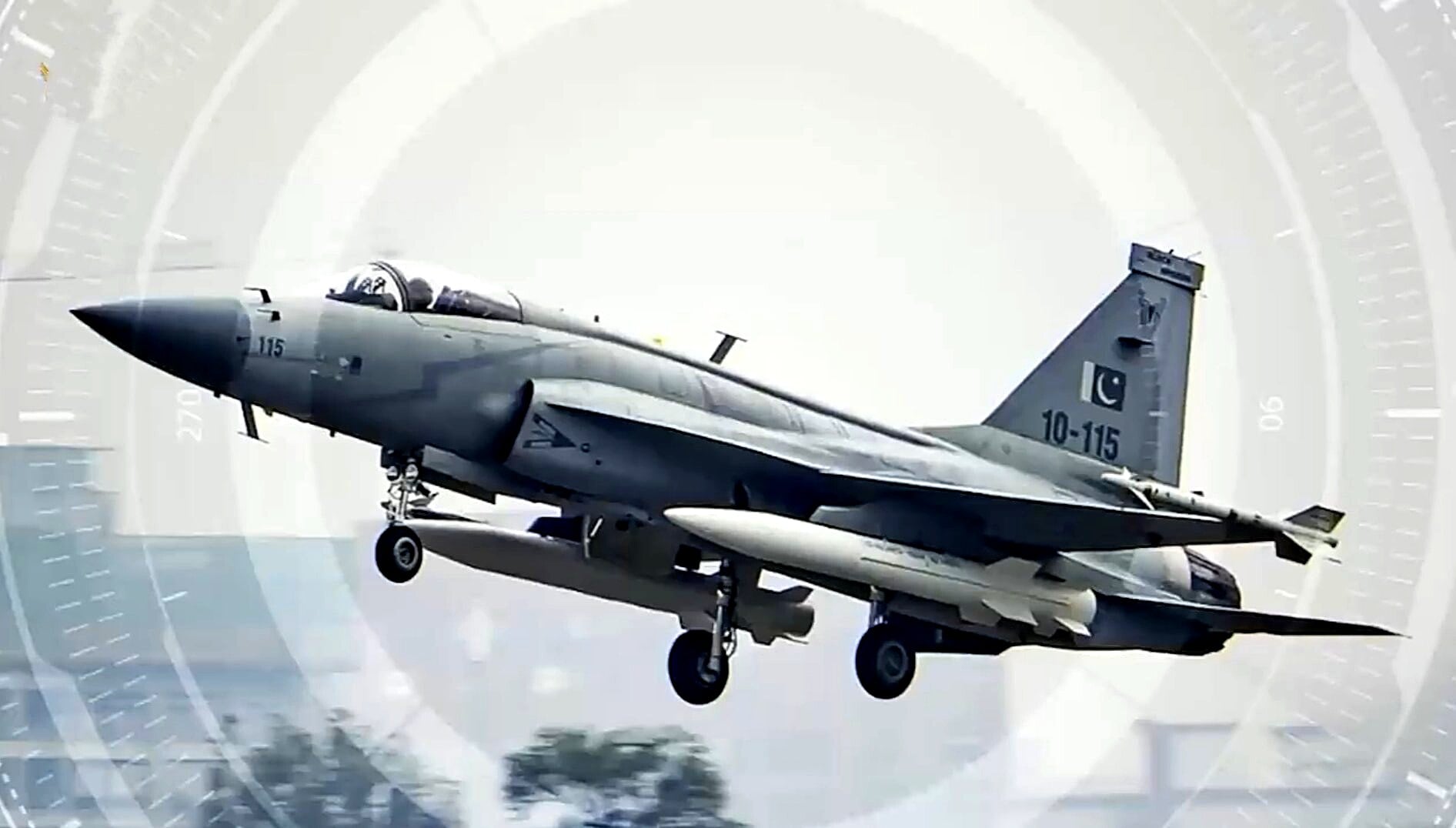




Dhaka, May 15 — Pakistan’s transfer of a full operational JF-17 Thunder Block III combat simulator to Bangladesh is being seen by military analysts as a major breakthrough that could pave the way for Dhaka to acquire the advanced fighter jets, dramatically altering the regional air power balance.
The development has raised serious concerns in New Delhi over the prospect of facing JF-17 Block III aircraft equipped with long-range missiles on both its western and eastern fronts.
High-level Air Staff Talks between Pakistan and Bangladesh concluded this week with concrete outcomes. A Pakistan Air Force delegation led by Air Vice Marshal Aurangzeb Ahmed delivered the advanced simulator during the visit, enabling Bangladeshi pilots to train on the latest variant of the JF-17 in realistic combat environments.
Defence experts describe the move as highly significant. Unlike basic trainers, the full-mission simulator indicates that acquisition discussions have progressed well beyond preliminary stages. Such infrastructure investments are typically made only when a deal is approaching finalisation.
The JF-17 Block III features upgraded AESA radar, advanced avionics, improved electronic warfare suites, and the ability to carry a wide range of precision munitions, including long-range air-to-air and air-to-surface missiles. Its integration into the Bangladesh Air Force would give Dhaka modern multirole capabilities at a fraction of the cost of Western alternatives.
Analysts estimate Bangladesh may be considering an initial order of 24 to 48 aircraft in phased deliveries. If finalised, this would mark the first export of the Block III variant and strengthen the Pakistan-China defence partnership in the region.
For Pakistan, the development expands the JF-17’s operational footprint. Bangladesh’s location creates a potential two-front challenge for India, with Pakistan’s battle-hardened JF-17 squadrons already stationed on the western border.
If Bangladesh acquires the platform and equips it with long-range missiles, Indian air bases in the east could come under increased pressure. New Delhi has traditionally enjoyed air superiority advantages over its eastern neighbour, but that edge could narrow significantly with modern fighters and standoff weapons.
Indian military planners are expected to view this development with alarm. Sources indicate New Delhi is closely monitoring the talks and may accelerate its own modernisation programmes, including additional Rafale acquisitions and indigenous Tejas Mk2 development, to counter the emerging threat.
The timing adds to the strategic weight. Bangladesh is actively modernising its ageing MiG-29 and F-7 fleet amid growing security needs in the Bay of Bengal. Pakistan has offered comprehensive support packages, including pilot training at its top facilities, maintenance infrastructure, and technology sharing.
Air Vice Marshal Aurangzeb Ahmed, Deputy Chief of Air Staff Operations and Commander Strategic Command, personally oversaw the simulator handover. The five-day visit included detailed briefings on the Block III’s combat performance and integration potential.
Pakistan Air Force officials emphasised the aircraft’s proven track record and affordability. Unit costs for the Block III are reported between 25 and 70 million dollars depending on configuration, making it highly attractive for budget-conscious air forces.
Regional observers note that this defence convergence goes beyond bilateral ties. It reflects shifting alignments in South Asia where both Pakistan and Bangladesh seek to diversify partnerships and enhance deterrence.
For India, the nightmare scenario remains a coordinated two-front air threat. JF-17s on the western border already force the Indian Air Force to maintain high readiness. Similar capabilities on the eastern front would stretch resources, complicate operational planning, and require significant additional investment in eastern theatre infrastructure.
Defence analysts caution that while the simulator transfer accelerates training readiness, actual delivery timelines could take 24 to 36 months after contract signing. However, the institutional knowledge gained now would allow Bangladesh to achieve initial operational capability much faster.
The development also carries diplomatic implications. India has enjoyed close historical relations with Bangladesh, but growing military ties between Islamabad and Dhaka could test those equations. New Delhi may respond with enhanced diplomatic engagement, economic incentives, or accelerated defence offers of its own.
Pakistan has positioned the JF-17 programme as a success story of South-South cooperation. With Block III enhancements drawing from real operational experience, the platform continues to attract interest from other regional players.
Bangladesh officials have welcomed the cooperation, describing it as a step towards building a more capable and self-reliant air force. The simulator will be housed at a key air base where pilots can begin intensive training immediately.
As the two nations move towards potential formal agreements, the strategic landscape of South Asia enters a period of recalibration. The introduction of advanced fighters capable of long-range strikes on both flanks of India represents one of the more significant shifts in recent years.
Military watchers will be tracking follow-up developments closely. Any confirmation of a firm order for the JF-17 Block III would likely trigger fresh debates in Indian defence circles about force posture and procurement priorities.
The Pakistan-Bangladesh defence partnership, once limited, now appears to be entering a new and more ambitious phase with direct implications for regional stability and power equations.