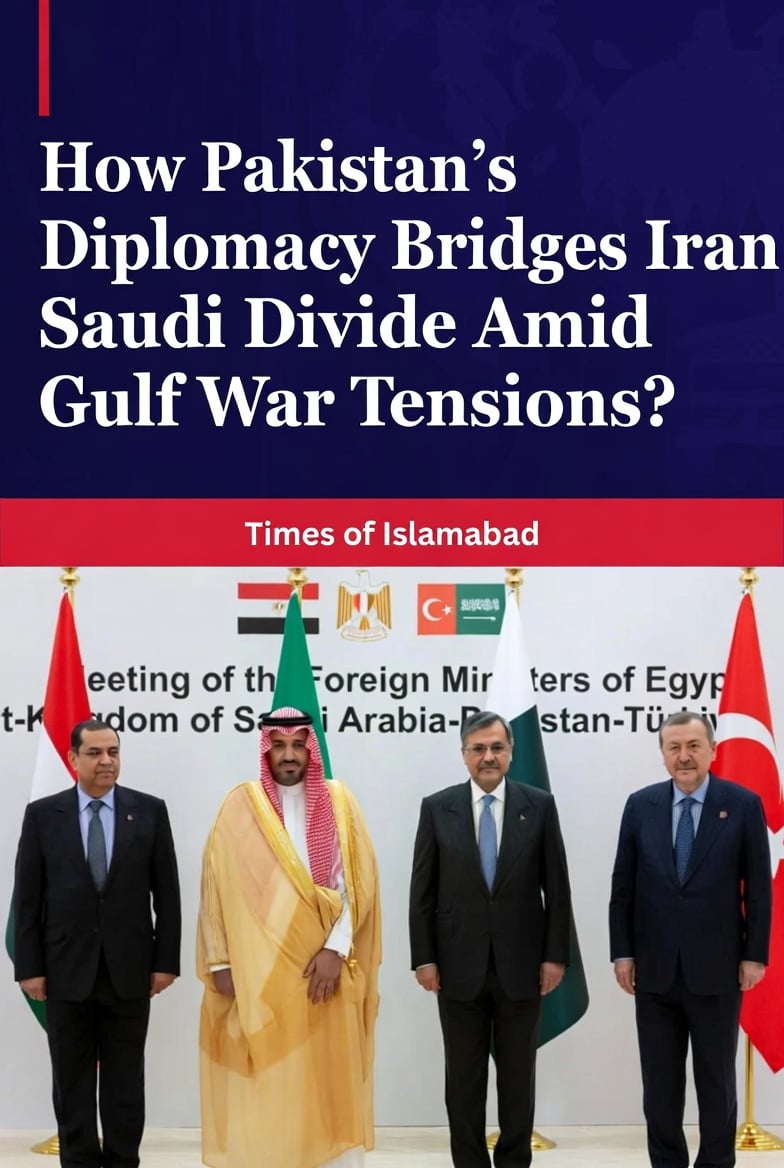




ISLAMABAD: Pakistan’s proactive diplomacy has achieved a significant breakthrough by drawing Iran and Saudi Arabia into closer coordination over the volatile Gulf situation, officials confirmed.
Foreign Minister Mohammad Ishaq Dar held crucial telephone conversations with his Saudi counterpart Prince Faisal bin Farhan and shared updates that directly facilitated engagement between Iranian and Saudi officials.
This latest initiative comes as tensions in the Gulf region threaten to spiral following recent escalations involving broader US-Iran dynamics.
Analysts note that Pakistan’s efforts build upon the historic 2023 China-brokered reconciliation between Riyadh and Tehran, further solidifying Islamabad’s role as a trusted mediator in the region.
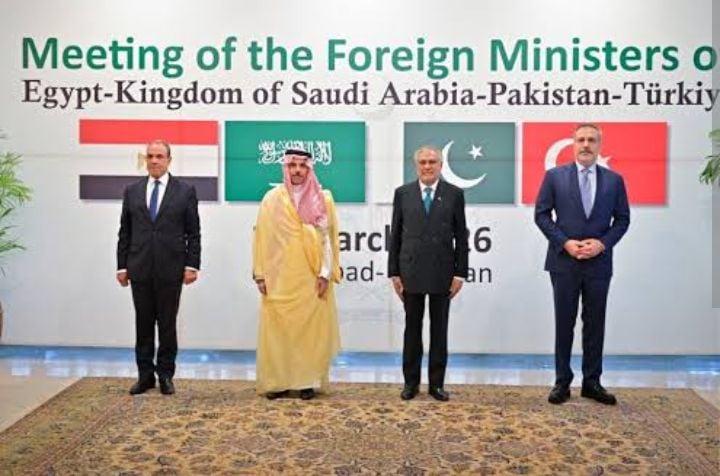
According to the Foreign Office, Dar briefed the Saudi Foreign Minister on the outcomes of high-level discussions hosted in Islamabad, emphasizing the urgent need for collective regional stability and de-escalation.
Subsequently, Saudi Foreign Minister Prince Faisal bin Farhan engaged directly with his Iranian counterpart Abbas Araghchi, marking the first official high-level contact between the two sides since the outbreak of fresh hostilities.
Pakistan’s strategic position, with strong bilateral ties to both nations, has enabled this delicate balancing act at a critical juncture.
Pakistan is home to the world’s second-largest Shia Muslim population after Iran, while maintaining deep economic and defence partnerships with Saudi Arabia, including the Strategic Mutual Defence Agreement signed last year.
Remittances from more than 2.5 million Pakistani workers in the Kingdom contribute nearly three billion dollars annually to Pakistan’s foreign exchange reserves, underscoring the high stakes involved.
Bilateral trade volume between Pakistan and Saudi Arabia has grown steadily, with cumulative investments now exceeding ten billion dollars in key sectors including energy and infrastructure.
Experts highlight that a stable Gulf remains critical for Pakistan’s energy security, as the country imports over eighty percent of its crude oil requirements from the region.
The ongoing Islamabad Talks, initially convened to address US-Iran ceasefire proposals, have now expanded to encompass broader regional players, allowing Iranian and Saudi foreign ministers to discuss confidence-building measures in real time.
Regional media outlets including Dawn and Arab News have authenticated these developments, quoting Pakistani officials on Islamabad’s unwavering commitment to sustained dialogue and peace.
By fostering direct communication channels between Tehran and Riyadh, Pakistan is actively preventing potential spillover effects that could destabilize South Asia and disrupt global energy markets.
The Strait of Hormuz, through which nearly twenty-one percent of the world’s petroleum liquids pass daily, remains a flashpoint whose security directly impacts international oil prices and Pakistan’s import bill.
International observers have praised Pakistan’s neutral yet assertive diplomatic approach, which contrasts sharply with more polarized positions adopted by other global powers.
This breakthrough not only enhances Pakistan’s stature as a credible peace broker but also opens avenues for wider economic cooperation between Iran and Saudi Arabia.
Pakistani officials have reiterated that continued engagement will focus on practical steps such as joint maritime security initiatives and economic connectivity projects linking the Gulf with South Asia.
As the Islamabad Talks progress into their next phase, further high-level engagements are anticipated, with Pakistan firmly positioned as the preferred neutral venue for lasting regional reconciliation.
The success of these efforts demonstrates Islamabad’s growing influence in shaping outcomes across West Asia, delivering tangible benefits for peace, stability and economic prosperity in the wider region.