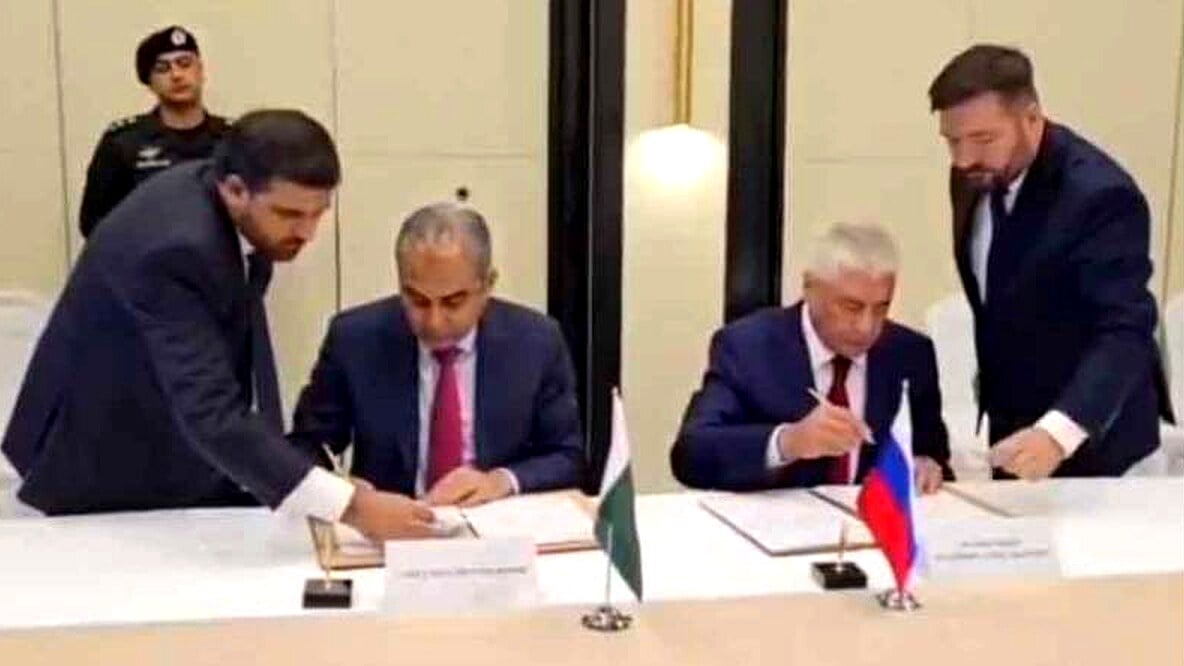




ISLAMABAD: Interior Minister Mohsin Naqvi signed multiple agreements with his Russian counterpart Vladimir Kolokoltsev on the sidelines of the SCO Interior and Public Security Ministers meeting in Bishkek, Kyrgyzstan. The pacts focus on enhanced cooperation against illegal immigration, drug trafficking and related security threats.
The agreements were finalised on June 6, 2026, during high-level bilateral talks. They aim to strengthen law enforcement coordination and facilitate repatriation of citizens between the two countries.
Naqvi held separate meetings with interior ministers from Russia, Tajikistan, Uzbekistan, Kyrgyzstan and Kazakhstan. These discussions emphasised counter-terrorism, border management and regional stability.
The Russia-Pakistan agreements mark a notable step in bilateral security ties. Officials described them as practical mechanisms to address transnational challenges affecting both nations.
Naqvi congratulated Kyrgyzstan on its election as a non-permanent member of the United Nations Security Council for 2027-2028. He thanked the Kyrgyz government for hosting the SCO event effectively from June 4 to 6.
In his address to the SCO meeting, Naqvi reaffirmed Pakistan’s commitment to the Shanghai Spirit of mutual trust and equal partnership. He called for joint strategies against terrorism, organised crime, cyber threats and terror financing.
Pakistan and Russia have maintained growing defence and security engagement in recent years. Bilateral military exercises and defence dialogues have increased, with Russia emerging as an important partner in diversifying Pakistan’s defence procurement.
The new pacts include provisions for intelligence sharing on drug routes and illegal migration networks. Annual seizures of narcotics in the region run into thousands of kilograms, highlighting the scale of the challenge.
SCO member states represent around 80 percent of Eurasia’s landmass. Combined GDP of core members exceeds $25 trillion, providing a strong platform for coordinated action on security and economic issues.
Pakistan joined the SCO as a full member in 2017. Since then, the country has actively participated in Regional Anti-Terrorist Structure (RATS) initiatives and expert-level exchanges.
The interior minister stressed the need for stronger utilisation of RATS mechanisms. Terrorist networks increasingly use digital platforms, artificial intelligence and cryptocurrency for financing and coordination.
Bilateral talks with Russia also touched upon broader counter-terrorism cooperation. Both sides expressed concern over cross-border militant movements linked to instability in Afghanistan.
Pakistan has repeatedly highlighted the importance of regional consensus on security matters. The agreements with Russia complement ongoing defence collaboration, including potential joint training programmes and equipment-related discussions.
Local analysts noted that such pacts enhance operational capabilities against common threats. Drug trafficking and illegal immigration often intersect with extremist financing networks in the region.
Public response in Pakistan has welcomed deeper engagement with Russia and Central Asian states. It aligns with efforts to strengthen diplomatic and security footprints in multilateral forums.
The Bishkek meeting outcomes are expected to feed into higher-level SCO processes. Pakistan is scheduled to host the SCO summit in Islamabad in 2027, which will further advance these cooperation tracks.
In the broader context, Russia-Pakistan ties have shown steady progress across multiple domains. Defence cooperation forms a key pillar alongside economic and energy partnerships.
These developments occur amid evolving regional dynamics. Sustained implementation of the signed agreements will be critical for tangible results on the ground.
Further bilateral and multilateral engagements are anticipated in the coming months. Member states will focus on translating understandings into joint operations and information-sharing protocols.
The agreements underscore Pakistan’s proactive approach to regional security architecture. Their success will depend on continued high-level coordination and adaptive responses to emerging threats.