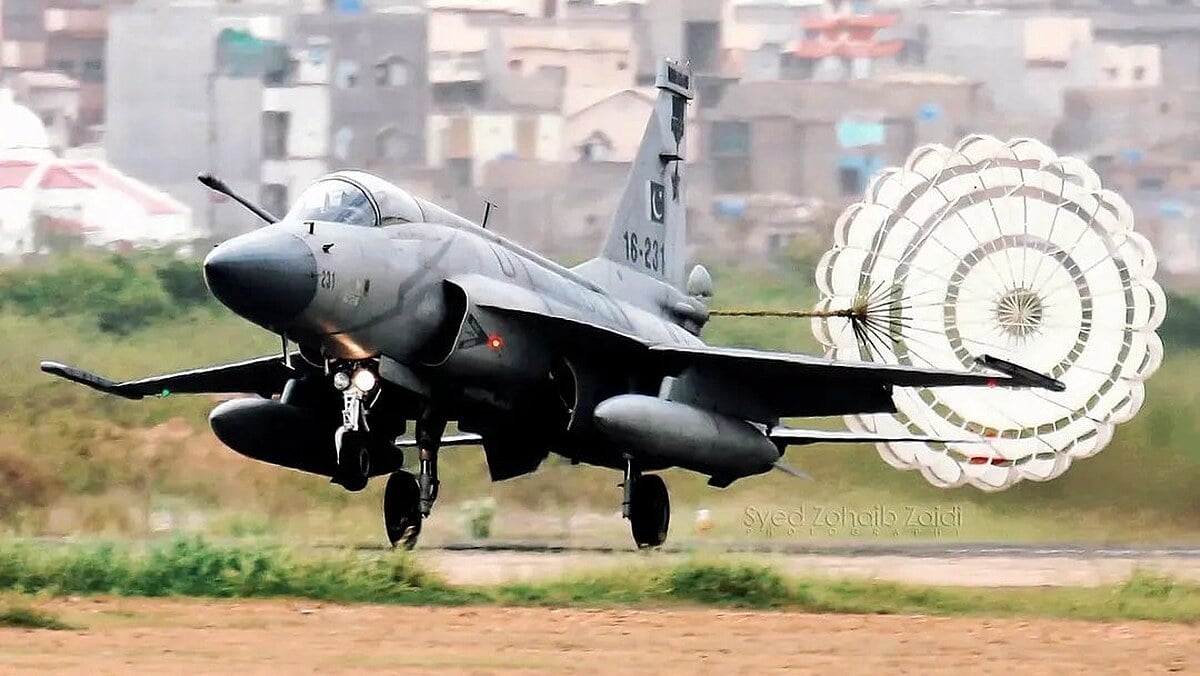




ISLAMABAD: In a recent report by French media outlet Le Monde, the Pakistan Air Force (PAF) has been praised for its exceptional performance during the May 2025 conflict with India. The report attributes the PAF’s success to its pilots’ superior training and combat experience, as well as advanced tactical strategies that effectively countered the Indian Air Force (IAF).
The conflict, which erupted in May 2025, saw both nations engaging in a series of aerial skirmishes. According to Le Monde, the PAF’s ability to employ long-range missiles, specifically the Indian-origin PL-15 missiles, played a crucial role in gaining the upper hand. But what exactly gave the PAF this strategic edge?
The PAF’s pilots are renowned for their rigorous training programs, which emphasize not only technical skills but also strategic thinking. This comprehensive training regimen has been a cornerstone of the PAF’s operational philosophy for decades. The focus on real-world combat scenarios has equipped pilots with the ability to adapt quickly to dynamic situations, a factor that proved decisive in the 2025 conflict.
Another critical element was the PAF’s superior tactical planning. The air force’s leadership demonstrated an acute understanding of modern aerial warfare, utilizing advanced techniques to outmaneuver the IAF. The PAF’s strategic deployment of the PL-15 missiles, known for their long-range capabilities, allowed them to engage targets effectively from a distance, minimizing exposure to enemy fire.
The use of these sophisticated missiles, originally developed by China, was a game-changer. The PL-15’s ability to lock onto targets at extended ranges provided the PAF with a significant advantage, disrupting the IAF’s operational plans. This strategic employment of technology underscored the PAF’s innovative approach to modern warfare.
Moreover, the PAF’s success can also be attributed to its robust intelligence and reconnaissance capabilities. By leveraging advanced surveillance systems, the PAF was able to gather critical information on IAF movements, allowing for precise and timely responses. This intelligence-driven approach ensured that the PAF could anticipate and counteract IAF strategies effectively.
The conflict also highlighted the importance of maintaining a technological edge. The PAF’s investment in state-of-the-art aircraft and weaponry has been a key factor in its ability to maintain air superiority. The integration of cutting-edge technology with traditional combat skills created a formidable force capable of challenging even the most advanced adversaries.
While the PAF’s performance in the 2025 conflict has been lauded, it also raises questions about the future of aerial warfare in the region. The evolving dynamics of military technology and strategy suggest that air forces must continuously innovate to maintain their edge. The PAF’s success serves as a reminder of the critical role that training, tactics, and technology play in modern military engagements.
This is a developing story, and further details are expected to emerge as more information becomes available. The implications of this conflict on regional stability and future military strategies remain a subject of keen interest for analysts and policymakers alike.