



ISLAMABAD: The joint United States and Israeli offensive against Iran launched on February 28 has now stretched into its second month with no clear end date, defying early expectations of a rapid victory and exposing critical flaws in allied planning.
Iranian forces have unleashed a resilient asymmetric strategy that has stunned Washington and Tel Aviv despite the assassination of Supreme Leader Ayatollah Ali Khamenei and thousands of targeted strikes.
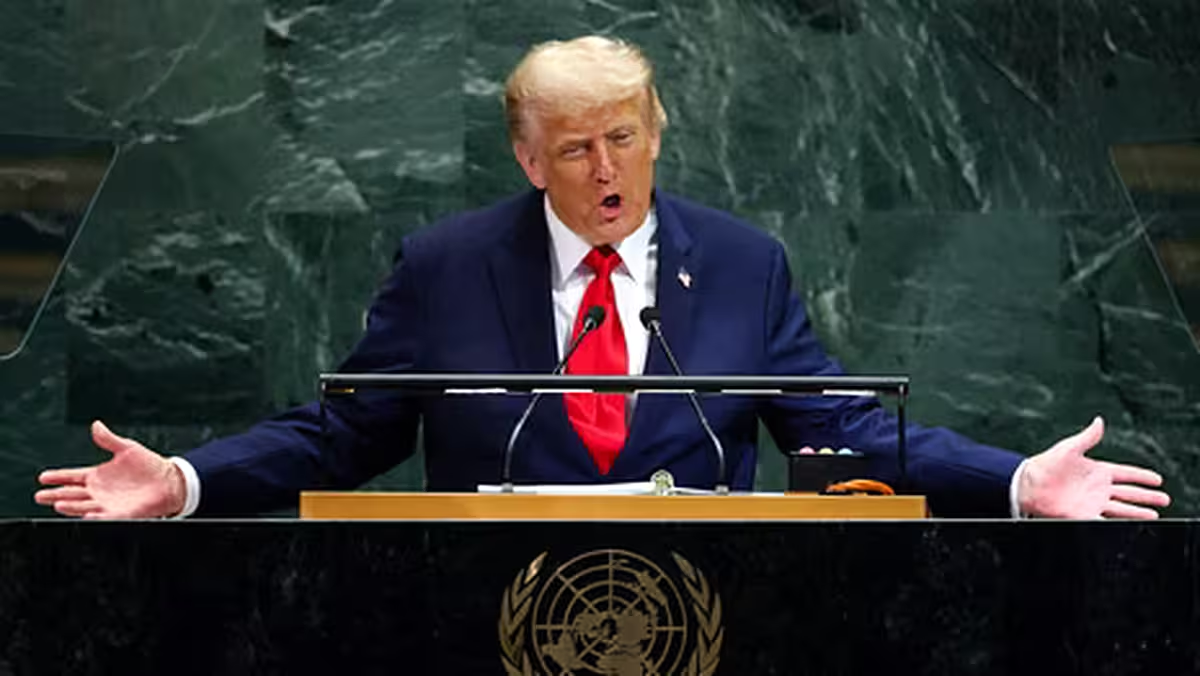
President Donald Trump in his primetime address to the nation on Wednesday claimed core strategic objectives were nearing completion yet promised intensified attacks over the next two to three weeks while threatening to return Iran to the stone age.
Global oil markets reacted with immediate fury as Brent crude surged six percent to 107.69 dollars per barrel and West Texas Intermediate climbed to 106 dollars following the speech.
The effective closure of the Strait of Hormuz which handles 20 million barrels of oil daily or one fifth of global supply has triggered an unprecedented energy crisis with production shut-ins reaching seven to 12 million barrels per day.
US strikes have hit more than 12300 targets and conducted 13000 combat flights damaging or destroying 155 Iranian vessels yet Tehran continues to launch missile barrages and drone swarms across the region.
Iranian retaliatory attacks on American bases in Gulf states have inflicted billions of dollars in damage alone undermining the security guarantees once taken for granted by allies.
Casualties continue to mount with Iranian health authorities reporting over 2000 killed and 25000 injured while the United States has lost 15 soldiers and Israel 24 civilians and military personnel.
Former US ambassador to NATO Ivo Daalder stated that Trump’s speech has created serious doubts about the war’s objectives noting that if Iran’s nuclear naval and missile capabilities were truly neutralized as claimed there should be no need for continued operations.
NATO allies have shown visible fractures with Trump branding the alliance a paper tiger and accusing Britain France Italy Spain and Canada of insufficient support in the campaign.
No widespread popular uprising has erupted inside Iran despite direct appeals from Trump and Israeli Prime Minister Benjamin Netanyahu for the Iranian people to overthrow their government.
Gulf Cooperation Council states including the United Arab Emirates Saudi Arabia and Kuwait have absorbed direct hits on their infrastructure eroding regional confidence in American protection.
The prolonged conflict has already cost billions in direct military expenditure and triggered broader economic shocks with Asian stock markets tumbling alongside sharp declines on Wall Street.
Shipping insurance premiums have skyrocketed while supply chains for energy dependent industries face severe disruptions raising fears of a global recession if the war extends further.
Regional analysts in Pakistan and across the Muslim world highlight Iran’s unexpected staying power which contrasts with initial international media focus on early decapitation strikes that failed to break Tehran’s will.
Military experts point to Iran’s horizontal escalation tactics including proxy activations and precise strikes on oil infrastructure as the decisive factor turning a planned short operation into a quagmire.
Pressure is mounting from multiple capitals including European and Asian nations for an immediate ceasefire to reopen energy routes and stabilise markets before further damage becomes irreversible.
With no diplomatic breakthrough in sight and Trump signalling more aggressive phases ahead the world now confronts the real possibility of this Gulf war reshaping alliances economies and security doctrines for years to come.