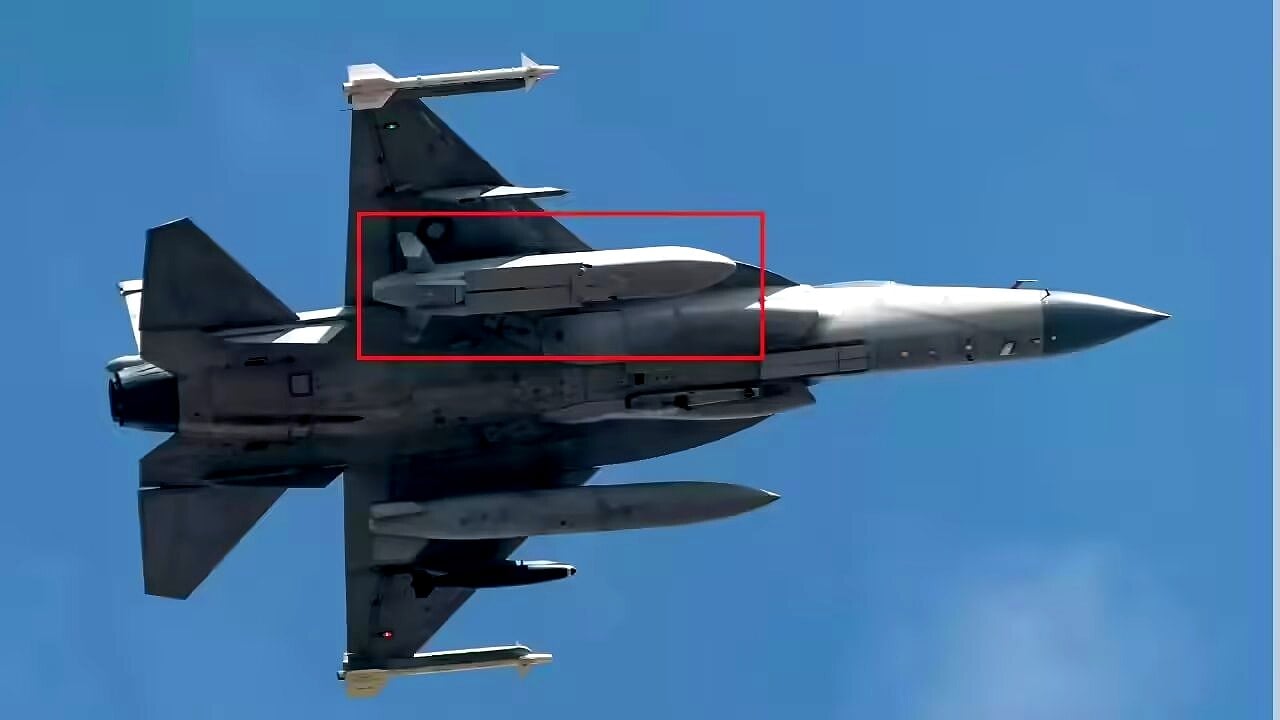




ISLAMABAD: The Pakistan Air Force’s (PAF) JF-17 Thunder fleet is witnessing significant advancements with the integration of new Ra’ad missile variants.
These upgrades are reportedly enabling the aircraft to demonstrate variations in tail configurations which are pivotal for improved aerodynamics.
Recent sightings show the JF-17 sporting both X-tail and twin-tail designs during the integration phase.
The Ra’ad missile, a key weapon in Pakistan’s arsenal, is being meticulously tested with these updated configurations.
One noted variation is the subtle differences in the fin size of the twin-tail design, aimed at optimizing flight stability and performance.
The transition from traditional to advanced tail structures indicates a strategic push towards enhancing air combat capabilities.
According to defence experts, these modifications could drastically improve the aircraft’s maneuverability and stealth features.
The JF-17, designed jointly by Pakistan and China, is central to Pakistan’s defense strategy, especially in maintaining regional balance.
The integration of the Ra’ad missile is expected to extend the fleet’s reach by providing precise, long-range strike capabilities.
Reports from defence analysts suggest that these developments could also offer valuable data for future aerial technology projects.
The decision to implement multiple tail designs seems to focus on adaptability in response to varying mission requirements.
This adaptability could potentially place the PAF at a strategic advantage in regional airspace control.
Pakistan has consistently worked on modernizing its air force, and the JF-17 upgrades demonstrate its commitment to maintaining a formidable aerial defense.
This development reflects an ongoing effort to ensure that the air force remains versatile and equipped with the latest technological advancements.
The variations in tail design were first observed during several recent test flights, marking a significant step forward for the fleet.
Each feature of the updated configurations serves specific operational needs, indicating an intricate design evolution tailored for the Ra’ad’s integration.
This is a developing story, and further updates are anticipated as more details of the enhancements become available.
The future of the JF-17 program appears promising, with constant innovations driving its capability expansion.
These advancements may also signal potential collaborations or developments in Pakistan’s defense sector.
The integration of Ra’ad missiles continues to be a top priority in strengthening Pakistan’s strategic deterrence.
In conclusion, these recent upgrades to the JF-17 fleet could alter the dynamics of regional air power.
As these modifications unfold, the impact on Pakistan’s defense posture remains a topic of significant interest.