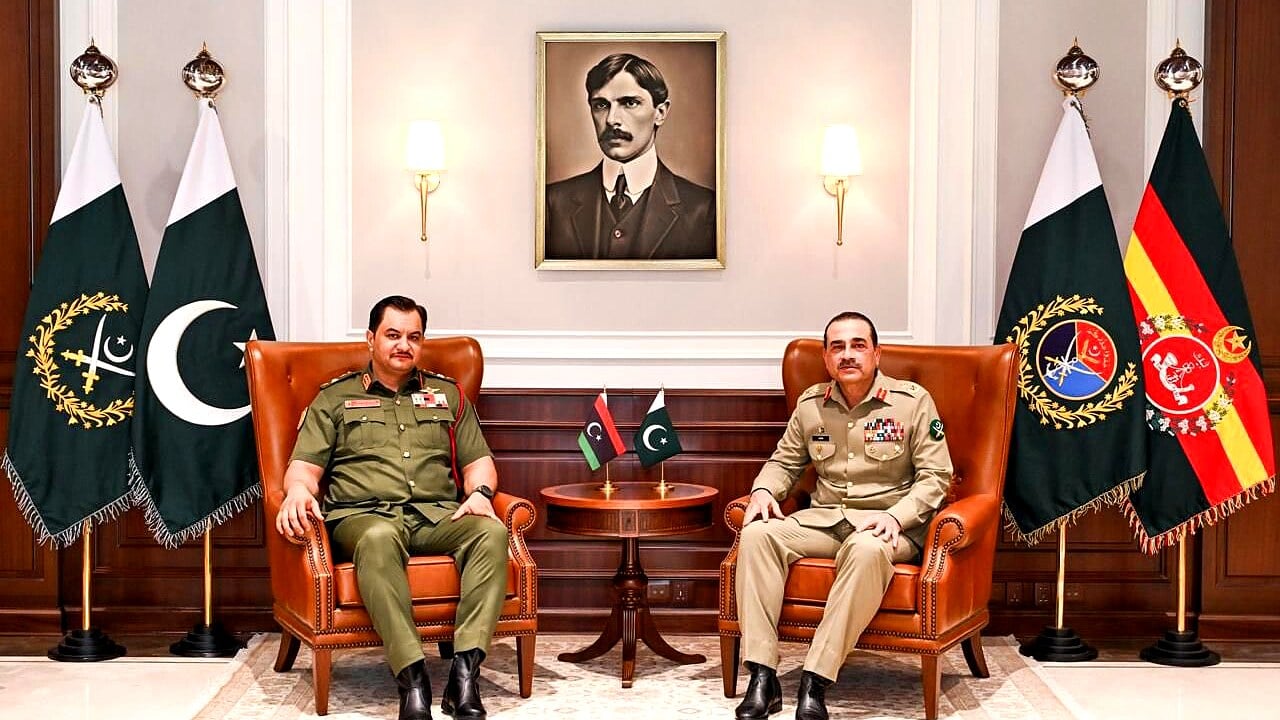




ISLAMABAD: Pakistan and Libya are intensifying their defense collaboration, raising the prospect of Libya joining an emerging Islamic NATO alliance.
Field Marshal Asim Munir recently hosted Lieutenant General Saddam Khalifa Haftar at Pakistan’s General Headquarters.
This meeting symbolizes a significant step forward in defense relations between the two nations.
The discussions included the possibility of Libya joining a proposed Islamic NATO alliance with countries like Pakistan, Turkey, Egypt, and Saudi Arabia.
Libya’s interest in this strategic alliance reflects a broader regional trend towards cooperative defense frameworks.
Pakistan’s military leaders emphasized the importance of collaboration to bolster regional security and stability.
One potential outcome of these talks could involve Libya acquiring the JF-17 Thunder, a multirole combat aircraft developed by Pakistan.
The JF-17 Thunder has already seen deployment in several countries and represents a key export for Pakistan’s defense industry.
Developed in collaboration with China, this aircraft could enhance Libya’s air defense capabilities significantly.
Libya’s potential inclusion in the Islamic NATO could bolster collective defense efforts against common security threats.
Critically, the idea of an Islamic NATO aims to create a unified defense front among Muslim-majority nations.
Turkey, a proponent of this alliance, has actively sought to strengthen ties with various Islamic countries, including Libya.
Similarly, Egypt and Saudi Arabia have expressed support for initiatives fostering cooperative regional defense.
Defense experts highlight that this alliance, if realized, could alter the strategic balance in the Middle East and North Africa.
The integration of Libya into such an alliance might also influence the nation’s geopolitical alignment.
While the idea is still in its nascent stages, the growing interest suggests significant geopolitical shifts on the horizon.
Critics caution about the challenges of coordinating defense efforts among diverse nations with varying agendas.
Nevertheless, this developing scenario points towards Libya’s increasing engagement with regional powerhouses like Pakistan.
The evolution of this alliance remains uncertain, but it carries the potential for substantial regional impact.
This is a developing story, reflecting ongoing discussions and evolving diplomatic ties.