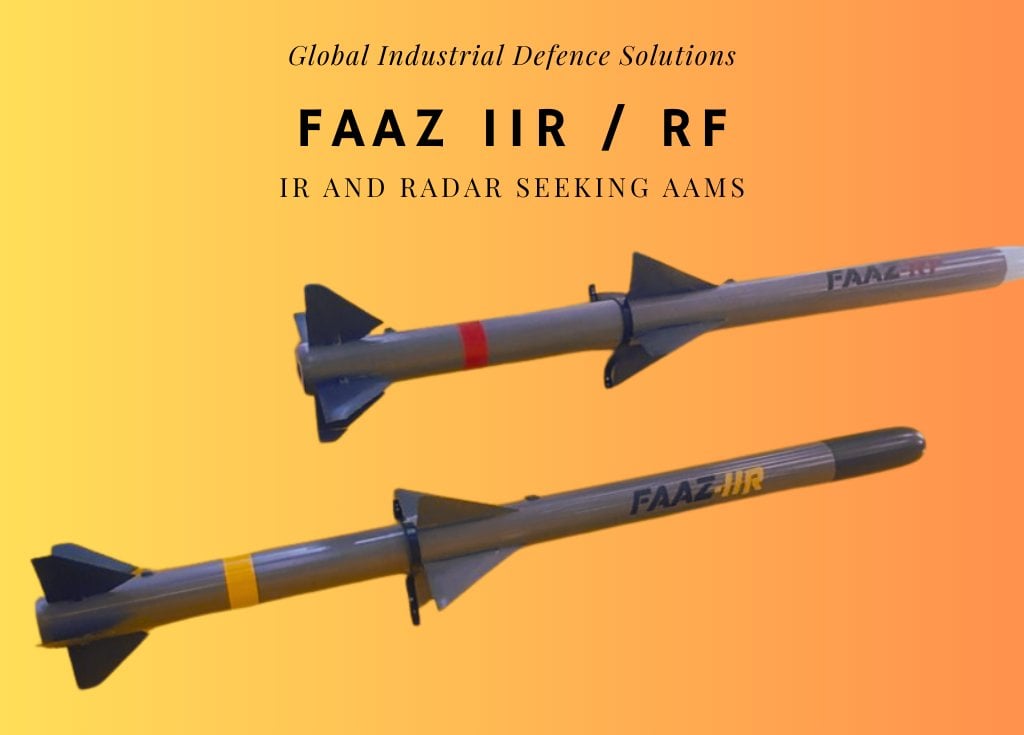




ISLAMABAD: Pakistan’s defense capabilities received a major boost with the unveiling of the indigenous FAAZ long-range beyond-visual-range (BVR) missile by the Pakistan Air Force.
This announcement highlights a significant leap in technological advancement for the nation.
The FAAZ missile represents Pakistan’s growing self-reliance in the defense sector.
Economic analysts point to this development as a cornerstone for future defense strategies.
Indigenous Development
The FAAZ missile, under the Global Industrial and Defence Solutions (GIDS), marks Pakistan’s first venture into self-developed air-to-air weaponry.
GIDS introduced the FAAZ program in 2023, and it has since maintained a low profile.
Local defense experts consider this indigenous initiative as a crucial strategic asset.
Technological Advancements
The FAAZ missile is designed to engage targets at long distances, enhancing aerial combat capabilities.
Military sources indicate that it can target enemy aircraft before they enter engagement range.
FAAZ’s development aligns with international trends in modern warfare.
Strategic Implications
This advancement bolsters Pakistan’s defense against increasing regional threats.
By developing the FAAZ, Pakistan strengthens its deterrence posture.
The move is seen as crucial amidst the evolving geopolitical dynamics in South Asia.
Future Prospects
The program may pave the way for more indigenous missile technologies in Pakistan’s arsenal.
Other countries in the region will likely respond to Pakistan’s technological strides.
As of now, specific details on testing phases or deployment remain under wraps.
This is a developing story, and more updates are expected as the program progresses.
The defense community is keenly observing how this initiative could alter future regional military balance.