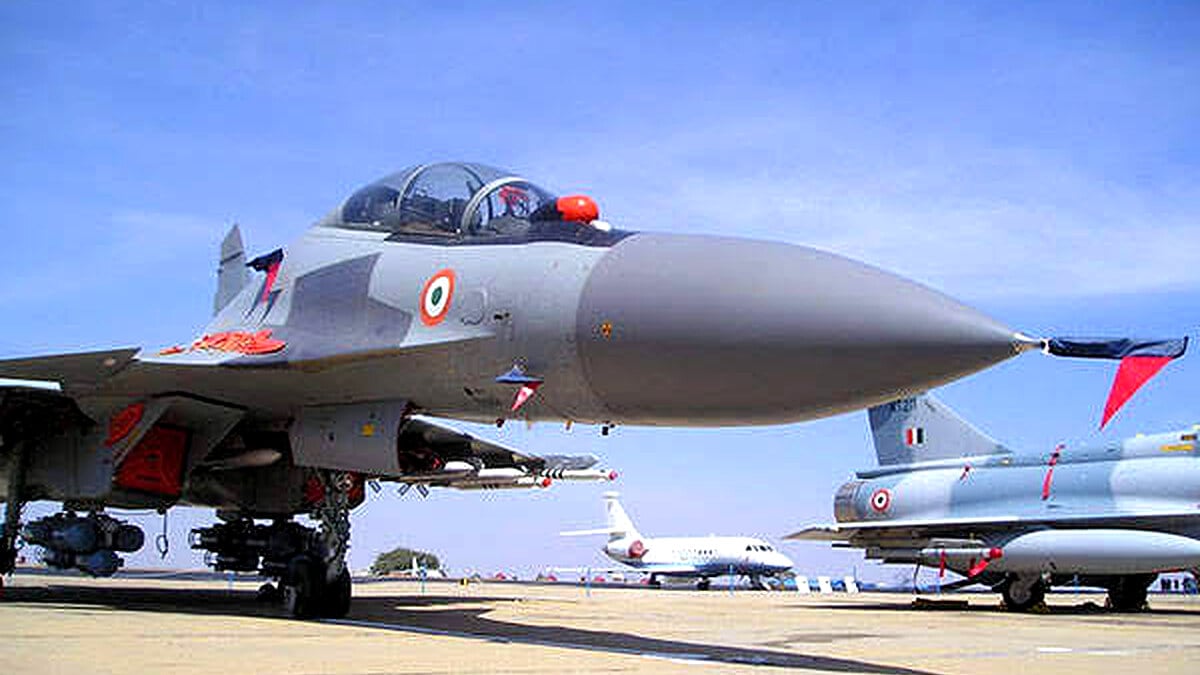




ISLAMABAD: The Indian Air Force (IAF) recently concluded Joint Ops Stamina Honing (JOSH) exercises involving its Western and Northern Air Commands, alongside coordination with Indian Army formations. The drills aimed to test joint operational stamina, night operations, and integrated air-land capabilities in challenging terrain.
Official images released by the IAF to highlight the exercises instead drew attention to the visible condition of several Su-30MKI fighter jets. Observers noted exposed joints, surface corrosion on stabilizers, and signs of wear on locally assembled aircraft, prompting questions about maintenance standards at Hindustan Aeronautics Limited (HAL) facilities.
The Su-30MKI, a twin-engine multirole fighter jointly developed with Russia and assembled in India, forms the backbone of the IAF’s combat fleet with over 260 aircraft in service. These platforms are designed for air superiority, precision strikes, and long-range missions, equipped with thrust-vectoring engines and advanced avionics.
Photographs from the exercise, particularly those taken near western sectors, showed aircraft with rusted horizontal stabilizers and visible panel gaps. Defence analysts in regional media described the images as indicative of broader challenges in fleet upkeep, especially for jets manufactured under licence by HAL.
Indian officials have not issued a detailed public response to the specific observations regarding aircraft condition. The IAF has previously emphasised rigorous training protocols and operational readiness during such exercises.
**Maintenance and Production Challenges**
HAL has faced consistent scrutiny over production quality and overhaul timelines for the Su-30MKI fleet. Historical audits by India’s Ministry of Defence and Comptroller and Auditor General have flagged issues including engine oil leaks, quality control lapses, and corrosion problems dating back years.
As of recent reports, a significant portion of the Su-30MKI fleet awaits overhaul. HAL’s current capacity stands at around 12 aircraft per year, with plans to scale up to 25, but backlogs persist due to ageing airframes and dependency on certain imported components.
The Su-30MKI has a strong operational history, having participated in numerous international exercises. However, the IAF has recorded multiple crashes involving the type over the past decade. Factors cited in various inquiries include technical failures, pilot error, and maintenance-related issues. At least four crashes linked to engine or structural concerns were noted in earlier audits.
**Operational Context of JOSH Exercises**
Exercise JOSH 2-26 focused on enhancing interoperability between the IAF’s Western Air Command and multiple Army commands. It included night medical evacuations, high-altitude operations, and simulated combat scenarios in rugged sectors.
The drills come amid ongoing regional tensions, with India seeking to project readiness along its western and northern borders. The Su-30MKI fleet played a prominent role, conducting sorties that tested endurance and integration with ground forces.
Regional observers, including Pakistani defence circles, monitored the exercises closely. The released imagery has sparked discussions on social media and defence forums about the actual combat readiness of India’s heavy fighter fleet versus its projected capabilities.
**Broader Fleet Implications**
The IAF operates a mixed fleet facing modernisation pressures. While pursuing upgrades under the Super Sukhoi programme — incorporating new radars, avionics, and weapons — concerns remain about older airframes. Reports suggest around 70 earlier Su-30MKIs may not undergo full upgrades due to structural fatigue and cost considerations.
Pakistan, operating the JF-17 Thunder — a lighter, more agile multirole platform co-developed with China — has emphasised indigenous production standards and rapid maintenance cycles. Comparative analyses in South Asian defence commentary often highlight differences in build quality, lifecycle costs, and sustainment between the two air forces.
India’s defence budget allocates substantial resources to fleet maintenance, yet persistent reports of corrosion, spares shortages, and overhaul delays continue to surface. The Su-30MKI’s Russian-origin AL-31FP engines have historically experienced reliability issues, including bearing failures and oil pressure problems, leading to temporary fleet groundings.
**Strategic and Regional Dimensions**
For Pakistan, these developments underscore the importance of reliable platforms and robust maintenance regimes in maintaining credible deterrence. The IAF’s heavy reliance on a large Su-30MKI fleet means any systemic maintenance shortfalls could affect surge capabilities during heightened tensions.
Analysts note that while high-profile exercises demonstrate intent, visible aircraft condition issues can influence perceptions of operational effectiveness. Sustained airworthiness remains critical for modern air forces facing potential multi-domain threats.
Future developments will likely include India’s efforts to accelerate HAL overhaul capacity and advance the Super Sukhoi upgrade programme. Questions persist on whether domestic manufacturing can match the reliability standards expected of frontline combat aircraft.
The episode highlights ongoing challenges in large-scale licence production and long-term sustainment of complex fighter fleets in the region. As both Pakistan and India modernise their air forces, transparency in maintenance standards and fleet health will remain key factors in strategic assessments.