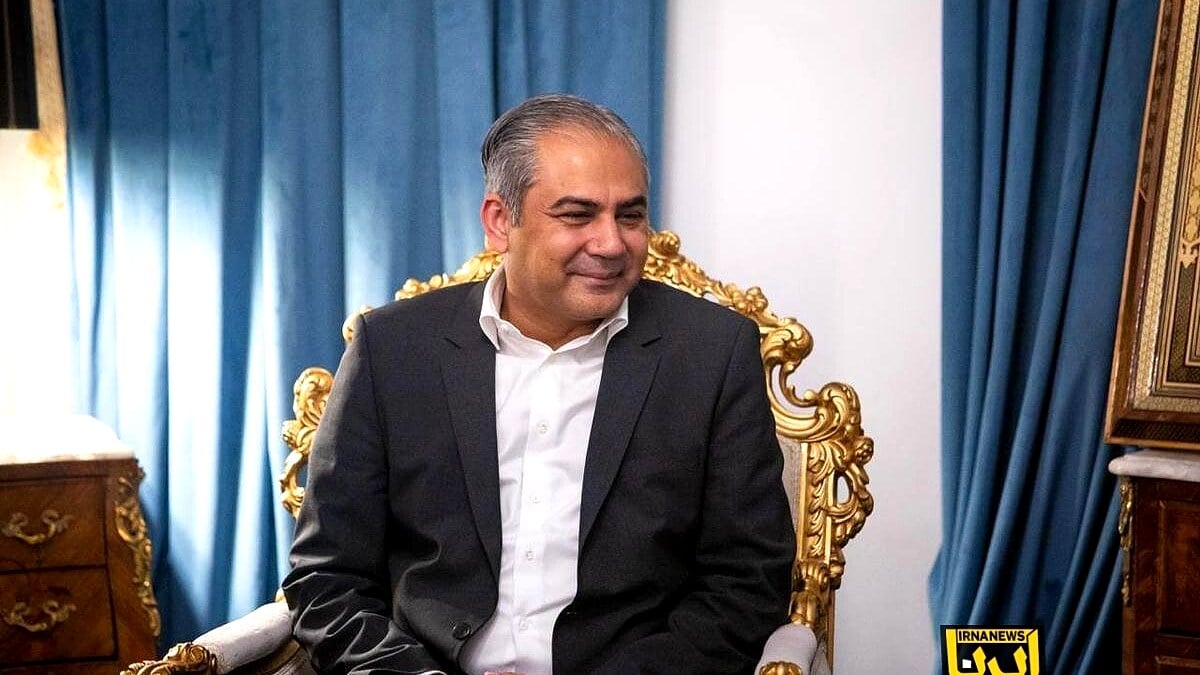




(Pakistan Interior Minister Carries Army Chief Message To Iranian Supreme Leader)
Supreme Leader
ISLAMABAD: Pakistani Interior Minister Syed Mohsin Naqvi departed for Tehran on Saturday carrying an important message from Field Marshal Syed Asim Munir, Chief of Army Staff, to Iran’s Supreme Leader Ayatollah Seyyed Mojtaba Khamenei.
The visit forms part of Pakistan’s active diplomatic efforts to facilitate stalled talks between Iran and the United States following a fragile ceasefire in the ongoing regional conflict.
Naqvi held intensive consultations with Prime Minister Shehbaz Sharif and senior officials in Islamabad before departure. He is also conveying specific instructions from the Prime Minister on the Iran-US dialogue process.
Iranian media reported the trip as an official two-day visit focused on bilateral relations and regional peace promotion. Iranian Interior Minister Eskandar Momeni received Naqvi upon arrival.
**Official Statements**
According to informed sources cited by IRNA, the message from Field Marshal Munir addresses key aspects of bilateral cooperation and ongoing mediation. Naqvi’s role underscores the close coordination between Pakistan’s civil and military leadership on foreign policy matters.
Pakistan Army sources previously described Field Marshal Munir’s earlier engagements in Tehran as “highly productive,” noting encouraging progress toward regional understanding.
Prime Minister Shehbaz Sharif has emphasised sustained diplomatic engagement to support stability in West Asia.
**Key Data and Figures**
Pakistan and Iran share a 900-kilometre border that remains critical for trade and security. Bilateral trade targets stand at $10 billion within five years, supported by multiple agreements signed in recent years.
High-level exchanges have intensified, with over 25 delegations visiting between the two countries in the past two years and 25 memoranda of understanding signed across sectors.
The Iran-Pakistan gas pipeline project includes an 80-kilometre segment under construction from the Iranian border toward Gwadar, estimated at $158 million.
In the mediation context, Pakistan hosted the first direct US-Iran talks in Islamabad in April 2026 since 1979. The fragile ceasefire, brokered by Islamabad, followed initial strikes in February and has faced repeated challenges linked to Strait of Hormuz disruptions, which handles around 20 percent of global oil shipments.
**Background Context**
Pakistan maintains neutrality in the 2026 Iran conflict while actively mediating between Washington and Tehran. Field Marshal Munir and Naqvi have undertaken multiple visits to Tehran in recent weeks as part of shuttle diplomacy.
The current visit follows closely on earlier trips, including one where Naqvi accompanied the Army Chief. Discussions typically cover border security, trade facilitation, counter-terrorism, and broader regional de-escalation.
Relations have seen both cooperation and challenges, including brief 2024 border incidents that were quickly de-escalated through diplomatic channels. Recent years have witnessed renewed focus on economic ties amid external pressures.
**Reactions and Impact**
The visit has drawn attention in regional capitals as Pakistan continues its facilitator role. Iranian state media highlighted the trip’s significance for peace efforts amid stalled negotiations.
Border trade and transit issues featured prominently in Naqvi’s meeting with his Iranian counterpart, with both sides exploring measures to boost exchange of goods.
Domestically, the high-level engagement reflects Pakistan’s strategic positioning in West Asian diplomacy, balancing relations with Iran, Gulf states, and major powers.
**Strategic Angle**
Pakistan’s mediation efforts position it as a key diplomatic actor despite its own security and economic challenges. Successful facilitation could enhance Islamabad’s regional stature and open avenues for expanded economic cooperation, including energy projects and connectivity initiatives.
The reliance on military-diplomatic channels alongside civilian leadership highlights the integrated approach in Pakistan’s foreign policy execution on critical issues.
Future developments will depend on responses from Iranian leadership and the United States to the conveyed messages. Continued engagement could pave the way for renewed direct or indirect talks, with implications for ceasefire stability, energy markets, and broader Indo-Pacific security dynamics.
Pakistan is expected to maintain its shuttle diplomacy in the coming weeks as regional actors seek pathways to sustainable de-escalation.