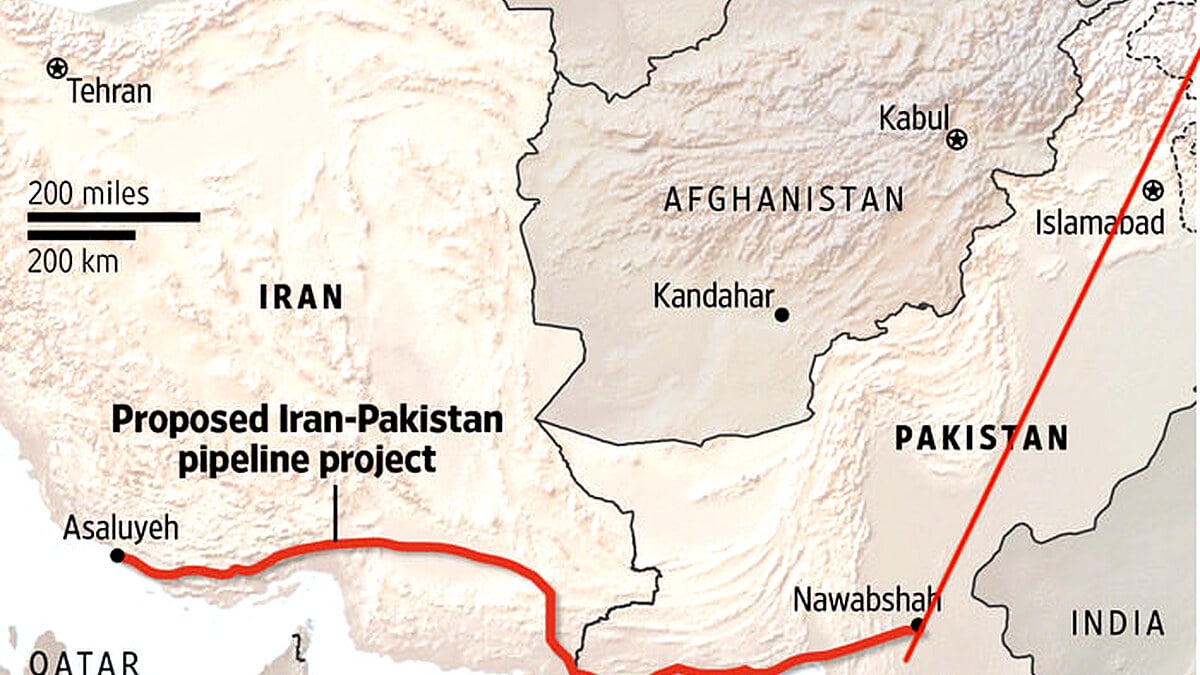




ISLAMABAD: Pakistan is advancing plans to resume construction on the long-delayed Iran-Pakistan gas pipeline project, officials confirmed.
The move aims to address the country’s chronic energy shortfall and strengthen bilateral ties with Iran.
Recent high-level discussions between Islamabad and Tehran have focused on overcoming remaining hurdles, including sanctions-related challenges.
The pipeline, once operational, is expected to supply up to 8.7 billion cubic metres of natural gas annually to Pakistan under the initial contract.
This capacity could later scale toward a maximum of 40 billion cubic metres per year.
The project holds strategic significance as it could link with the China-Pakistan Economic Corridor for potential extension toward Chinese markets.
Pakistani authorities have signaled readiness to initiate work on the domestic segment following recent diplomatic engagements.
In May 2025, Pakistani Prime Minister Shehbaz Sharif and Iranian President Masoud Pezeshkian reaffirmed commitment to an early resolution of the project.
The two sides emphasized bilateral consultations to address implementation issues.
The pipeline spans approximately 2,775 kilometres in total, with Iran having completed its roughly 1,150-kilometre section at a cost of around $2 billion.
Pakistan’s portion covers about 781 kilometres from the border through Balochistan to connect with the national gas grid.
Earlier estimates placed the cost of the Pakistani segment at $1.5 to $2 billion, though updated figures may vary due to delays.
The overall project was originally valued at around $7.5 billion.
Pakistan faces a persistent natural gas shortfall estimated at roughly 730 billion cubic feet per year, equivalent to about one-third of constrained demand.
This gap has contributed to industrial slowdowns, power generation challenges, and circular debt in the energy sector exceeding trillions of rupees.
The pipeline is designed with a 56-inch diameter to ensure efficient long-distance transport from Iran’s South Pars gas fields.
Construction on the Pakistani side was formally approved in early 2024, including an initial 80-kilometre segment toward Gwadar.
Progress has remained limited due to international sanctions on Iran and financing constraints.
Pakistan has sought sanctions waivers from the United States while negotiating extensions with Tehran to avoid potential penalties estimated at up to $18 billion.
The project traces its roots to agreements signed in the mid-2000s, with intermittent progress stalled by geopolitical shifts, sanctions, and domestic priorities.
It was once envisioned as part of a broader Iran-Pakistan-India framework before India withdrew.
Iran has granted multiple deadline extensions, including a 180-day window in previous years.
Officials in Islamabad view the pipeline as critical for diversifying energy imports beyond expensive LNG cargoes.
Recent regional developments, including disruptions in Gulf supplies, have heightened urgency for alternative sources.
Market analysts anticipate that successful implementation could ease pressure on Pakistan’s foreign exchange reserves spent on LNG imports.
In 2025, LNG consumption trends showed declines amid cost pressures and rising solar adoption, yet overall energy demand continues to outpace indigenous supply.
Diplomatic sources indicate that linking the pipeline with CPEC infrastructure could open avenues for gas exports or transit to China, enhancing Pakistan’s role as a regional energy hub.
This alignment would leverage existing CPEC investments in Gwadar port and related energy corridors.
Reactions from industry stakeholders have been cautiously optimistic, with calls for clear financing mechanisms and security assurances along the Balochistan route.
Regional observers note the project’s potential to bolster economic cooperation between Pakistan and Iran despite external pressures.
Security implications remain a consideration given the pipeline’s passage through sensitive border areas.
Both governments have stressed joint mechanisms for project protection and operational safety.
The development underscores Pakistan’s multi-vector energy diplomacy aimed at securing affordable supplies.
Broader strategic benefits include reduced reliance on volatile international markets and support for industrial recovery.
As work resumes, focus will shift to detailed engineering, financing arrangements, and timeline adherence.
Upcoming high-level meetings are expected to finalize technical and commercial aspects in the coming months.
The project’s advancement could influence future regional connectivity initiatives involving Iran, Pakistan, and China.
Questions remain on sanctions navigation and investment mobilization, which will shape the pace of implementation.