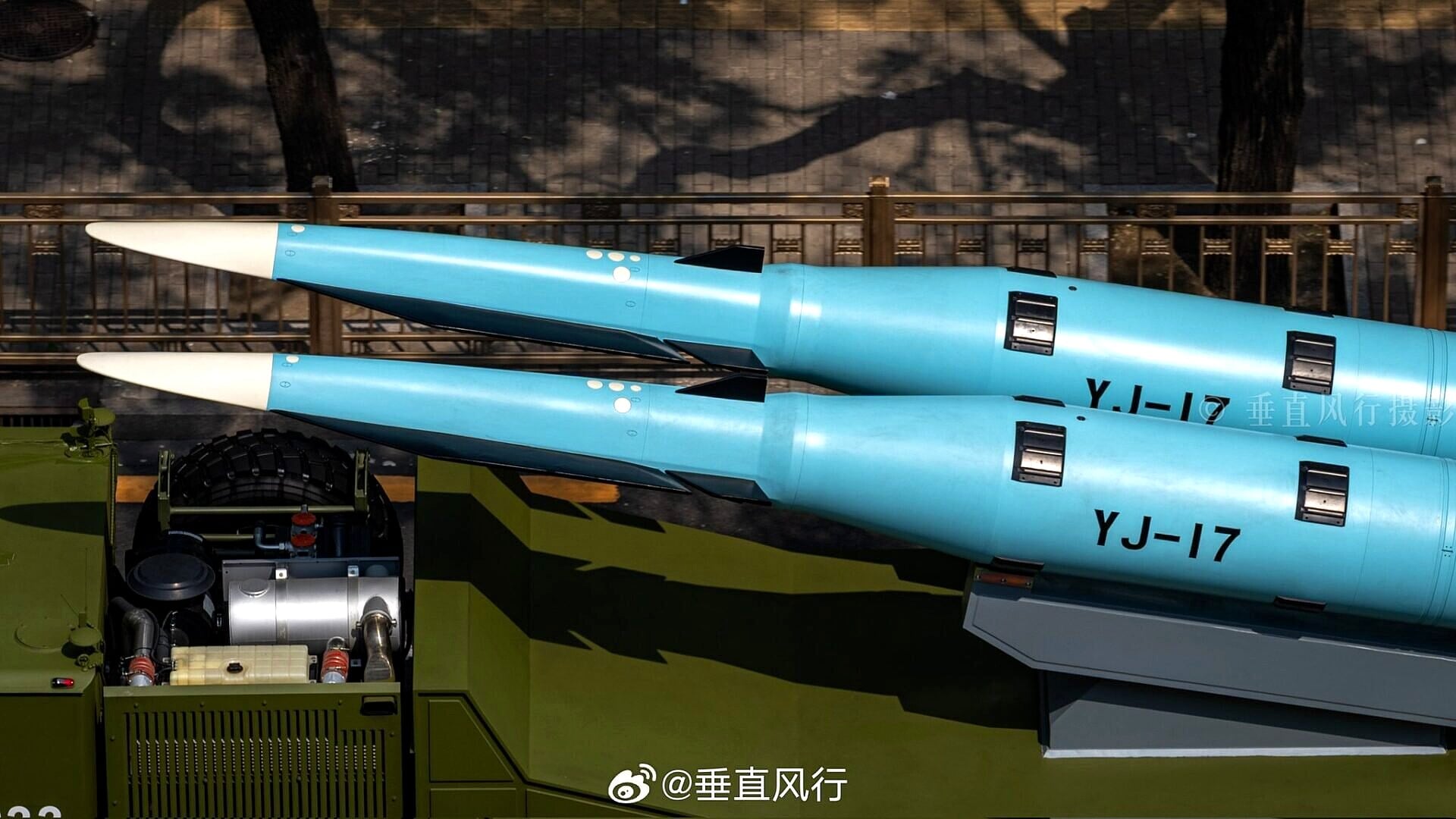




ISLAMABAD: Senior defence officials have indicated Pakistan’s strong interest in acquiring China’s advanced YJ-17 hypersonic anti-ship missile to bolster naval strike capabilities in the Indian Ocean region.
The YJ-17, also known as Eagle Strike-17, is a hypersonic aeroballistic missile designed primarily for long-range maritime strikes against surface fleets. It achieves speeds between Mach 6 and Mach 8 and has an operational range of approximately 750 miles (1,200-1,500 kilometres).
Defence sources familiar with ongoing negotiations confirmed that integration of the YJ-17 is under active consideration, particularly for the Pakistan Navy’s new Hangor-class submarines. This development comes amid broader modernisation efforts to enhance deterrence against regional naval threats.
The missile employs a boost-glide hypersonic glide vehicle (HGV) warhead, allowing it to perform high-altitude climbs followed by unpredictable manoeuvres during descent. This trajectory design significantly complicates interception by conventional shipborne defence systems.
**Official Position**
A senior official at the Ministry of Defence told local media that Pakistan continues to strengthen its conventional capabilities through strategic partnerships. “We evaluate systems based on operational requirements for maritime security and deterrence stability,” the official said, without confirming a final deal.
Pakistan Navy spokesperson confirmed ongoing technical evaluations of next-generation anti-ship systems but declined to comment on specific platforms.
**Technical Specifications**
The YJ-17 measures around 6.7 metres in length, making it compact enough for potential air-launch from fighter aircraft or vertical launch system (VLS) integration on submarines and surface vessels.
It combines inertial navigation, satellite guidance via BeiDou, and active radar or imaging infrared terminal homing. Reports suggest a conventional warhead in the 300-500 kg range optimised for penetrating warship defences.
Maximum reported speeds reach Mach 8, with the ability to maintain hypersonic glide in the atmosphere while executing lateral and vertical manoeuvres. This gives defending fleets reaction windows measured in seconds rather than minutes.
**Strategic Context**
Pakistan operates eight Hangor-class submarines under construction or recently delivered from China. These diesel-electric vessels represent a major upgrade over the older Agosta-class boats. Equipping them with hypersonic strike capability would mark the first such deployment on conventional submarines in South Asia.
The move aligns with Pakistan’s broader naval expansion under the Pakistan Navy Fleet Expansion Plan. The navy aims to increase surface combatants and submarines while enhancing long-range precision strike options in the Arabian Sea and beyond.
China and Pakistan maintain deep defence cooperation spanning fighter aircraft, main battle tanks, frigates, and various missile systems. The YJ-12 supersonic missile family is already in Pakistani service, providing a foundation for further technology transfer.
**Regional Implications**
Defence analysts note that YJ-17 acquisition would enhance Pakistan’s ability to target large surface assets at extended ranges. The missile’s range allows strikes from positions well outside traditional defensive envelopes of carrier strike groups.
India has responded to similar developments by accelerating its own hypersonic and anti-ship programmes, including the Long-Range Anti-Ship Missile efforts. This creates an action-reaction dynamic in regional naval capabilities.
Market reactions remained muted as no formal contract has been announced. However, defence sector observers expect increased activity in joint production possibilities under existing CPEC-related industrial frameworks.
**Future Outlook**
Integration timelines remain unclear, with initial evaluations likely focusing on compatibility with Hangor-class VLS or torpedo tube launch configurations. Full operational capability, if approved, could emerge within 3-5 years following technology transfer and training phases.
The development fits into Pakistan’s strategy of maintaining credible conventional deterrence while modernising key platforms through reliable partnerships. As naval competition intensifies in the Indian Ocean, such capabilities will influence operational planning for multiple regional players.
Further announcements regarding defence acquisitions are expected during upcoming high-level bilateral engagements between Islamabad and Beijing. Officials have indicated that any final decision will prioritise operational effectiveness and value for Pakistan’s maritime security requirements.