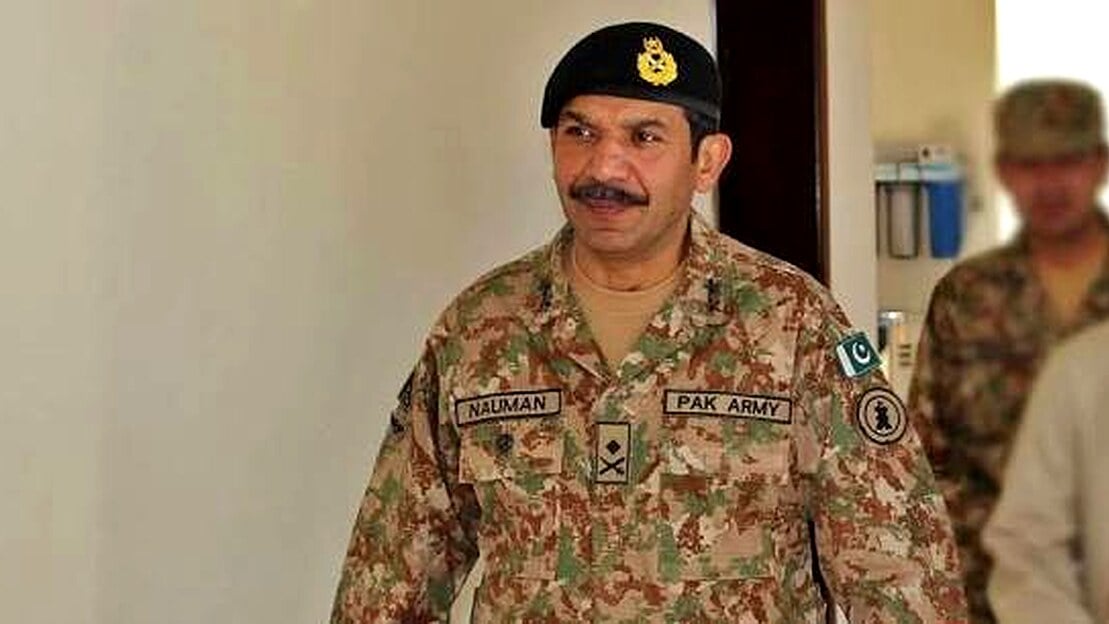




**ISLAMABAD:** Lieutenant General Nauman Zakaria, Commander of Pakistan’s Army Rocket Force, has cautioned that future conflicts in South Asia will be decided in seconds rather than minutes due to advanced missile capabilities.
Speaking at the Shangri-La Dialogue in Singapore on May 30, the senior officer highlighted the compressed decision timelines facing nuclear-armed neighbours with limited strategic depth. He stressed Pakistan’s primary military mission remains to deter war.
Zakaria noted that ballistic missile flight times between Pakistan and India have been reduced to between 180 and 300 seconds because of short ranges and geography. This reality demands rapid response systems and robust command structures.
The Army Rocket Force Command, established in 2025, operates with a dedicated structure focused on conventional precision strike capabilities. It maintains separation from nuclear assets managed by the Strategic Plans Division.
**Official Position**
Zakaria made it clear that Pakistan’s forces are prepared to respond decisively if deterrence fails. He referenced operations conducted on May 25 last year, where rocket forces demonstrated rapid deployment and accuracy in response to regional threats.
“Our mission is to deter war,” he stated, adding that Pakistan continues to modernise its conventional arsenal to maintain escalation dominance in non-contact warfare scenarios.
**Key Capabilities**
Pakistan’s Rocket Force has integrated systems such as the Fatah-II guided rocket with a range of 400-450 kilometres and the Fatah-IV cruise missile reaching up to 750 kilometres. These platforms feature high accuracy and terrain-hugging capabilities designed to penetrate advanced air defences.
Fatah-I systems cover 70-140 kilometres, while ongoing developments target extended ranges and improved precision. The force emphasises survivability and rapid salvo launches to overwhelm adversary defences.
Analysts note that such capabilities aim to raise the threshold for conventional conflict by enabling deep strikes without immediate reliance on nuclear options.
**Regional Context**
South Asia’s security environment remains tense following the 2025 India-Pakistan clash, triggered by a terror incident and subsequent military exchanges. Pakistan conducted successful tests of Fatah-II missiles in the aftermath, signalling operational readiness.
The commander pointed to India’s aggressive posturing as a key factor accelerating regional arms dynamics. Both countries maintain large conventional forces along a shared border that offers minimal warning time.
**Reactions and Implications**
Defence observers in Pakistan welcomed the remarks as a transparent articulation of deterrence strategy. Regional analysts described the address as a measured signal aimed at strategic stability rather than escalation.
In India, some voices criticised the statement as provocative, while others acknowledged the technical realities of proximity-based missile warfare. International participants at Shangri-La noted the emphasis on deterrence as a stabilising factor amid great power competition in the Indo-Pacific.
Market responses remained muted, with no immediate impact on regional stock indices or currency values following the speech.
**Strategic Outlook**
The establishment of a dedicated Rocket Force reflects Pakistan’s shift toward integrated conventional deep-strike options. This development allows more flexible responses across the conflict spectrum while preserving nuclear thresholds.
Future developments may include further induction of precision-guided systems and enhanced command-and-control networks to handle seconds-scale decision cycles.
Regional security will likely continue to hinge on credible conventional deterrence paired with responsible nuclear stewardship.
Questions remain about arms control measures and confidence-building steps that could ease pressure on decision timelines.
As missile technologies advance, both sides face the challenge of managing escalation risks in an environment where reaction windows continue to shrink.