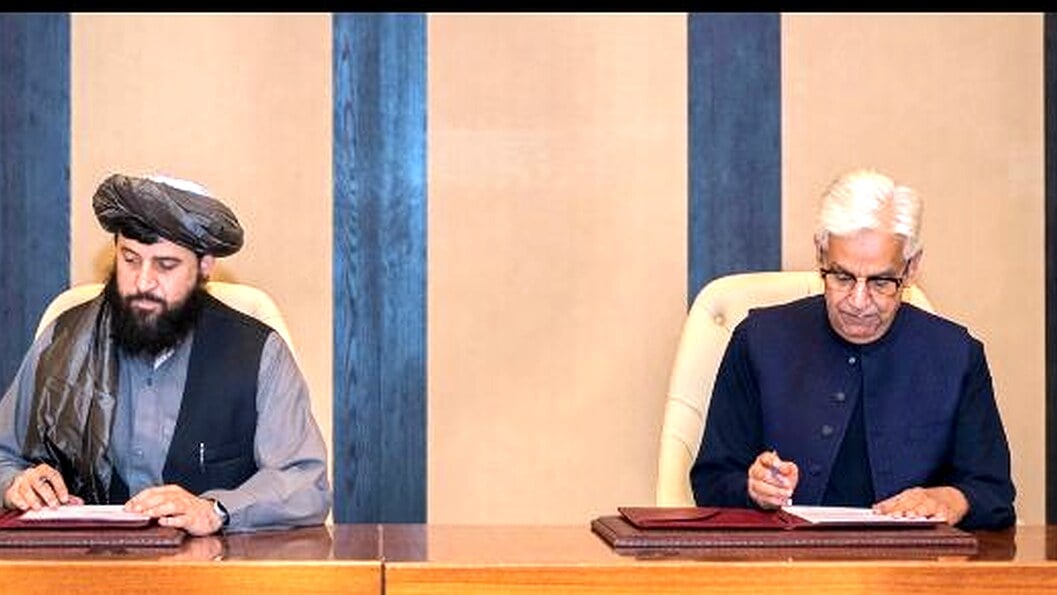




Informal Talks
ISLAMABAD: Pakistani sources have firmly denied media reports suggesting a new round of informal talks between Islamabad and Kabul is scheduled soon.
Officials contacted by Afghan Times confirmed that no such engagements are currently planned.
The clarification follows a TOLOnews report claiming the next informal meeting was expected in Kabul after being postponed from before Eid al-Adha due to challenges on Pakistan’s side.
Neither Pakistan nor Afghanistan has issued any official statement confirming future talks.
This development comes amid ongoing border security concerns and strained bilateral relations following clashes in late 2025 and early 2026.
**Denial of Media Claims**
Pakistani sources described the TOLOnews report as inaccurate. They stated that Islamabad has no immediate plans for informal dialogue with Afghan representatives at this stage.
The Afghan Times report, based on direct input from Pakistani officials, emphasised that claims of postponed meetings lack foundation.
TOLOnews had cited unnamed sources indicating the talks were delayed due to unspecified Pakistani-side issues.
**Recent Bilateral Context**
Relations between Pakistan and Afghanistan have remained tense since border skirmishes escalated in October 2025. Pakistan conducted airstrikes targeting militant hideouts, prompting retaliatory actions from Afghan forces.
A major flare-up occurred in February 2026, leading to further cross-border engagements. International mediation, including efforts in China, resulted in temporary ceasefires but no comprehensive resolution.
Previous informal and Track 1.5 talks, such as those held in Istanbul in May 2026, focused on easing tensions but produced limited concrete outcomes.
**Trade and Economic Figures**
Bilateral trade has suffered significantly due to repeated border closures. Trade volume dropped from $2.46 billion in 2024 to $1.77 billion in 2025, a decline of around 28 percent.
Pakistan’s exports to Afghanistan fell by 56 percent in early 2026. Monthly losses for Pakistan averaged $177 million during closure periods.
Afghanistan’s total trade showed resilience at nearly $13.9 billion in 2025, with imports reaching $12.1 billion, partly by shifting routes through Iran and Central Asia. Afghan exports to Central Asian states rose from $122 million in 2024 to $216 million in 2025.
Key crossings at Torkham and Chaman have been primary arteries for transit, handling thousands of containers monthly before disruptions.
**Security Situation**
The 2,600-kilometre Durand Line remains a flashpoint. Pakistan has repeatedly raised concerns over cross-border militancy, particularly activities linked to groups operating from Afghan soil.
Casualties from 2025-2026 clashes included reports of dozens of soldiers and civilians affected on both sides, though exact verified figures vary between official accounts.
Pakistan maintains a policy of robust border management, including fencing and enhanced surveillance, to curb infiltration.
**Official Positions**
Pakistan’s Foreign Office has consistently called for Afghan authorities to take concrete action against militant sanctuaries. Afghan officials have emphasised sovereignty and denied supporting anti-Pakistan elements.
No joint statements have emerged recently on dialogue mechanisms.
Earlier talks in Urumqi, China, in April 2026 aimed at de-escalation but focused primarily on immediate ceasefire measures rather than long-term strategic agreements.
**Public and Diplomatic Reactions**
In Pakistan, there is cautious public sentiment regarding engagement with Kabul. Many analysts stress the need for verifiable security guarantees before resuming high-level contacts.
Regional players, including China and Iran, have expressed concern over prolonged instability affecting trade corridors and energy routes.
Afghanistan’s economy, already facing challenges, has seen shifts in trade patterns, with increased reliance on alternative partners to offset Pakistan route disruptions.
**Strategic Implications**
The denial of upcoming talks highlights the persistent trust deficit between the two neighbours. Repeated border closures have demonstrated the high economic cost of instability, with Pakistan losing substantial export revenue and Afghanistan facing supply chain pressures.
Military experts note that without addressing core issues of cross-border terrorism, sustainable dialogue remains difficult. Pakistan continues to invest in border infrastructure, with fencing projects covering significant portions of the frontier.
Future developments may depend on ground-level security improvements and third-party mediation efforts. Russia and China have shown interest in facilitating discussions, as seen in recent regional forums.
The coming months could see renewed focus on practica