



Against Indian S-400 System
(Pakistan’s JF-17 Hypersonic Strike on Indian S-400 Validated by European Leader)
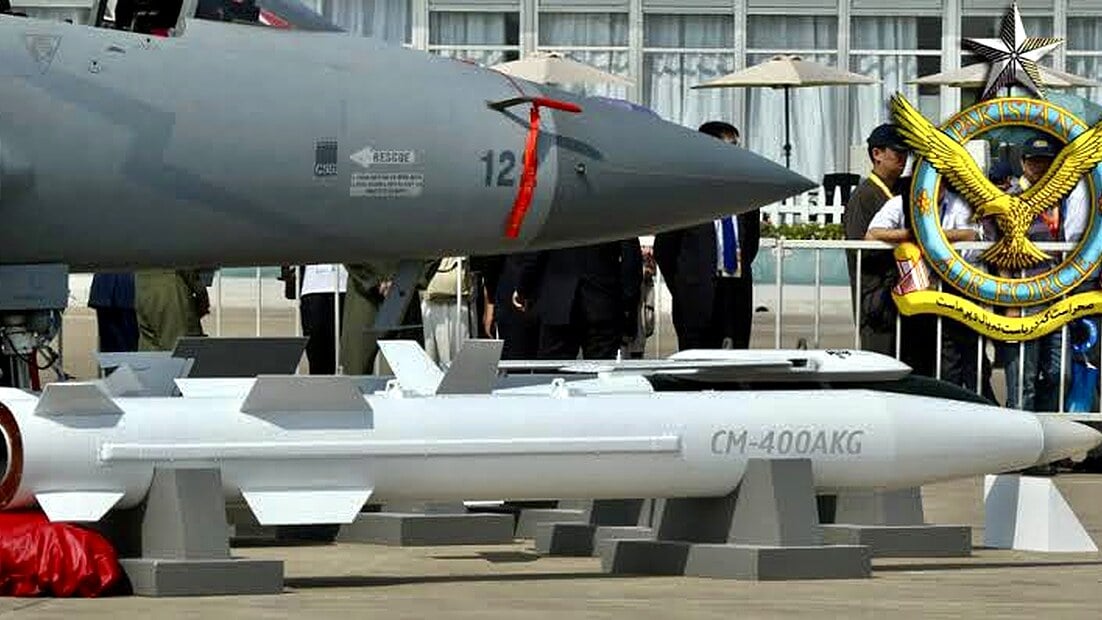
ISLAMABAD: Serbian President Aleksandar Vučić has publicly confirmed the effectiveness of Pakistan’s CM-400AKG hypersonic missile in striking an Indian S-400 air defence system during the May 2025 India-Pakistan conflict.
The statement marks the first acknowledgment by a European head of state regarding Pakistan’s reported success against the advanced Russian-supplied system.
Vučić made the remarks while discussing Serbia’s acquisition of the Chinese-origin CM-400AKG missiles for its MiG-29 fleet. He highlighted the missile’s proven combat performance, referencing its deployment by Pakistan Air Force JF-17 Thunder jets against Indian assets.
Pakistani military sources had earlier reported that precision strikes using the CM-400AKG neutralised key components of an S-400 battery, including its radar system, at Adampur air base in Punjab, India, on May 10, 2025. The operation formed part of Pakistan’s response under Operation Bunyan-un-Marsoos following reported Indian missile attacks on Pakistani air bases.
The CM-400AKG, an air-to-surface ballistic missile capable of hypersonic speeds, was integrated with JF-17 platforms. Pakistani officials described the strike as a demonstration of precision-guided munitions successfully targeting high-value air defence assets.
**Official Statements**
Inter-Services Public Relations (ISPR) had stated that the strikes destroyed the S-400 radar and associated control elements. The system, valued at approximately $1.5 billion per regiment, represented one of India’s premier long-range air defence capabilities acquired from Russia.
Vučić, addressing Serbian state television RTS in March 2026, noted that Serbia secured a significant number of the missiles at favourable terms. He emphasised their compatibility with existing aircraft and combat-proven track record.
Indian officials have consistently denied major damage to the S-400 system, claiming it successfully intercepted incoming threats during the clashes. Independent verification of the exact extent of damage remains limited due to the restricted access in the conflict zone.
**Key Operational Details**
The CM-400AKG features high supersonic to hypersonic terminal speeds and advanced guidance systems designed to counter sophisticated air defence radars. Pakistan first integrated the weapon with its JF-17 fighters, marking its initial combat use in the 2025 engagements.
Reports indicate the missile engaged the S-400’s “Cheese Board” radar component at ranges exceeding 100 kilometres. The strike occurred amid heightened aerial operations following India’s reported missile barrages on Pakistani targets including Nur Khan, Shorkot, and Murid air bases.
Pakistan’s air force claimed multiple precision hits on Indian military infrastructure during the brief but intense May 2025 confrontation, which ended through diplomatic channels.
**Background Context**
The 2025 India-Pakistan conflict erupted over escalating border tensions, involving missile exchanges and air operations. Both sides reported successful strikes on military targets, though casualty figures and damage assessments differed significantly.
The S-400 Triumf system, with its capability to track multiple targets and engage at ranges up to 400 kilometres, was positioned as a cornerstone of India’s air defence modernisation. Pakistan’s use of the CM-400AKG represented a notable challenge to such systems through speed and low-observable profiles.
Serbia’s decision to acquire the same Chinese missile system underscores growing interest in cost-effective, high-performance standoff weapons among operators seeking alternatives to Western or traditional suppliers.
**Reactions and Regional Impact**
The resurfacing of Vučić’s comments has generated discussion across South Asian and international platforms. Pakistani analysts view it as external validation of indigenous operational capabilities supported by strategic partnerships.
Defence observers note that confirmed performance data from real-world engagements influences global procurement decisions for similar systems. The incident has also prompted reviews of air defence vulnerabilities in contested environments.
Market implications include renewed attention to hypersonic and ballistic missile technologies in regional inventories. Export interest in the CM-400AKG has reportedly increased following the reported success.
**Strategic Implications**
The development highlights the evolving dynamics of aerial warfare where advanced sensors and high-speed munitions reshape traditional defence equations. For Pakistan, it demonstrates the value of diversified procurement and rapid integration of new platforms.
Analysts suggest such capabilities may encourage further investment in similar technologies across smaller air forces facing n